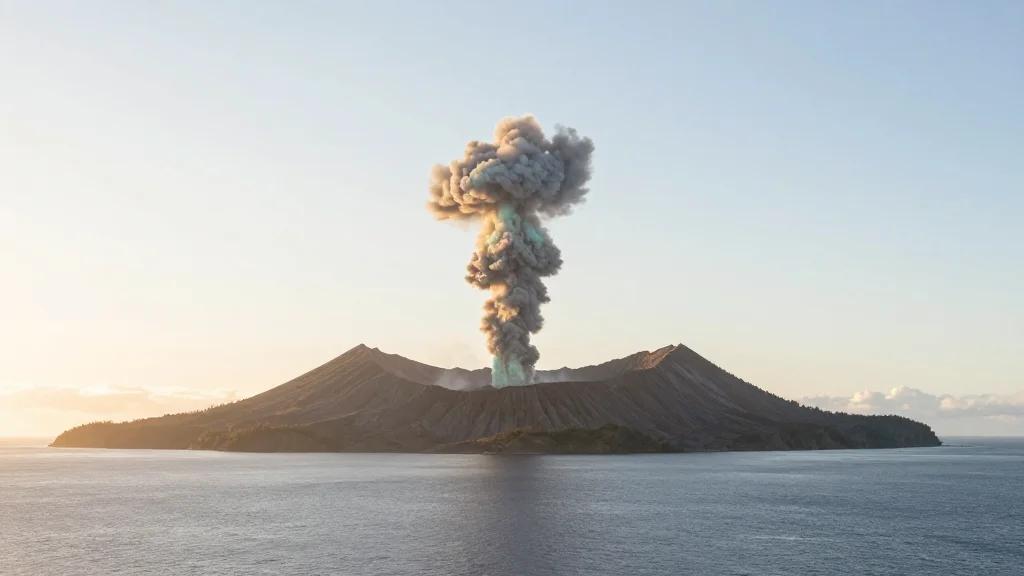
Volcanic Plume Cuts Methane by 900 Mg Daily, Study Shows Natural Climate Feedback

Why It Matters
The study overturns the long‑standing view of volcanoes solely as methane sources, introducing a natural, albeit episodic, sink that could offset a measurable fraction of anthropogenic emissions. By quantifying the removal rate—900 Mg per day—the research provides a concrete data point for climate models, potentially narrowing uncertainties in the global methane budget. Moreover, the underlying chemistry, involving chlorine atoms released from ash‑salt aerosols, opens a new avenue for climate‑engineering research that seeks to accelerate methane oxidation without harmful side‑effects. Beyond the immediate scientific insight, the finding underscores the importance of high‑resolution satellite monitoring for uncovering hidden atmospheric processes. It also highlights how extreme natural events can reveal mechanisms that may be harnessed—or at least considered—in future mitigation strategies, bridging the gap between natural climate feedbacks and engineered solutions.
Key Takeaways
- •Hunga Tonga‑Hunga Ha'apai eruption removed ~900 Mg of methane per day, comparable to emissions from two million cows
- •Satellite‑detected formaldehyde cloud persisted for over 10 days, indicating continuous methane oxidation
- •Researchers identified chlorine atoms from ash‑salt aerosols as the catalyst for methane breakdown
- •Discovery adds a previously unknown natural methane sink to global climate models
- •Findings could inspire engineered approaches that mimic volcanic ash chemistry for methane mitigation
Pulse Analysis
The revelation that a volcanic plume can act as a methane sink reshapes our understanding of natural climate feedbacks. Historically, volcanoes have been catalogued as net emitters of greenhouse gases, but this study forces a re‑evaluation of their net impact, especially for short‑lived, high‑intensity events. The chlorine‑driven oxidation pathway is chemically elegant: it leverages abundant halogen chemistry already present in the stratosphere, yet it only activates under the unique combination of ash, sea‑salt, and intense solar radiation found in massive eruptions. Replicating those conditions artificially would require careful balancing to avoid unintended ozone depletion or aerosol loading.
From a policy perspective, the discovery offers a double‑edged sword. On one hand, it provides a natural benchmark for how much methane can be removed under extreme conditions, informing more accurate emissions accounting. On the other, it tempts a rush toward geo‑engineering proposals that may overlook the delicate atmospheric chemistry involved. The prudent path forward is incremental: first, integrate the new sink into Earth‑system models to gauge its true climate relevance; second, pursue controlled laboratory experiments to dissect the reaction kinetics; and third, evaluate any side‑effects before contemplating large‑scale deployment. In the meantime, the study reinforces the value of continuous, high‑resolution satellite monitoring as a tool for uncovering hidden climate processes.
Volcanic plume cuts methane by 900 Mg daily, study shows natural climate feedback
Comments
Want to join the conversation?
Loading comments...