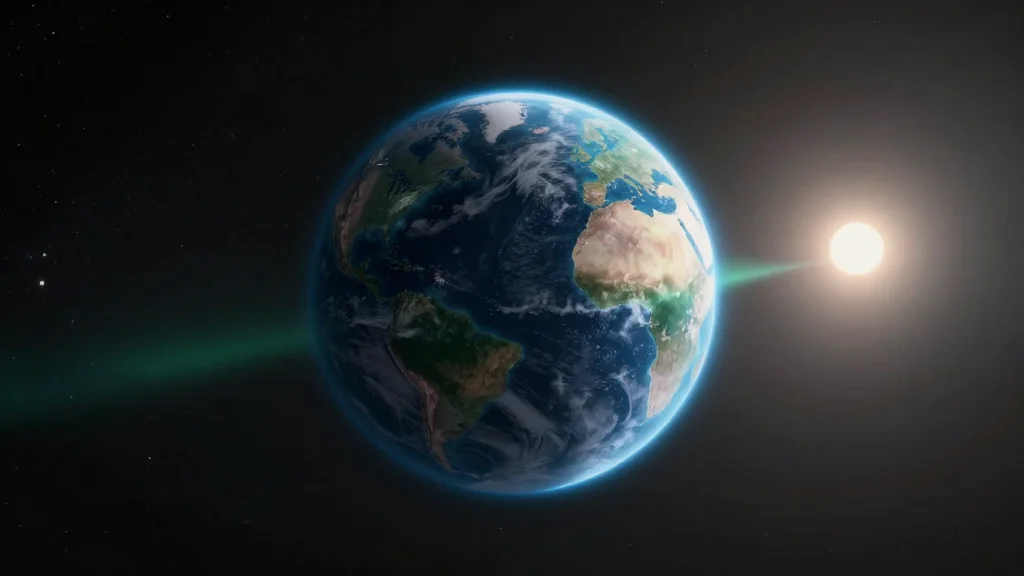
Volunteers Discover Rare Space Weather Events Using Their Ears
Companies Mentioned

NASA
Why It Matters
The discovery improves understanding of plasma wave behavior that drives geomagnetic storms, enhancing forecasting tools that protect critical infrastructure. It also demonstrates how crowdsourced audio analysis can accelerate space‑weather research.
Key Takeaways
- •HARP converts magnetometer data into audible frequencies for public analysis
- •Volunteers identified inverted Alfvén wave pattern opposite expected pitch gradient
- •Discovery refines models of plasma wave propagation near Earth
- •Findings aid prediction of geomagnetic storms affecting power grids
- •Citizen‑science approach accelerates data labeling and engages new talent
Pulse Analysis
The HARP project illustrates a growing trend: translating complex scientific data into sensory formats that non‑experts can interpret. By mapping magnetic‑field fluctuations to audible frequencies, the initiative leverages the human ear’s pattern‑recognition strengths, turning raw satellite telemetry into a crowdsourced listening lab. This approach lowers the barrier to participation, inviting hobbyists, students, and retirees to contribute meaningful observations without advanced technical training.
The core scientific breakthrough emerged when volunteers heard an inverted radial Alfvén continuum—a plasma wave whose frequency gradient ran opposite to theoretical expectations. Traditional models predict higher‑frequency (higher‑pitch) waves closer to Earth where magnetic field strength is greater. The observed reversal suggests nuanced interactions between the Earth’s magnetosphere and solar wind, prompting a reevaluation of wave dispersion relations. Incorporating this anomaly into magnetohydrodynamic simulations could yield more accurate forecasts of how energy propagates during substorms.
Beyond the immediate physics, the finding has practical implications for space‑weather resilience. Geomagnetic storms can induce currents that overload power‑grid transformers, as seen in historic events like the 1989 Quebec blackout. Better predictive models, informed by citizen‑science data, enable utilities to implement pre‑emptive safeguards. Moreover, the success of HARP underscores the value of public engagement: volunteers gain scientific literacy, while researchers gain a scalable method for labeling vast datasets. As more missions adopt audified data streams, the synergy between professional scientists and citizen analysts is poised to accelerate discovery across heliophysics.
Volunteers discover rare space weather events using their ears
Comments
Want to join the conversation?
Loading comments...