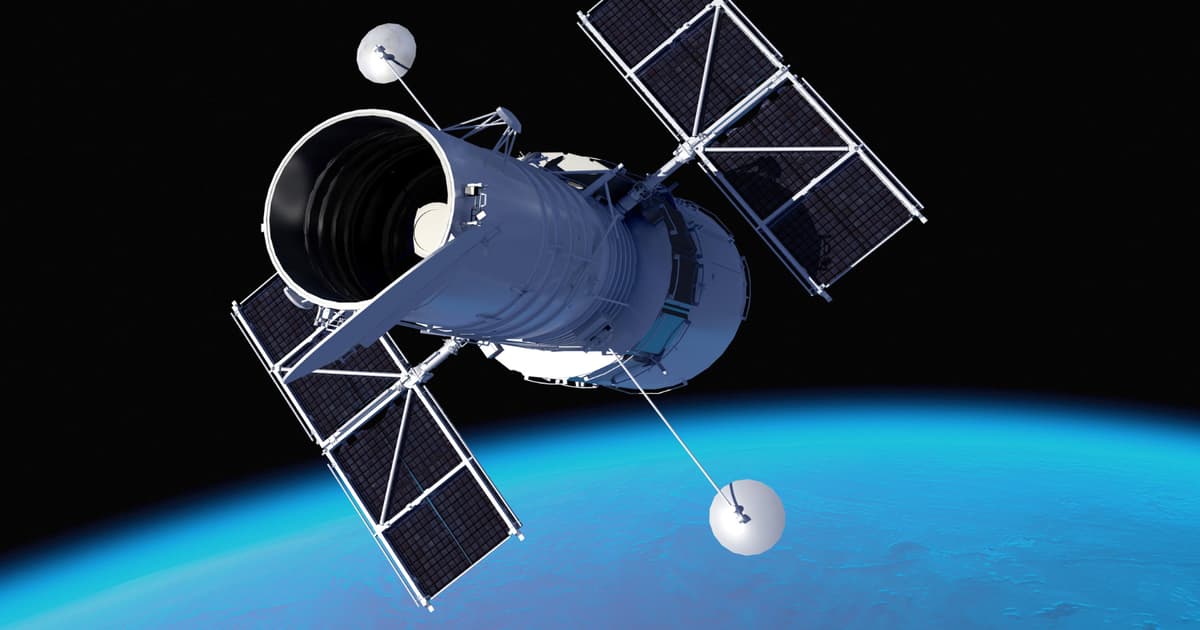
Voyager 2 Flew Past Neptune in 1989 and Detected Faint Hints of Auroras It Couldn’t Explain — because the Magnetic Field Is Tilted 47 Degrees Off the Rotation Axis and the Auroras Were Glowing in Entirely the Wrong Place
Why It Matters
Confirming Neptune’s auroras validates models of ice‑giant magnetospheres and reveals a significant atmospheric cooling trend, prompting new research into planetary weather and magnetic dynamics.
Key Takeaways
- •Webb detected H3+ auroral emissions on Neptune for first time
- •Neptune's magnetic field tilted 47° off rotation axis, offset from center
- •Auroral ovals appear at mid‑latitudes, not near rotational poles
- •Upper atmosphere temperature dropped several hundred Kelvin since 1989
- •Future Webb observations needed to track seasonal auroral and temperature changes
Pulse Analysis
The James Webb Space Telescope’s recent observations have finally provided the missing piece of Neptune’s auroral puzzle. By targeting the near‑infrared signature of the trihydrogen cation (H3+), Webb captured the faint glow produced when charged particles spiral along magnetic field lines into the planet’s upper atmosphere. This detection not only confirms that Neptune generates auroras, but also delivers the first comprehensive map of their locations, which sit far from the rotational poles due to the planet’s uniquely tilted and offset magnetic field.
Neptune’s magnetic geometry, discovered by Voyager 2 in 1989, has long confounded scientists because it diverges sharply from Earth‑like expectations. The field’s 47‑degree tilt and off‑center displacement shift the auroral ovals toward mid‑latitudes, explaining why earlier ultraviolet searches missed the phenomenon. Webb’s ability to image the entire planetary disc in the infrared eliminated the need for pre‑selected target zones, allowing the faint H3+ emissions to emerge from the background despite the planet’s unexpectedly cool upper atmosphere.
The temperature finding—several hundred kelvin cooler than Voyager’s measurements—adds a new dimension to ice‑giant climate studies. Whether this cooling reflects a long‑term atmospheric trend, a seasonal cycle on a planet with a 165‑year year, or other dynamical processes remains an open question. Continued Webb monitoring of H3+ intensity and atmospheric temperature will be crucial for tracking these changes, offering insights that could reshape our understanding of magnetospheric physics and atmospheric evolution across the outer Solar System.
Voyager 2 flew past Neptune in 1989 and detected faint hints of auroras it couldn’t explain — because the magnetic field is tilted 47 degrees off the rotation axis and the auroras were glowing in entirely the wrong place
Comments
Want to join the conversation?
Loading comments...