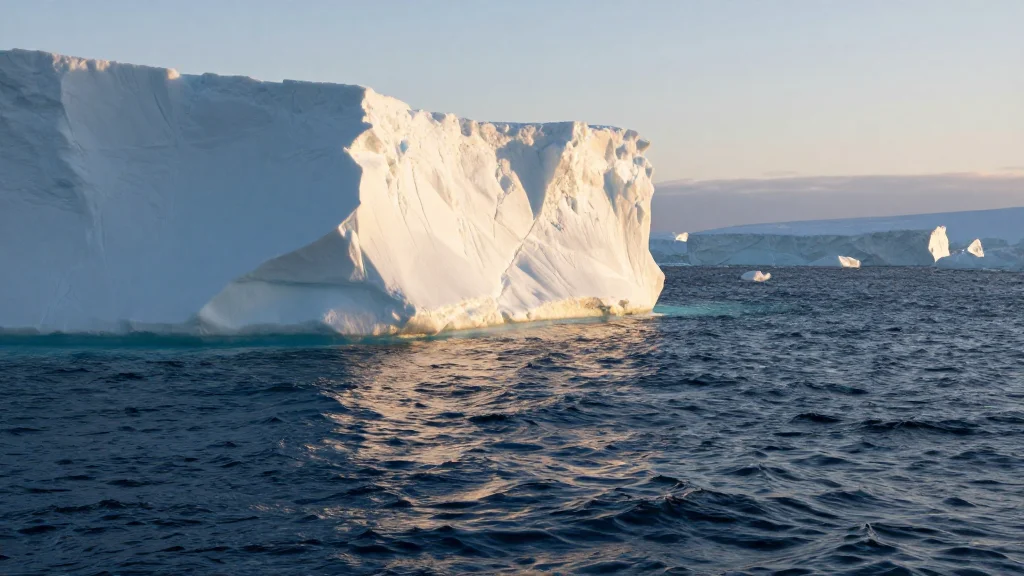
Warm Deep Water Nears Antarctic Ice Shelves, Heightening Sea-Level Risk

Why It Matters
The encroachment of circumpolar deep water onto Antarctic ice‑shelf fronts represents a tangible mechanism that could accelerate ice loss beyond current projections. Because ice shelves buttress the continent’s interior ice, their destabilization can trigger rapid inland glacier retreat, amplifying sea‑level rise. Understanding this process is critical for refining climate models, informing coastal adaptation strategies, and guiding international climate policy. Moreover, the study highlights the power of modern ocean‑monitoring technologies—sensor arrays, autonomous gliders, and machine‑learning analytics—to detect subtle but consequential changes in the Earth system. As the climate crisis intensifies, such tools will be indispensable for early warning and for evaluating the effectiveness of mitigation efforts.
Key Takeaways
- •Circumpolar deep water is now within a few kilometers of major Antarctic ice‑shelf fronts, per a 20‑year data set.
- •Lead author Joshua Lanham warns the shift could affect global carbon and heat cycles.
- •Oceanographer Sarah Purkey likened the change to turning on a hot tap in a cold bath.
- •If all Antarctic ice melted, sea levels could rise up to 190 feet (58 m).
- •Study calls for expanded sensor networks to improve future sea‑level projections.
Pulse Analysis
The new findings underscore a growing consensus that the Southern Ocean is no longer a passive heat sink but an active conduit for climate‑driven warming. Historically, Antarctic ice‑shelf stability was thought to be governed primarily by atmospheric temperature and surface melt. This study flips that narrative, showing that subsurface oceanic heat can bypass surface controls and directly erode the ice from below. The implication is profound: mitigation strategies that focus solely on reducing surface warming may underestimate the speed at which ice loss can occur if deep‑water pathways remain unchecked.
From a market perspective, the research could accelerate investment in climate‑resilient infrastructure and insurance products. Coastal cities already grappling with rising tides may now face higher risk premiums, prompting a surge in demand for flood‑defense technologies. Simultaneously, the data validates the business case for expanding ocean‑observing networks, a sector poised for growth as governments and private entities seek real‑time climate intelligence.
Looking ahead, the study sets a benchmark for interdisciplinary collaboration—combining glaciology, oceanography, and data science—to tackle complex climate feedbacks. Future research will need to quantify how quickly the observed deep‑water intrusion translates into measurable ice‑shelf thinning, a metric that will directly feed into the next IPCC assessment. If the trend persists, policymakers may have to confront a narrower window for effective adaptation, reinforcing the urgency of rapid decarbonization and robust coastal planning.
Warm Deep Water Nears Antarctic Ice Shelves, Heightening Sea-Level Risk
Comments
Want to join the conversation?
Loading comments...