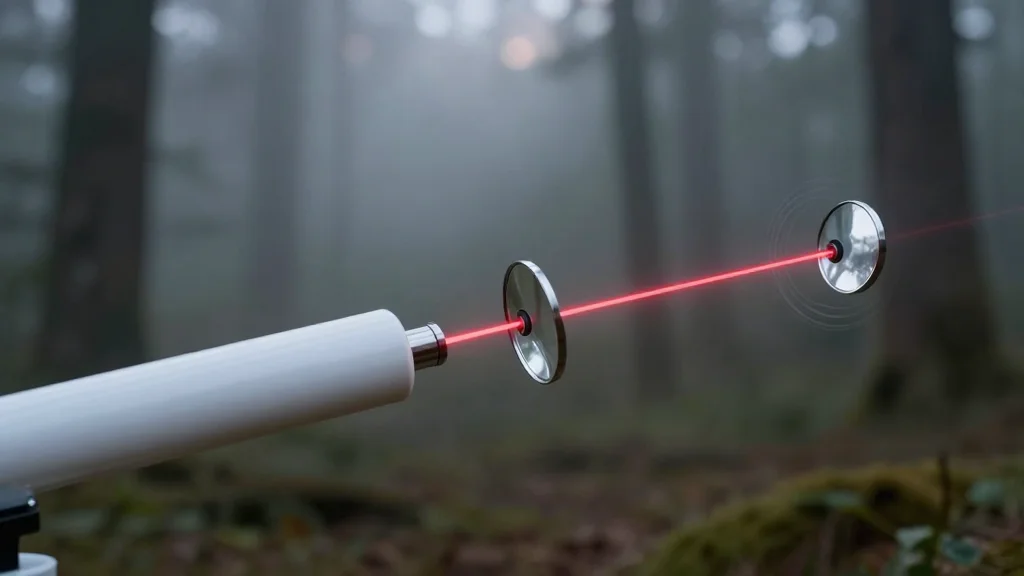
Warwick Team Unveils Blueprint to Detect Hidden Spacetime Ripples with Existing Interferometers

Why It Matters
Detecting spacetime fluctuations would provide the first empirical foothold for quantum‑gravity theories, a domain that has long been dominated by mathematical conjecture. By converting abstract predictions into observable signatures, the Warwick framework could catalyse a new era of experimental relativity, where competing models are judged by data rather than elegance. Success would also validate interferometric techniques as versatile probes of fundamental physics, extending their utility beyond astrophysical gravitational‑wave events to the microscopic fabric of the universe. Moreover, the ability to test multiple theories with a single experimental platform could accelerate the convergence of theoretical efforts, narrowing the field of viable quantum‑gravity candidates. This would have downstream effects on related fields such as early‑universe cosmology, black‑hole physics, and high‑energy particle phenomenology, where the nature of spacetime at the Planck scale remains a pivotal unknown.
Key Takeaways
- •Warwick researchers publish first unified guide to detect spacetime fluctuations.
- •Framework categorises fluctuations into three measurable classes with frequency signatures.
- •LIGO’s long arm cavities are sensitive to low‑frequency fluctuations; tabletop interferometers target higher frequencies.
- •Approach works for multiple quantum‑gravity models without favoring a single theory.
- •Plans include integrating search algorithms into upcoming LIGO‑Virgo‑KAGRA runs and supporting tabletop prototypes.
Pulse Analysis
The Warwick blueprint arrives at a moment when the gravitational‑wave community is seeking fresh scientific payloads beyond binary mergers. Historically, interferometers have been optimized for transient, high‑amplitude signals; the new framework flips that paradigm by hunting for persistent, low‑amplitude noise patterns that could betray quantum‑gravity effects. If LIGO and its partners can retrofit their pipelines to accommodate these searches, the observatories will effectively double their scientific return without major capital outlays.
From a competitive standpoint, the United States, United Kingdom, and Europe each host a growing ecosystem of tabletop interferometer projects. By providing a common signal language, the Warwick study could level the playing field, allowing smaller labs to contribute meaningfully to a global effort. This democratization may spur a wave of cross‑institutional collaborations, mirroring the open‑data culture that propelled the first gravitational‑wave detections.
Looking forward, the real test will be whether the predicted signatures survive the rigorous statistical scrutiny that has become the hallmark of the field. A confirmed detection would not only vindicate a specific class of quantum‑gravity models but also reshape funding priorities, directing more resources toward precision interferometry. Conversely, null results across the categorized spectra would tighten constraints on theory space, sharpening the theoretical discourse. Either outcome promises to move the quantum‑gravity debate from philosophical speculation to empirical science, a transition that has been decades in the making.
Warwick Team Unveils Blueprint to Detect Hidden Spacetime Ripples with Existing Interferometers
Comments
Want to join the conversation?
Loading comments...