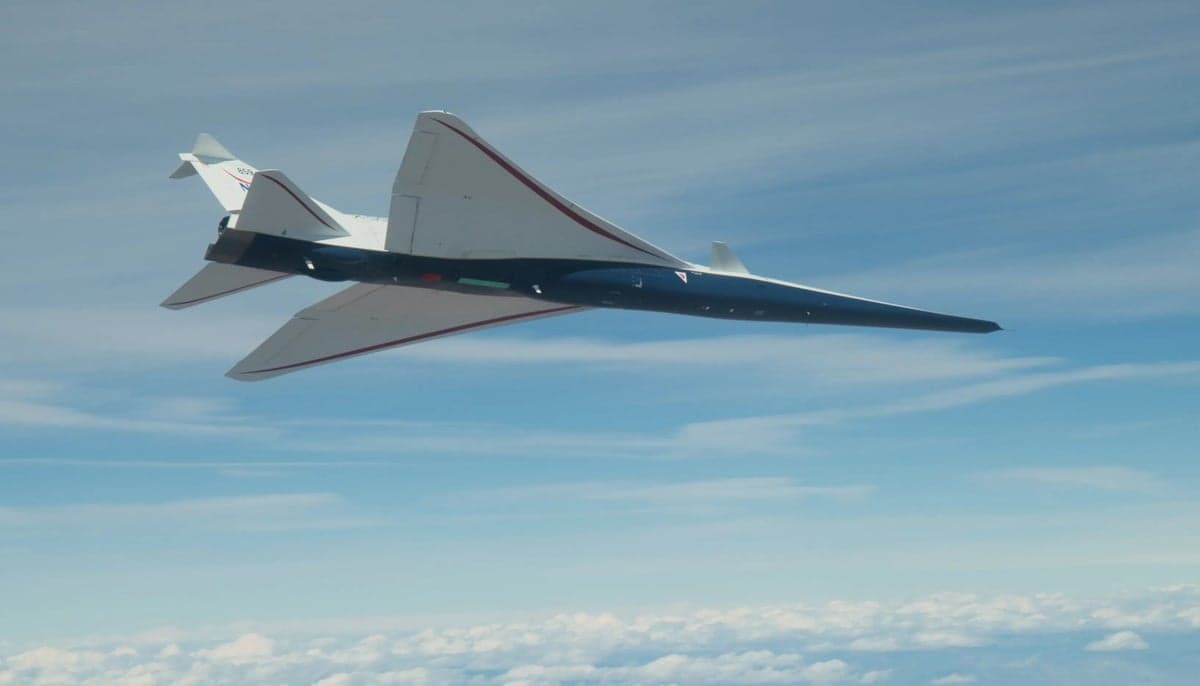
Watch NASA Test Its New X-59 Jet Designed to Go Faster than the Speed of Sound
Why It Matters
The ability to fly supersonic over land without disruptive booms could unlock faster passenger routes and revive a market abandoned since the Concorde, while providing data needed for new regulatory standards.
Key Takeaways
- •X‑59 aims for supersonic flight with “thump” instead of boom.
- •Designed to cruise above 1,000 mph, twice typical jet speed.
- •NASA will conduct over‑flight tests in U.S. neighborhoods.
- •Data will inform future regulations on commercial supersonic travel.
Pulse Analysis
Supersonic travel has long been hampered by the disruptive sonic boom that accompanies breaking the sound barrier, a problem that forced the retirement of the Concorde and limited over‑land supersonic flights. NASA’s Quiet Supersonic Technology (QueSST) program targets this barrier by reshaping the aircraft’s aerodynamics to spread shock waves, turning a thunderous boom into a faint thump. The effort reflects broader industry interest in reclaiming the speed advantage of supersonic flight while meeting modern noise‑abatement expectations.
The X‑59’s design features a slender, needle‑like nose, a specially contoured fuselage, and advanced flight‑control software that together keep pressure signatures low. Recent test footage from the Mojave Desert shows the prototype executing rolls, climbs, and gear deployments, confirming its handling envelope at speeds exceeding 1,000 mph (≈1,600 km/h). NASA plans controlled over‑flight demonstrations over U.S. neighborhoods, where residents will be surveyed on perceived noise levels. These data will quantify the acoustic footprint and validate whether the “distant thunder” target is realistic in real‑world conditions.
If successful, the X‑59 could reshape regulatory frameworks that currently prohibit supersonic operations over populated areas. Airlines may soon consider routes that cut trans‑Atlantic travel times by hours, revitalizing premium market segments and stimulating new aircraft development. Moreover, the research could spill over into military and unmanned systems, where low‑observable supersonic flight offers tactical advantages. In essence, NASA’s quiet supersonic experiment could be the catalyst that makes faster, quieter air travel a commercial reality.
Watch NASA test its new X-59 jet designed to go faster than the speed of sound
Comments
Want to join the conversation?
Loading comments...