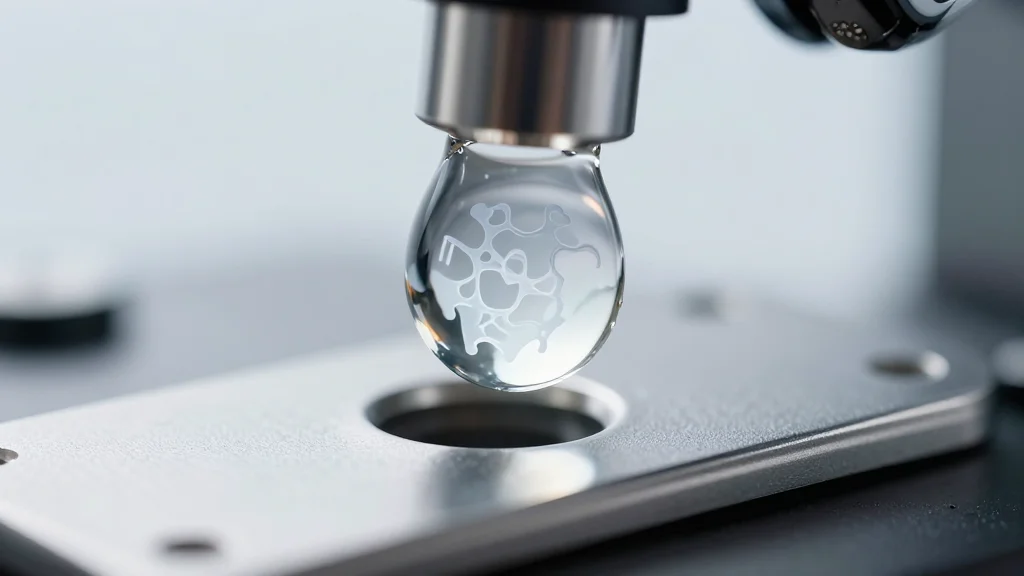
Water Molecules Found to Actively Drive Gene Transcription Process
Why It Matters
By identifying water as a catalytic participant, the discovery opens new avenues for targeting transcription in disease, potentially enabling more precise drug designs.
Key Takeaways
- •Cryo‑EM visualized >1,000 water molecules in RNA polymerase II.
- •Waters facilitate proton transfer during nucleotide addition.
- •Water networks stabilize enzyme‑DNA‑RNA interfaces.
- •Conservation of active waters spans bacteria to humans.
- •Insight may reshape drug design targeting transcription.
Pulse Analysis
The transcription of DNA into RNA is a cornerstone of cellular function, driven primarily by RNA polymerase II. While the enzyme’s protein architecture has been extensively charted, the role of the surrounding solvent remained largely speculative. Recent advances in cryo‑electron microscopy now achieve sub‑2 Å resolution, allowing scientists to pinpoint individual water molecules within the active site. This unprecedented view reveals a dense lattice of waters that were previously invisible, redefining our structural understanding of the transcription complex.
Beyond mere presence, the newly identified waters perform critical chemical work. They act as proton shuttles, facilitating the transfer of hydrogen ions essential for forming phosphodiester bonds as nucleotides are added to the nascent RNA strand. Their strategic placement also helps the enzyme discriminate correct nucleotides and stabilizes transient conformations of DNA and RNA during catalysis. Remarkably, these water‑mediated mechanisms are conserved from bacteria through yeast to mammals, indicating an evolutionary pressure to retain this aqueous choreography. This insight shifts the paradigm from a protein‑only focus to a holistic view that includes solvent dynamics as integral to enzymatic function.
For the biotech and pharmaceutical sectors, the discovery opens fresh strategic pathways. Drugs that traditionally target protein active sites may now be designed to disrupt or mimic critical water networks, offering a subtler means to modulate transcription. Such approaches could yield therapies with higher specificity for diseases linked to transcriptional dysregulation, like certain cancers and genetic disorders. Moreover, the methodological breakthrough sets a new standard for structural biology, encouraging researchers to explore solvent roles in other macromolecular machines, potentially unveiling hidden layers of regulation across the proteome.
Water molecules found to actively drive gene transcription process
Comments
Want to join the conversation?
Loading comments...