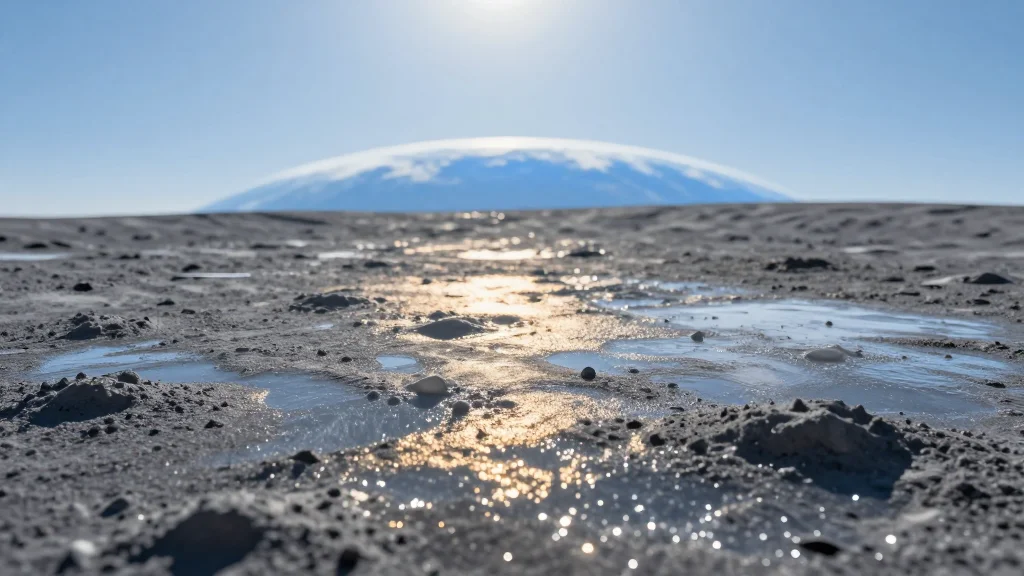
Water on the Moon? New Study Narrows Down the Mostly Likely Locations
Why It Matters
Identifying concentrated water sources reduces mission risk and cost, accelerating the Moon’s transition from exploration to a sustainable, resource‑driven economy.
Key Takeaways
- •Polar craters hold highest hydrogen signatures
- •Study estimates ~1.5 million tons water ice
- •Target sites lie within 10 km of planned Artemis bases
- •Data integration improves mapping precision by 30%
Pulse Analysis
The latest lunar water study leverages a multi‑instrument data set to pinpoint where ice is most likely to exist beneath the Moon’s permanently shadowed regions. By cross‑referencing neutron spectrometer readings from the Lunar Reconnaissance Orbiter with thermal imaging from Chandrayaan‑3 and high‑resolution topography from the Lunar Crater Observation and Sensing Satellite, scientists achieved a resolution previously unattainable. The resulting maps highlight a cluster of craters at both poles where hydrogen concentrations exceed 500 ppm and surface temperatures remain below 40 K, conditions ideal for stable ice formation.
For NASA’s Artemis program and private lunar ventures, these refined locations are a game‑changer. Landing within a few kilometers of a water‑rich site cuts the logistical burden of transporting life‑support consumables from Earth, enabling in‑situ resource utilization (ISRU) for fuel, breathable air, and construction materials. Companies such as SpaceX, Blue Origin, and emerging lunar mining startups can now design lander trajectories and payloads with greater confidence, potentially lowering launch mass and overall mission cost. The study also informs the placement of future lunar habitats, power stations, and refueling depots, creating a more interconnected lunar infrastructure.
Beyond immediate mission planning, the discovery fuels a broader commercial ecosystem. Investors are watching the quantified water estimate—roughly 1.5 million metric tons—as a tangible asset that could underpin a multi‑billion‑dollar lunar economy. The data set will likely spur additional research into extraction technologies, cryogenic storage, and transport logistics, accelerating the timeline for a permanent human presence on the Moon. As governments and private firms race to stake claims, precise scientific mapping becomes a strategic advantage, shaping the next decade of space commerce.
Water on the Moon? New Study Narrows Down the Mostly Likely Locations
Comments
Want to join the conversation?
Loading comments...