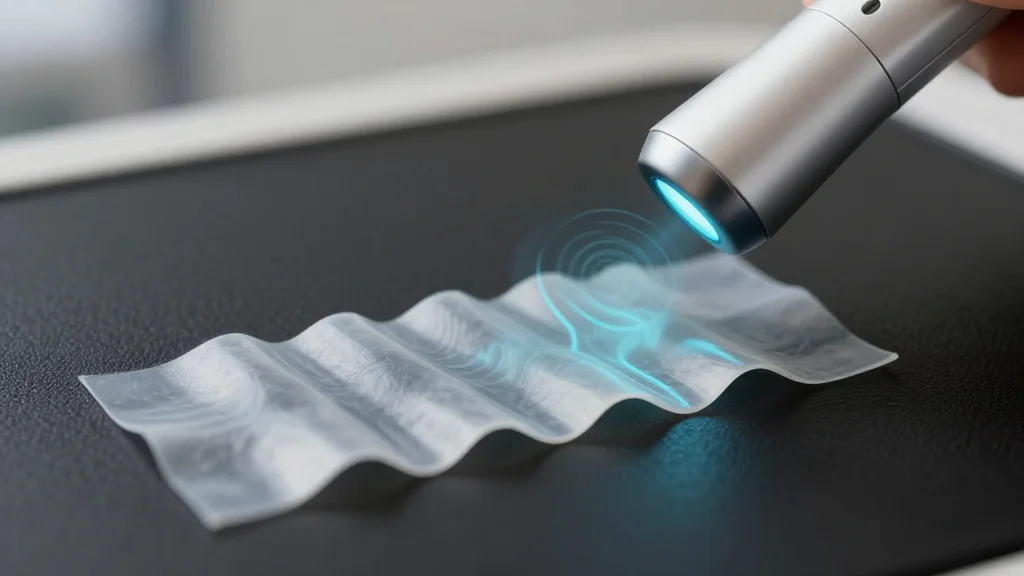
Wavy Membrane Triples Output of Ultrasound-Powered Implant Nanogenerators
Key Takeaways
- •Wavy polymer membrane triples output versus flat design
- •Concave zones amplify ultrasound pressure; convex zones suppress vibration
- •Device endures 100 million cycles with stable performance
- •In‑vivo rat test delivered 600 µA, 1.2 mW power
Pulse Analysis
Wireless power for implantable devices has long been hampered by limited energy density and rapid wear of acoustic transducers. Traditional flat‑film triboelectric nanogenerators (TENGs) vibrate erratically under high‑frequency ultrasound, leading to uneven electrode contact and material fatigue. The new approach reframes the membrane from a passive sheet to an engineered acoustic‑impedance landscape, allowing precise control over where ultrasonic energy is concentrated. This shift not only boosts conversion efficiency but also mitigates the degradation mechanisms that have stalled commercial rollout.
The core innovation lies in a single polymer film patterned with alternating concave and convex sections. Concave regions sit against a metal electrode, creating a constructive acoustic reflection that doubles local pressure and drives strong, repeatable deformation. Conversely, convex zones trap air, generating a near‑180° phase‑shifted reflection that dampens motion, acting as built‑in micro‑spacers. Laboratory tests showed the concave zones producing six times the voltage of convex zones, and the overall device delivering three times the current of a flat counterpart after 100 million vibration cycles. In vivo trials in rats confirmed reliable 600 µA currents and 1.2 mW power output over six weeks without tissue damage.
For the medical device industry, this technology could dramatically extend the functional lifespan of pacemakers, neurostimulators, and biosensors, eliminating the need for periodic battery replacements and associated surgeries. The demonstrated durability and higher power density also open doors for more complex implantable electronics, such as continuous glucose monitors or drug‑delivery platforms. As regulatory pathways for ultrasound‑based energy harvesting mature, manufacturers can leverage the acoustic‑impedance design principle to tailor performance across a range of frequencies and tissue depths, accelerating the transition to truly autonomous, battery‑free implants.
Wavy membrane triples output of ultrasound-powered implant nanogenerators
Comments
Want to join the conversation?