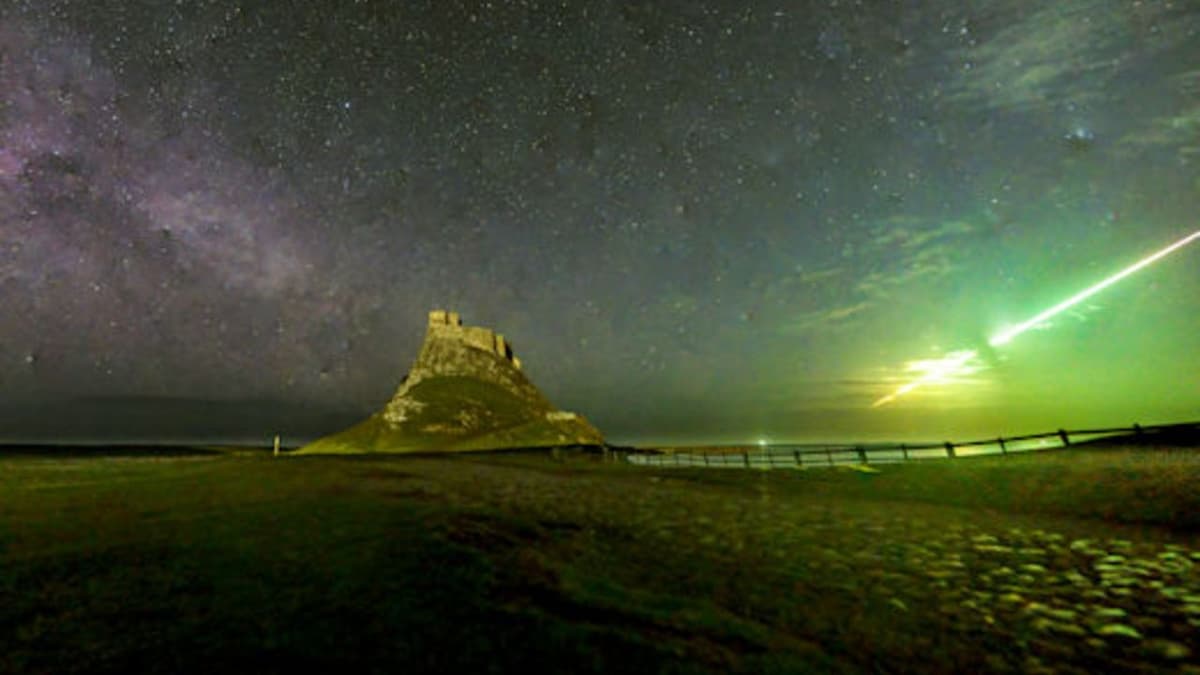
'We All Screamed when It Happened': Bright-Green Fireball Meteor Caught Exploding over Famous Viking Raid Site in UK
Why It Matters
The incident underscores the rising frequency of fireball events in early‑year months, highlighting the importance of widespread visual reporting for atmospheric research. It also brings public attention to space‑rock hazards and the historic landmarks they can illuminate.
Key Takeaways
- •Green fireball seen over Lindisfarne, historic Viking raid site
- •Meteor traveled ~20,000 mph, weighed about 12 g
- •230 observers across UK, Belgium, Netherlands, Germany reported sighting
- •Green hue caused by magnesium and nickel vaporization
- •Fireball season Feb‑Apr sees 10‑30% rise in events
Pulse Analysis
The April 13 fireball over Lindisfarne captured imaginations not only because of its vivid emerald hue but also due to the island’s deep historical resonance. Photographers aiming to document the Milky Way instead recorded a seven‑second blaze that lit the medieval castle and surrounding coastline, prompting spontaneous screams and a flurry of social‑media posts. By linking a celestial event to a site of the 793 Viking raid, the spectacle fused astronomy with cultural heritage, drawing tourists and local residents alike to witness a rare skyward display.
From a scientific perspective, the fireball exemplifies the seasonal surge in meteoroid activity that NASA labels “fireball season,” typically spanning February through April. During this window, Earth’s orbital position increases encounter rates with debris streams, yielding a 10‑30% uptick in bright fireball reports. The green coloration observed is characteristic of magnesium and nickel vaporizing under extreme friction, a signature that helps researchers infer the rock’s composition even before any fragments reach the ground. Although the 12‑gram meteoroid likely disintegrated over the North Sea, its luminous breakup contributed valuable data to the American Meteor Society’s global tracking network.
Beyond the immediate awe, the event illustrates the growing role of citizen observers in planetary defense and space‑weather monitoring. Doorbell cameras, smartphones, and amateur astronomers collectively generate a dense observational grid that professional facilities alone cannot match. This grassroots data stream improves trajectory modeling, informs potential impact assessments, and can even guide future meteorite recovery efforts. Moreover, such high‑profile sightings boost public engagement with space science, encouraging educational outreach and supporting funding for continued sky‑watching infrastructure. As fireball frequency climbs, the partnership between hobbyists and scientists will become increasingly vital for both safety and scientific discovery.
'We all screamed when it happened': Bright-green fireball meteor caught exploding over famous Viking raid site in UK
Comments
Want to join the conversation?
Loading comments...