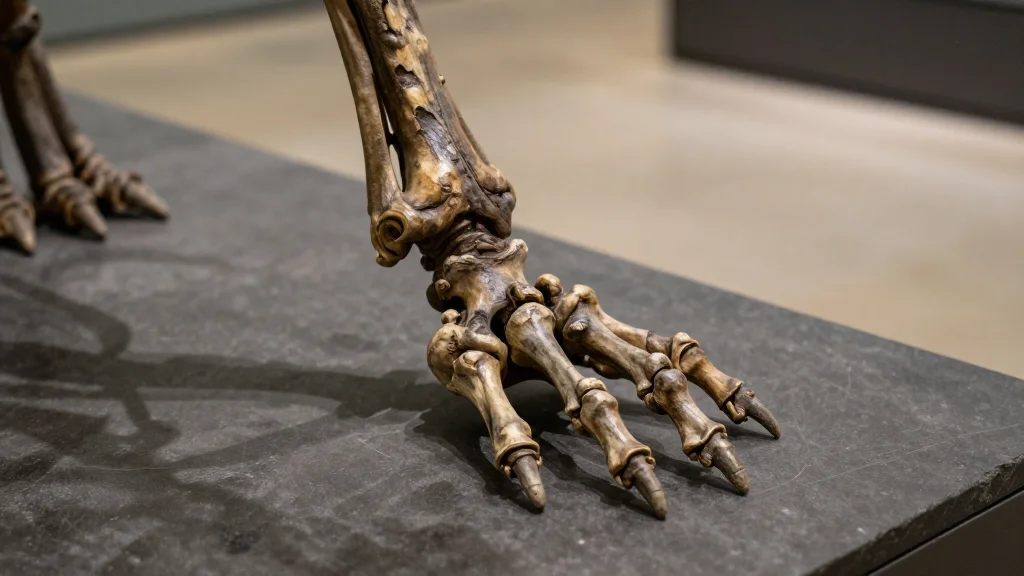
We Might Finally Now Know Why T. Rex Had Such Tiny Arms
Why It Matters
This insight revises long‑standing assumptions about dinosaur functional anatomy and highlights skull strength as a key driver of predatory adaptation, influencing how paleontologists reconstruct feeding behavior and ecosystem dynamics.
Key Takeaways
- •Forelimb reduction occurred independently in five theropod lineages
- •Stronger skulls, not just size, drove arm shrinkage
- •Study analyzed 85 non‑avian theropods to compute skull‑forelimb ratios
- •Hunting larger prey shifted predation to jaws, making arms redundant
- •Spinosaurus kept long arms due to a distinct, fish‑based diet
Pulse Analysis
The recent paper in Proceedings B of the Royal Society provides the most comprehensive quantitative test yet of why tyrannosaurids and their kin evolved such diminutive forelimbs. By assembling measurements of forelimb length, skull robustness and body mass for 85 non‑avian theropods, the authors calculated a skull‑to‑forelimb ratio that normalizes arm size across vastly different species. Their phylogenetic analysis shows that a marked increase in skull strength coincided with a consistent reduction in arm length in at least five separate carnivorous lineages. This pattern suggests a repeatable evolutionary response rather than a random by‑product of overall body enlargement.
The functional shift toward jaw‑centric predation makes intuitive sense when the prey exceeds the bite‑handling capacity of the forelimbs. As skulls grew more massive and teeth became capable of crushing bone, the selective pressure to maintain powerful arms waned. The authors draw a parallel with modern toothed whales, whose skull morphology adapts to the size of their prey, while their limbs remain reduced. Conversely, lineages such as Spinosaurus retained elongated arms because their diet—primarily fish—required different feeding mechanics. These findings underscore how diet and prey size can drive convergent morphological changes across distant clades.
For paleontologists, the study offers a new metric to evaluate functional anatomy in extinct predators and may refine reconstructions of hunting behavior. It also prompts a re‑examination of other theropod groups where arm length has been assumed to be a vestigial relic. Future work could integrate biomechanical modeling and finite‑element analysis to quantify the exact forces generated by the enhanced jaws, further clarifying the trade‑offs between cranial and forelimb performance. Ultimately, linking skull robustness to arm reduction reshapes our narrative of how apex predators like T. rex dominated Late Cretaceous ecosystems.
We might finally now know why T. rex had such tiny arms
Comments
Want to join the conversation?
Loading comments...