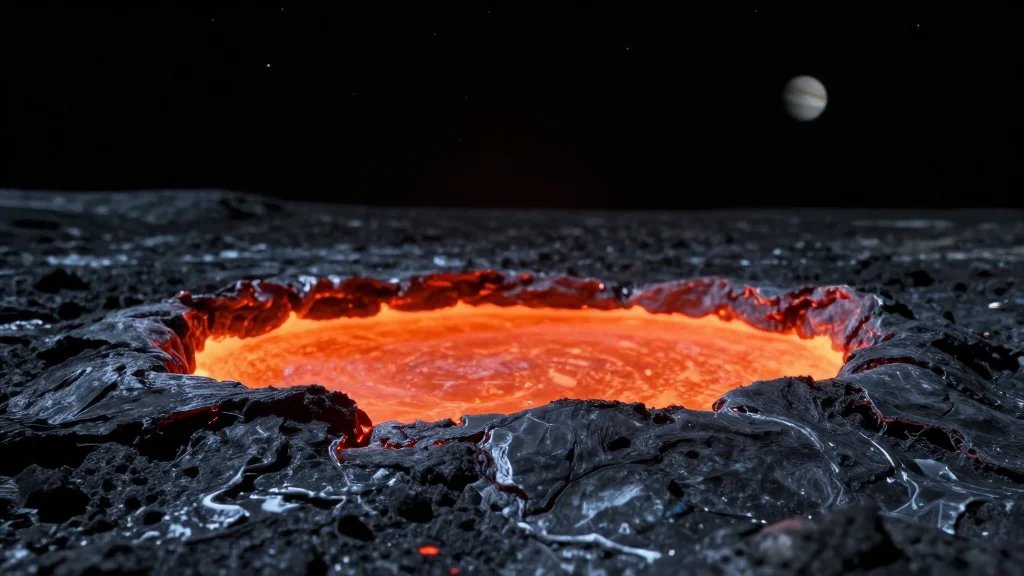
We Might Have Massively Underestimated Io's Thermal Output
Why It Matters
Revising Io’s heat flow reshapes our understanding of tidal heating and volcanic processes, influencing future exploration strategies and the economics of deep‑space missions.
Key Takeaways
- •JIRAM data raises Io’s total thermal output to ~80 GW.
- •Prior estimates missed cooler crustal lava, undercounting by tenfold.
- •Resurfacing age of Io’s lava lake crusts is ~8–10 years.
- •Study examined 32 of 400 paterae; extrapolation remains uncertain.
- •Ongoing Juno observations could refine Io’s volcanic power models.
Pulse Analysis
Io has long been the poster child for extreme volcanism, but most thermal estimates relied on a single infrared wavelength that captured only the hottest peripheral rings of its lava lakes. Those M‑band measurements ignored the extensive, cooler crust that blankets the lake interiors, leading to a systematic under‑reporting of the moon’s heat output. By leveraging Juno’s JIRAM instrument, which spans a broader spectral range, researchers can now quantify both the blistering edges and the massive, lower‑temperature crusts, delivering a more complete thermal picture.
The revised calculations are striking: a well‑studied lake, P63, now appears to radiate roughly 80 GW—four to ten times higher than earlier estimates. If this scaling holds across Io’s 400+ paterae, the moon’s total volcanic power could be tenfold greater than current models suggest. This surge in energy has direct implications for the tidal‑heating mechanisms that keep Io’s interior molten, potentially requiring a reassessment of Jupiter’s own heat budget and the dynamics of its magnetosphere. For the scientific community, the findings tighten constraints on thermal‑evolution models and open new avenues for comparative volcanology.
Beyond pure science, the discovery reshapes the business case for future missions. Higher heat flow translates to more vigorous plume activity, which could affect spacecraft navigation, instrument design, and mission risk assessments. It also heightens interest from commercial entities eyeing in‑situ resource utilization or high‑resolution mapping contracts. Continued Juno flybys and upcoming missions equipped with next‑generation infrared spectrometers will be crucial to validate the extrapolations and refine the thermal map, ensuring that both academic and commercial stakeholders can plan with accurate, up‑to‑date data.
We might have massively underestimated Io's thermal output
Comments
Want to join the conversation?
Loading comments...