Weaker Bonds Make for More Impact-Resistant Polymers
Why It Matters
By turning weak bonds into energy‑absorbing features, the technology offers a scalable path to tougher, safer consumer and industrial products, potentially reducing material failure in high‑impact applications.
Key Takeaways
- •Mechanophores serve as weak cross‑links that fracture on impact
- •Cross‑linked polystyrene absorbed significantly more energy than standard polymer
- •Laser‑induced micro‑plastic impact testing measured energy dissipation precisely
- •Technique applicable to rubber, asphalt, and roofing materials
- •Potential to improve tire safety and protective consumer electronics
Pulse Analysis
The concept of using deliberately weak bonds to enhance polymer toughness builds on a growing body of research into mechanochemistry. Earlier work by MIT and Duke demonstrated that distributing such weak cross‑links could dissipate energy during slow tearing, preserving the stronger load‑bearing bonds. This strategy flips conventional wisdom—where stronger bonds are prized—by showing that controlled bond failure can act as a shock absorber, opening new avenues for material design across a range of polymer families.
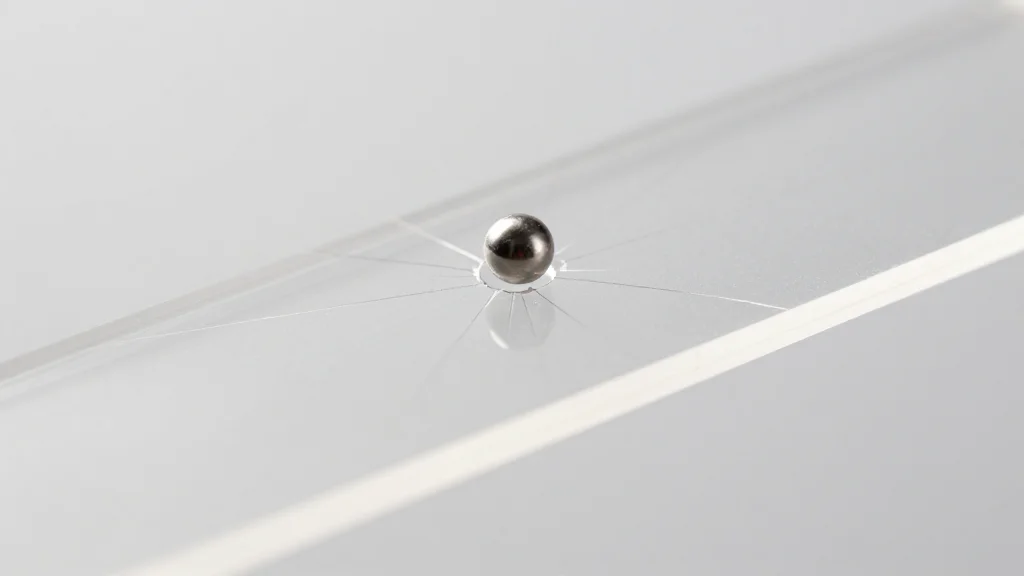
In the latest study, MIT researchers integrated mechanophores directly into polystyrene and evaluated performance with laser‑induced micro‑plastic impact testing (LIPIT). Tiny silica beads traveling at 750 m/s struck thin polymer films, allowing precise measurement of particle velocity changes and resulting energy absorption. The cross‑linked samples exhibited a pronounced temperature spike that created a localized, sacrificial zone, absorbing far more kinetic energy than untreated polystyrene. The same methodology proved effective for styrene‑butadiene‑styrene rubber, asphalt and roofing compounds, confirming the versatility of the approach.
The implications for industry are significant. Materials that can intelligently dissipate impact energy could extend the lifespan of shoe soles, reduce road‑wear on tires, and provide more resilient protective cases for electronics. Backed by NSF funding, the research team is exploring broader polymer classes, aiming to commercialize the technology for automotive, construction and consumer markets. If scaled successfully, these mechanophore‑enhanced polymers could lower failure rates, cut maintenance costs, and improve safety across multiple sectors.
Weaker bonds make for more impact-resistant polymers
Comments
Want to join the conversation?
Loading comments...