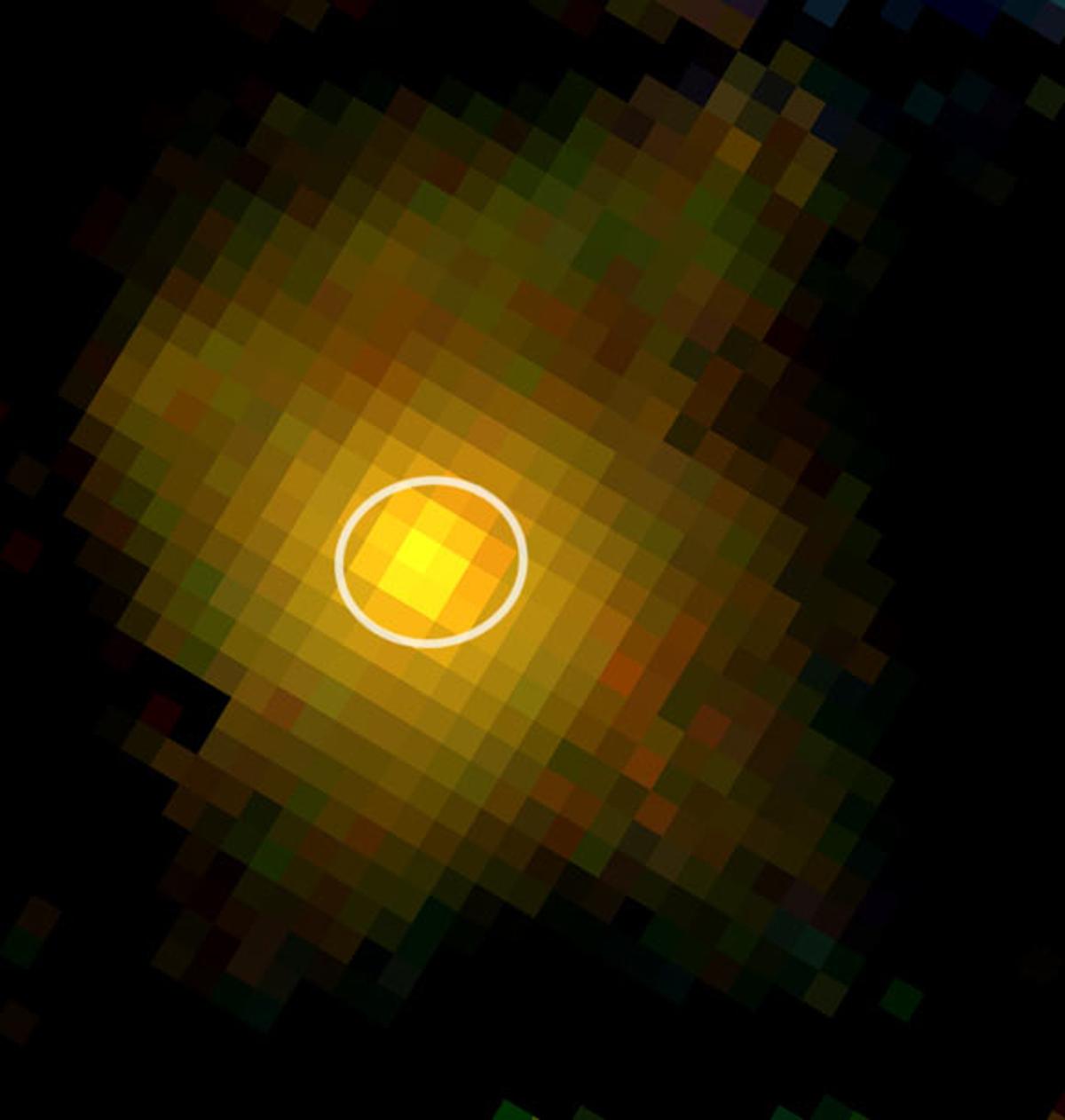
Why It Matters
The discovery forces a rethink of galaxy‑evolution models that assume slow rotators develop only after billions of years of mergers, indicating that massive, mature dynamics can arise much earlier. It highlights JWST’s unique ability to probe kinematics of compact high‑redshift systems, opening new avenues for testing cosmological simulations.
Key Takeaways
- •Webb identified XMM‑VID1‑2075 as massive slow rotator at z=3.449
- •Galaxy hosts several times Milky Way's stellar mass, already quenched
- •Discovery challenges models that require billions of years for slow rotation
- •Possible origin: single opposite‑spin merger rather than multiple collisions
- •Webb's IFU spectroscopy enables kinematic studies of compact high‑z galaxies
Pulse Analysis
The early Universe was once thought to be dominated by fast‑spinning, gas‑rich galaxies, with slow‑rotating, dispersion‑dominated systems emerging only after extensive merger histories. In the local cosmos, such galaxies are rare and typically massive, residing in dense clusters where repeated collisions randomize stellar orbits. By contrast, XMM‑VID1‑2075, observed at a redshift of 3.449, already exhibits the hallmarks of a mature slow rotator—high stellar mass, quenched star formation, and chaotic internal motions—despite existing when the Universe was under two billion years old.
Webb’s Near‑Infrared Spectrograph integral‑field unit (IFU) made this breakthrough possible. The instrument captured spatially resolved spectra across the galaxy, allowing researchers to map velocity fields with unprecedented precision for such a distant target. The MAGAZ3NE team compared XMM‑VID1‑2075 with two contemporaneous galaxies, finding a clear dichotomy: one rotating, one disturbed, and one lacking rotation entirely. This kinematic diversity at high redshift suggests that massive galaxies can follow multiple evolutionary pathways, including rapid dynamical settling via a single counter‑rotating merger, rather than the gradual build‑up traditionally modeled.
The implications ripple through theoretical astrophysics and cosmological simulations. Models must now accommodate mechanisms that produce dispersion‑dominated structures on short timescales, potentially revising assumptions about angular momentum transfer, feedback processes, and the role of environment in early galaxy assembly. As JWST continues to deliver high‑resolution IFU data, astronomers anticipate a growing catalog of early slow rotators, offering a stringent test for next‑generation simulations and deepening our grasp of how the Universe’s most massive galaxies attained their present‑day dynamical states.
Webb Discovers Slow-Rotating Galaxy in Early Universe
Comments
Want to join the conversation?
Loading comments...