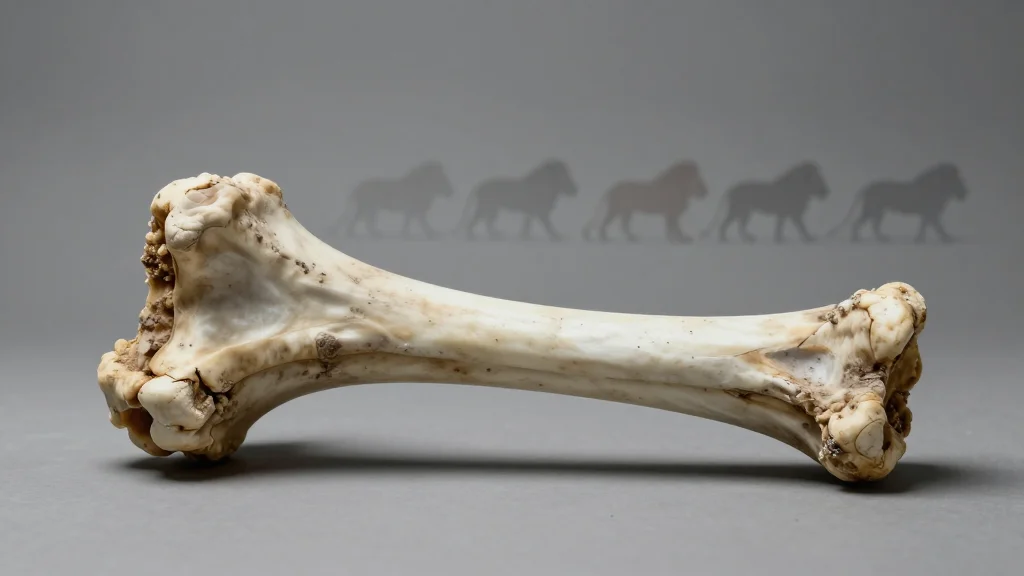
Were Neanderthals Able to Hunt Elephants? The Proof Is in an Ancient Bone
Why It Matters
The discovery reshapes our view of Neanderthal cognition, showing they could plan and execute complex group hunts, which narrows the perceived behavioral gap with Homo sapiens. It also prompts a reassessment of other prehistoric sites previously deemed insignificant.
Key Takeaways
- •Lehringen elephant shows wooden‑spear tool marks
- •Neanderthals coordinated a massive megafauna kill
- •Hunting evidence predates Homo sapiens in Europe by 75,000 years
- •Study challenges long‑standing views of Neanderthal simplicity
Pulse Analysis
For decades, the Lehringen elephant—found in a German lake bed in 1948—was treated as a geological oddity rather than a window into prehistoric behavior. Early researchers assumed any butchery traces would have eroded over time, reinforcing the narrative that Neanderthals were opportunistic scavengers, not skilled hunters. This bias persisted until a team of zooarchaeologists revisited the specimen with modern microscopy and 3‑D imaging, revealing precise cut marks consistent with a wooden spear, a clear sign of intentional killing.
The *Nature* paper details how the spear‑induced wounds align with coordinated group effort, suggesting a structured hunt rather than a chance encounter. Radiocarbon dating places the kill at roughly 125,000 years ago, well before Homo sapiens entered Europe around 50,000 years ago. This pushes back the timeline for complex big‑game hunting, indicating Neanderthals possessed advanced planning, tool use, and social organization comparable to later modern humans. The find also underscores the importance of re‑examining legacy collections with new technologies, as hidden evidence can dramatically alter our evolutionary narratives.
Beyond reshaping academic discourse, the discovery has broader implications for public perception of Neanderthals and for archaeological methodology. It invites scholars to revisit other long‑ignored assemblages for subtle butchery signatures, potentially uncovering a richer record of Neanderthal subsistence strategies. Moreover, it highlights how interdisciplinary approaches—combining paleo‑environmental data, advanced imaging, and experimental archaeology—can unlock insights from seemingly mundane fossils, reinforcing the need for continual methodological innovation in the study of human origins.
Were Neanderthals Able to Hunt Elephants? The Proof Is in an Ancient Bone
Comments
Want to join the conversation?
Loading comments...