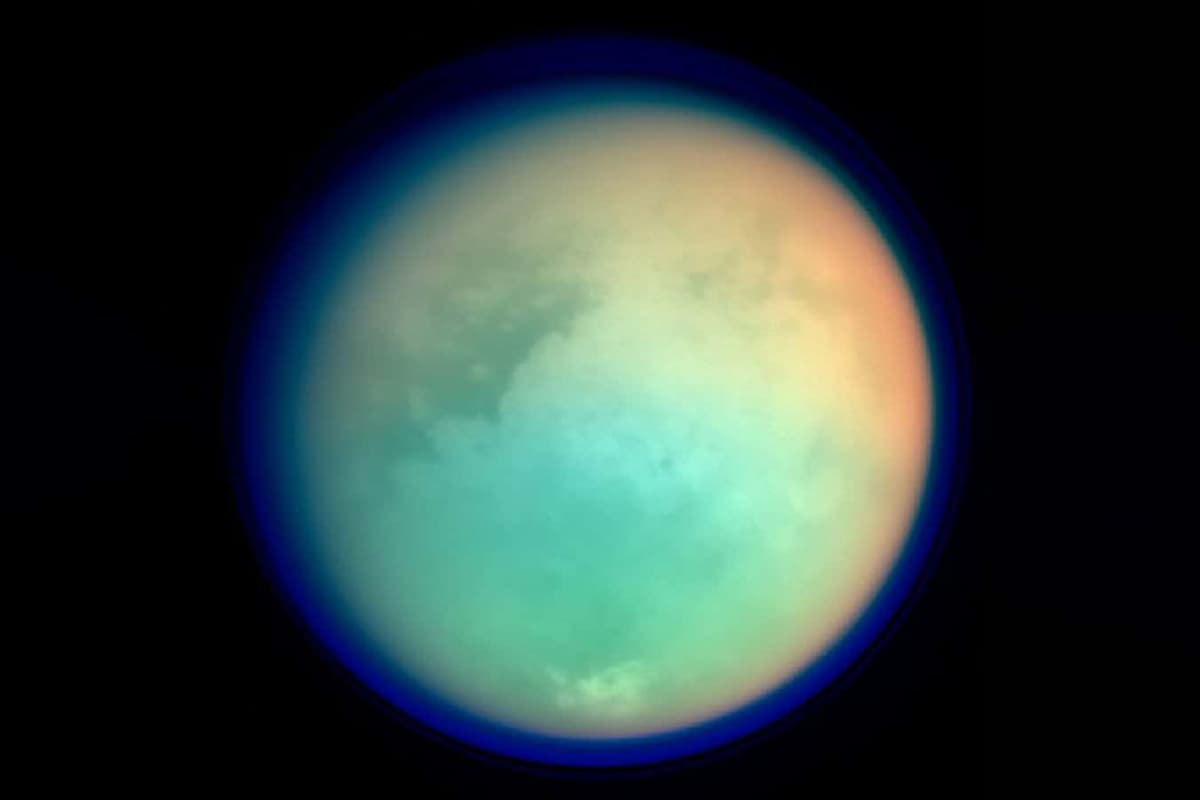
We've Found a Mysterious Substance on Titan and Pluto
Why It Matters
The detection links two of the solar system’s most chemically rich bodies, offering clues about organic synthesis pathways that may have preceded life. Understanding this shared chemistry can shape future exploration strategies for icy moons and dwarf planets.
Key Takeaways
- •Unknown spectral feature detected on Titan and Pluto surfaces
- •Detection made using infrared data from Cassini and New Horizons
- •Substance may be complex organics or exotic ices, composition uncertain
- •Findings highlight shared chemical processes despite different environments
- •Could guide future missions targeting pre‑biotic chemistry on icy worlds
Pulse Analysis
The new spectral anomaly was first spotted in archival Cassini ultraviolet‑infrared data from 2004 and later confirmed by New Horizons’ 2015 flyby of Pluto. Researchers applied high‑resolution spectroscopy to isolate a narrow absorption band that does not match any known ices or simple hydrocarbons, prompting a cross‑planetary comparison that revealed the same feature on both bodies. This unexpected convergence suggests a previously unrecognized class of compounds that can form under the cold, nitrogen‑rich conditions prevalent on Titan and the methane‑laden surface of Pluto.
Titan’s dense atmosphere drives a rich photochemistry that produces tholins—complex organic hazes that settle onto the surface. Pluto, though lacking a substantial atmosphere, exhibits surface ices of nitrogen, methane, and carbon monoxide that undergo seasonal sublimation and re‑deposition. The mysterious substance could represent a bridge between these environments, perhaps a polymeric material generated by UV‑driven reactions in both settings. If it proves to be a stable organic polymer, it would provide a tangible example of pre‑biotic chemistry occurring naturally on icy worlds, reinforcing the idea that the building blocks of life can arise far from Earth‑like conditions.
The discovery reshapes priorities for upcoming missions such as NASA’s Dragonfly rotorcraft, which will sample Titan’s surface, and the Europa Clipper, which will investigate ocean worlds with similar chemistry. Laboratory simulations replicating Titan‑like and Pluto‑like conditions are now essential to reproduce the spectral signature and identify its molecular makeup. Moreover, next‑generation telescopes like the James Webb Space Telescope can target the same wavelength range on other Kuiper‑belt objects, testing whether this compound is a common feature of the outer solar system. By linking chemistry across disparate icy bodies, the finding accelerates the search for universal pathways that could lead to life.
We've found a mysterious substance on Titan and Pluto
Comments
Want to join the conversation?
Loading comments...