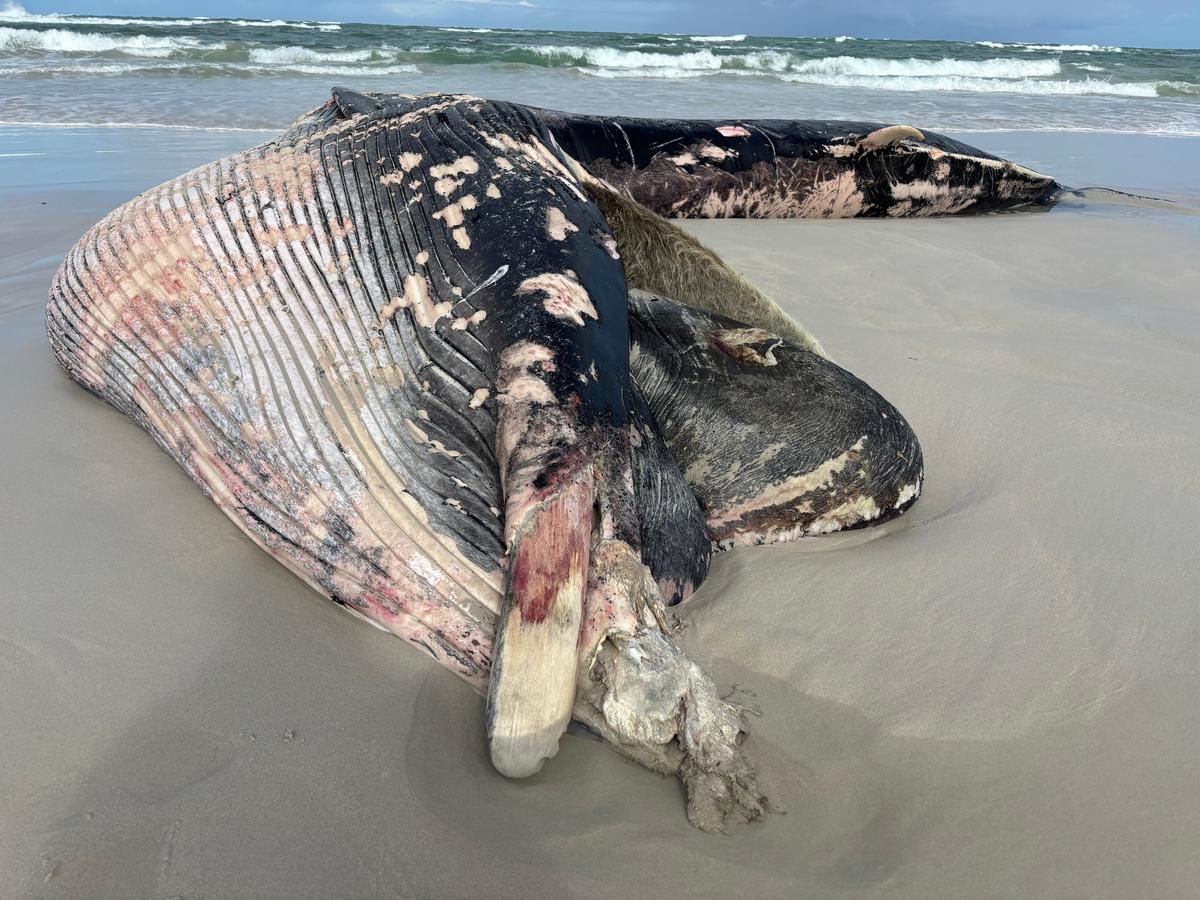
Whale Strike Risk Rises as International Shipping Reroutes Around South Africa
Why It Matters
The growing collision risk endangers recovering whale populations and could prompt regulatory changes that reshape global shipping practices, underscoring an escalating human‑wildlife conflict in a critical maritime corridor.
Key Takeaways
- •Large vessel traffic around Cape of Good Hope quadrupled 2023‑24.
- •Six baleen‑whale species' habitats overlap heavily with new shipping lanes.
- •No mandatory speed limits; voluntary guidelines under discussion.
- •Modeled alternate routes could cut strike risk 20‑50% without longer trips.
- •Cryptic whale mortality likely far exceeds documented ship‑strike strandings.
Pulse Analysis
The Red Sea attacks by Houthi rebels and the recent Strait of Hormuz blockade have forced cargo carriers to reroute around the Cape of Good Hope, sending a flood of large, fast‑moving vessels into South Africa’s nutrient‑rich waters. This region, home to thriving humpback and Bryde’s whale populations and the productive Benguela upwelling, now sees a four‑fold increase in ships cruising above 15 knots, intensifying the overlap between marine traffic and critical whale habitats.
Scientists led by Els Vermeulen combined Global Fishing Watch vessel‑tracking data with species‑distribution models to quantify the collision risk for six baleen‑whale species. Their analysis shows a stark spatial convergence of shipping lanes and whale feeding grounds, with no mandatory speed limits in place. Proposed mitigation includes voluntary 10‑knot speed caps—mirroring U.S. East Coast measures—and the development of alternative routes that could reduce strike probability by 20‑50% while preserving transit efficiency. However, incomplete offshore sighting data hampers precise routing recommendations, highlighting the need for systematic surveys.
The findings have broader implications for the maritime industry and international policy. As whale numbers rebound after decades of protection, the economic cost of potential strikes—ranging from vessel damage to reputational risk—may drive faster adoption of voluntary guidelines and eventually mandatory regulations. Collaborative efforts among South Africa’s Department of Forestry, Fisheries and the Environment, the International Maritime Organization, and shipping firms could set a precedent for balancing trade routes with marine conservation, prompting other high‑traffic corridors to evaluate similar mitigation strategies.
Whale strike risk rises as international shipping reroutes around South Africa
Comments
Want to join the conversation?
Loading comments...