Why It Matters
If correct, the two‑component hypothesis reshapes strategies for indirect dark‑matter detection and could reconcile conflicting gamma‑ray observations, steering the next generation of astrophysical searches.
Key Takeaways
- •Galactic center shows gamma‑ray excess possibly from dark‑matter annihilation
- •Dwarf galaxies lack similar signal, challenging single‑particle models
- •Two‑component dark matter could vary particle ratios across environments
- •Annihilation probability may stay constant yet appear only where ratios match
- •Upcoming Fermi data on dwarfs will test the two‑state hypothesis
Pulse Analysis
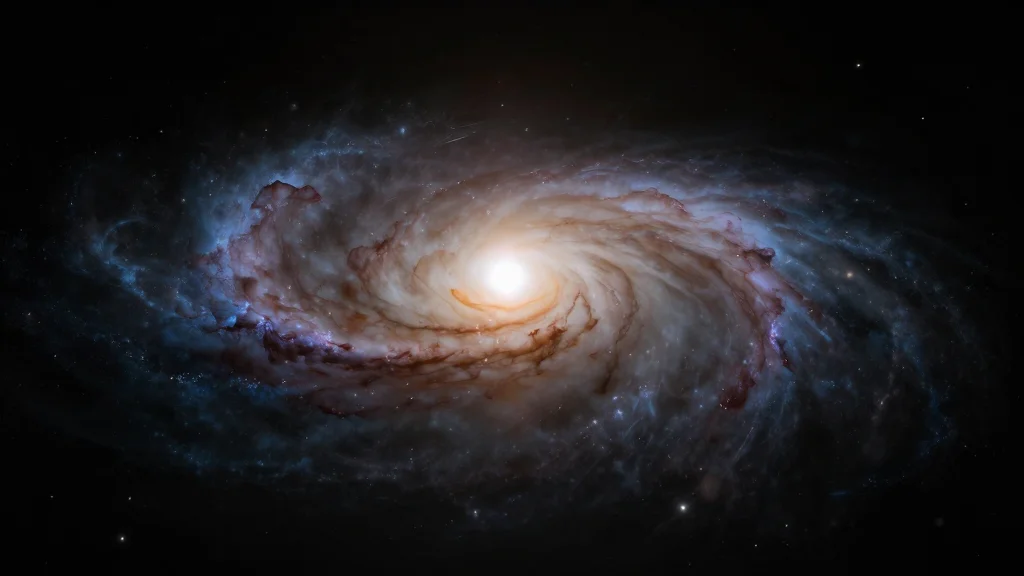
The quest to identify dark matter has long hinged on indirect signals such as high‑energy photons. The persistent gamma‑ray surplus detected by the Fermi Telescope around the Milky Way’s core sparked excitement because it matches predictions for particle annihilation, yet the same signature is conspicuously absent in dwarf spheroidal galaxies—some of the most dark‑matter‑dense objects known. Traditional models assume a single particle species with either velocity‑independent or velocity‑dependent annihilation rates, forcing a binary interpretation: either the excess is astrophysical, or the theory is flawed.
Berlin and colleagues introduce a nuanced alternative: dark matter composed of two closely related particles whose relative abundance can shift with local conditions. In massive galaxies like ours, the two species may coexist in roughly equal numbers, enabling frequent encounters and a detectable gamma‑ray glow. In dwarf galaxies, an imbalance could suppress annihilation despite a constant cross‑section, naturally explaining the missing signal without discarding a dark‑matter origin. This environmental dependence adds a new dimension to model building, prompting theorists to revisit constraints on particle masses, coupling strengths, and cosmological production mechanisms.
The practical payoff lies in upcoming Fermi observations and next‑generation gamma‑ray instruments. More sensitive measurements of dwarf galaxies will either reveal faint emissions consistent with a balanced two‑state mixture or tighten limits that force refinements of the model. Either outcome will sharpen the field’s focus, guiding laboratory searches and informing simulations of structure formation. By offering a flexible framework that bridges contradictory data, the two‑state hypothesis could become a pivotal reference point for both astrophysicists and particle physicists seeking the elusive dark sector.
What if dark matter came in two states?
Comments
Want to join the conversation?
Loading comments...