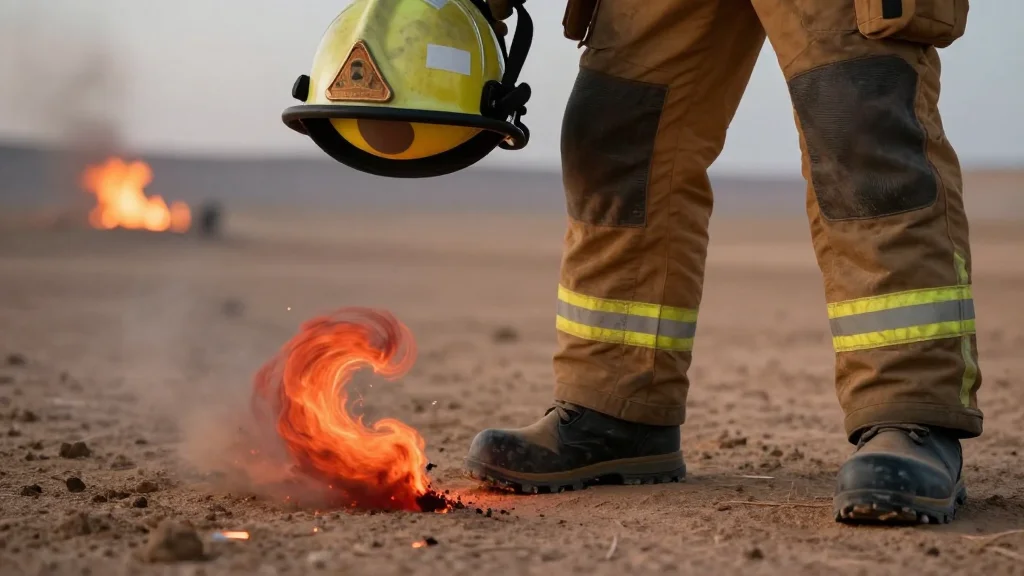
What Is an 'Ash Devil'? Rare Fire Phenomenon Rises in Phelan's Trinity Fire
Why It Matters
Ash devils illustrate how volatile fire behavior can spawn secondary ignition sources, underscoring the need for heightened situational awareness among wildfire responders.
Key Takeaways
- •Ash devils are vortexes of hot ash and embers from wind shear.
- •Trinity fire burned 19 acres, no structures damaged, 50% contained.
- •Phenomenon can ignite spot fires, increasing firefighter safety risks.
- •San Bernardino agencies coordinated to extinguish hot spots and prevent spread.
- •Video shows ash devil forming after crews extinguished a line of flames.
Pulse Analysis
The term “ash devil” describes a short‑lived, tornado‑like vortex that forms when intense heat from a wildfire meets rapidly shifting winds. The resulting wind shear lifts ash, embers and debris into a spinning column that can travel several hundred feet. While the phenomenon is rare, it poses a real threat because the rotating mass can hurl burning material in all directions, potentially igniting new spot fires far from the original flame front. Understanding the physics behind ash devils helps fire managers anticipate sudden flare‑ups and adjust tactics accordingly.
The Trinity fire, sparked on May 1 near Phelan, quickly grew to 19 acres before being declared 50% contained. Although the blaze spared homes, it damaged an unknown number of iconic Joshua trees, highlighting the ecological stakes of even modest wildfires in desert habitats. A coalition of the California Department of Forestry and Fire Protection, San Bernardino County Fire Protection District, Victorville Fire Department, and Apple Valley Fire District coordinated suppression efforts, focusing on hot‑spot removal and perimeter security. Their rapid response limited the fire’s spread and prevented structural loss, demonstrating the effectiveness of inter‑agency collaboration in California’s fire‑prone regions.
For fire professionals, the ash devil sighting serves as a reminder to integrate advanced monitoring tools—such as aerial infrared imaging and real‑time wind modeling—into incident command strategies. Early detection of vortex formation can prompt pre‑emptive evacuations of crews from vulnerable zones and inform the deployment of fire‑retardant drops. Moreover, public education about such phenomena can improve community preparedness, ensuring that residents understand the dynamic nature of wildfire hazards beyond the visible flames.
What is an 'ash devil'? Rare fire phenomenon rises in Phelan's Trinity fire
Comments
Want to join the conversation?
Loading comments...