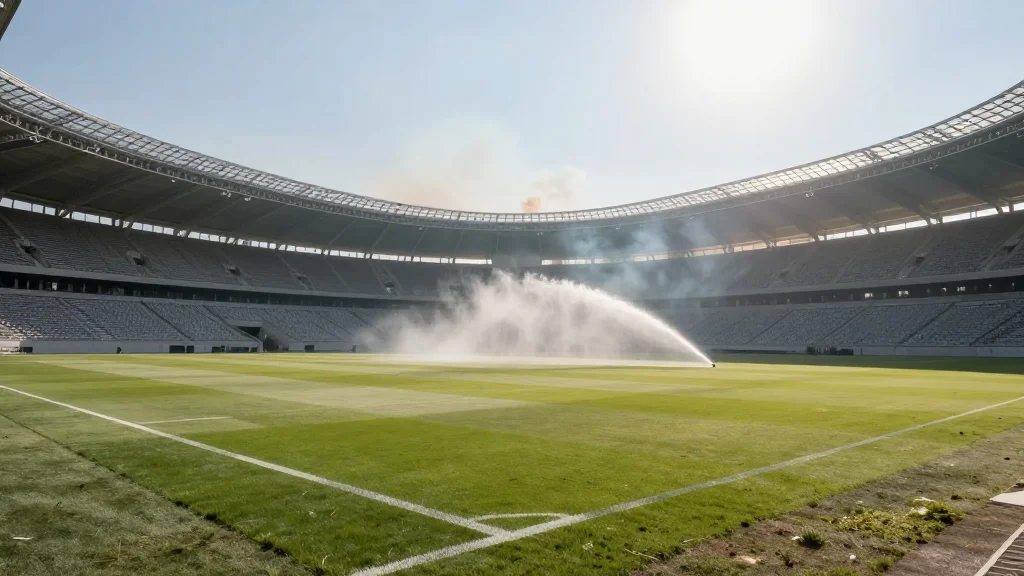
What the World Cup Reveals About Cities’ Growing Heat Risk
Why It Matters
Heat risk threatens player performance, spectator health, and the economic success of mega‑events, while exposing gaps in city climate‑resilience planning that must be addressed now.
Key Takeaways
- •Over half U.S. stadiums face >95°F heat days within 25 years
- •Few World Cup venues have climate‑controlled roofs or cooling systems
- •Urban trees can cut heat‑island effect by ~50%, improving safety
- •Wildfire smoke adds health risk, yet no AQI contingency plans exist
- •Elite athlete protections set precedent for youth sports heat safety
Pulse Analysis
The 2026 World Cup will unfold under unprecedented heat, a symptom of accelerating climate change that forces organizers to move beyond historical averages. Scientists cite Wet‑Bulb Globe Temperature as a more accurate gauge of human stress, and projections show a strong chance that matches will require water breaks or even be halted. This reality pushes host cities to embed heat‑risk modeling into event logistics, from scheduling to emergency services, and highlights the financial stakes of postponements or reduced attendance.
Stadium design emerges as a critical lever. While some venues, like Dallas’s retrofitted baseball park, have added roofs and air‑conditioning, the majority lack built‑in cooling. Experts recommend passive solutions—shade structures, enhanced airflow, and strategic vegetation—that deliver climate resilience at lower cost than full HVAC systems. Urban trees, for instance, can offset roughly half of the heat‑island effect by reflecting sunlight and transpiring moisture, creating cooler corridors for fans walking to and from games.
Beyond heat, wildfire smoke adds a volatile layer of risk, especially for western host cities. The absence of Air Quality Index protocols leaves municipalities scrambling when particulate levels spike, endangering both athletes and vulnerable spectators. The World Cup thus serves as a test case: robust, science‑backed heat protections for elite players can set a precedent for school‑level sports, where resources are scarcer. By institutionalizing comprehensive heat and smoke mitigation plans, cities can protect public health, preserve the integrity of the event, and leave a lasting climate‑adaptation legacy.
What the World Cup reveals about cities’ growing heat risk
Comments
Want to join the conversation?
Loading comments...