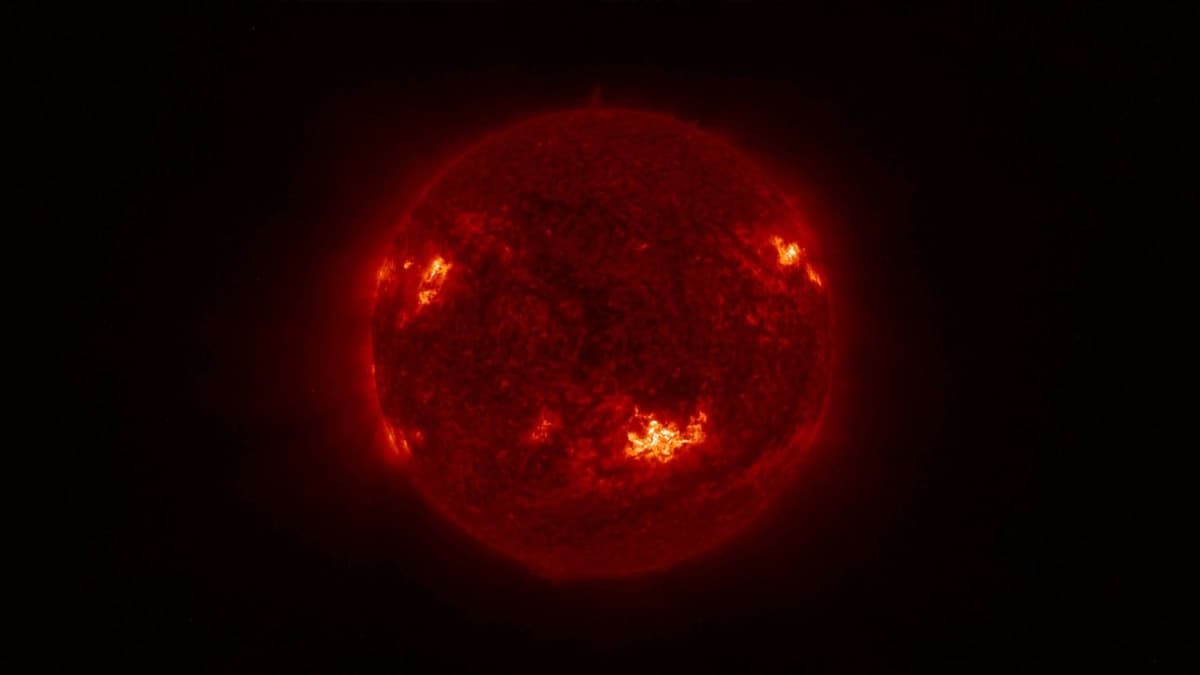
What Will Happen when Our Sun Starts Dying? These 'Stellar Archaeologists' May Have Found a Clue
Companies Mentioned

Elsevier
Why It Matters
Understanding persistent stellar magnetism refines models of solar evolution and informs forecasts of planetary habitability as stars age. It also challenges long‑standing assumptions that many stars, including the Sun, lack significant core magnetic fields.
Key Takeaways
- •Fossil magnetic fields observed on white dwarfs link to red‑giant cores
- •Older white dwarfs show stronger surface magnetism than younger counterparts
- •Shell‑like magnetic structures emerge as stars shed outer layers
- •Magnetic cores could extend Sun's lifespan by mixing hydrogen
- •Fossil‑field theory revives, challenging prior assumptions about stellar magnetism
Pulse Analysis
The discovery of fossilized magnetism on white dwarfs bridges a critical gap in stellar evolution theory. By correlating surface magnetic signatures of ancient white dwarfs with core magnetic fields detected in red‑giant progenitors, astronomers validate a model where magnetic structures survive the dramatic expansion and mass loss of the red‑giant phase. This "fossil‑field" concept, long dismissed, now gains empirical support through a combination of asteroseismic data and sophisticated simulations, offering a coherent narrative for how magnetic energy is redistributed as stars contract into dense remnants.
For the Sun, the implications are profound. If the Sun’s core harbors a magnetic field, it could facilitate the transport of hydrogen from outer layers back into the core, potentially extending the main‑sequence lifetime beyond current estimates. Conversely, strong internal magnetism might alter the red‑giant expansion, affecting whether Earth is engulfed or spared. The revised timeline could shift expectations for the habitability window of Earth‑like planets orbiting Sun‑type stars, making magnetic diagnostics a priority for future solar observations.
Beyond our own star, the revived fossil‑field theory prompts a reassessment of magnetic activity across the galaxy. It suggests that magnetic fields are a common, persistent feature of solar‑mass stars, influencing everything from stellar wind strength to the formation of planetary nebulae. Upcoming missions such as ESA's PLATO and NASA's XRISM will provide higher‑resolution asteroseismic and X‑ray data, enabling astronomers to test these models on larger samples. As the field converges, the industry anticipates new tools for predicting stellar lifecycles, which could impact everything from exoplanet surveys to long‑term space‑flight planning.
What will happen when our sun starts dying? These 'stellar archaeologists' may have found a clue
Comments
Want to join the conversation?
Loading comments...