What You Would See and Feel While Traveling Near the Speed of Light
Companies Mentioned
Why It Matters
Understanding these relativistic visual effects bridges the gap between abstract physics and public perception, enhancing science communication and grounding sci‑fi narratives in real science.
Key Takeaways
- •Acceleration, not speed, is the only physiological concern for travelers
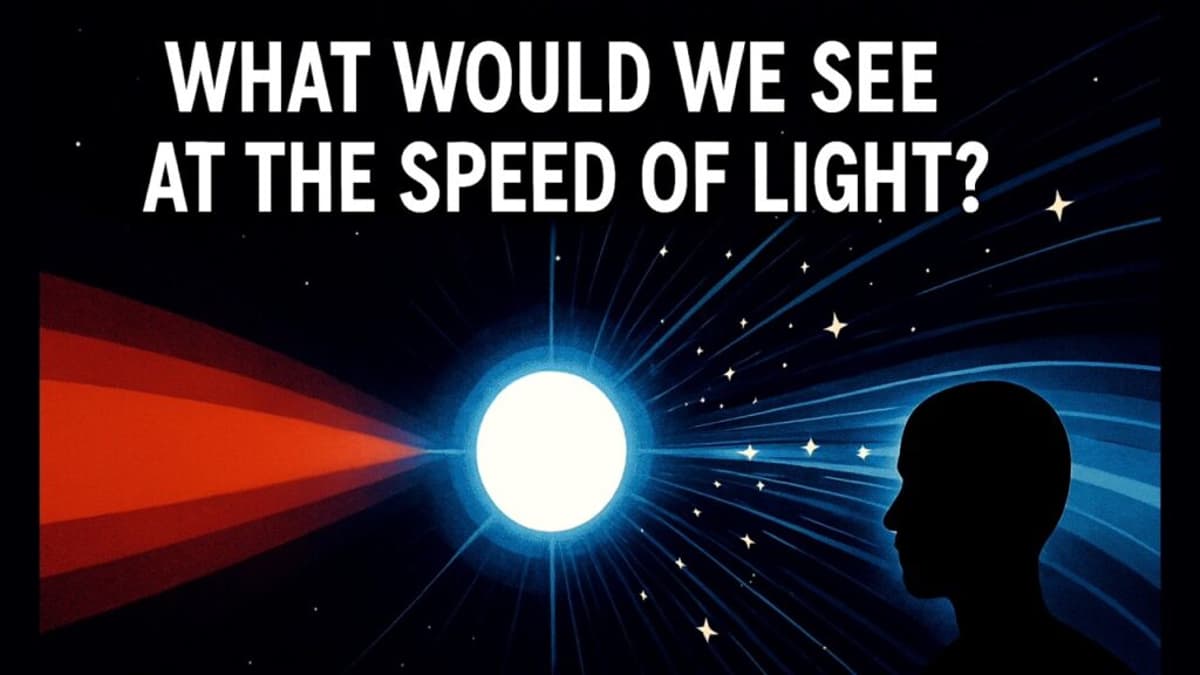
- •Light‑speed travel causes extreme forward‑directional light concentration (relativistic aberration)
- •Colors shift blue ahead, red behind due to Doppler effect
- •The universe appears contracted; rear view darkens as speed increases
- •Time dilation makes external events appear in slow motion from the ship
Pulse Analysis
Relativistic aberration is the most striking visual consequence of approaching light speed. As a vessel accelerates, photons from all directions are beamed into a narrow cone ahead, making the star field appear to crowd into a brilliant point. Simultaneously, the Doppler effect stretches wavelengths: light from the front shifts toward blue, while the rear reddens and eventually fades. This dual shift not only creates a dazzling forward glare but also darkens the aft sky, giving the impression of a one‑way tunnel through space.
These phenomena have practical implications for both education and entertainment. Aerospace simulators that incorporate accurate relativistic rendering can give pilots and engineers an intuitive feel for high‑velocity navigation, while filmmakers and game designers gain a scientifically grounded toolkit for crafting immersive sci‑fi experiences. By visualizing time dilation—where external clocks tick slower relative to the ship—audiences grasp why distant events seem to crawl, reinforcing Einstein’s counter‑intuitive predictions with concrete imagery.
Looking ahead, researchers are exploring laboratory analogs, such as ultra‑fast laser pulses, to mimic relativistic light‑cone compression on a tabletop scale. While true near‑light‑speed travel remains speculative, the growing fidelity of visualizations helps demystify complex physics and fuels public imagination. As the line between scientific theory and popular culture blurs, accurate depictions of relativistic travel become essential for informed discourse on future propulsion concepts and the broader narrative of humanity’s cosmic aspirations.
What You Would See and Feel While Traveling Near the Speed of Light
Comments
Want to join the conversation?
Loading comments...