Why It Matters
The discovery imposes order on a previously chaotic sensory system, opening a pathway to targeted therapies for smell loss and its mental‑health consequences.
Key Takeaways
- •Researchers sequenced ~5.5 million mouse olfactory neurons across 300 mice
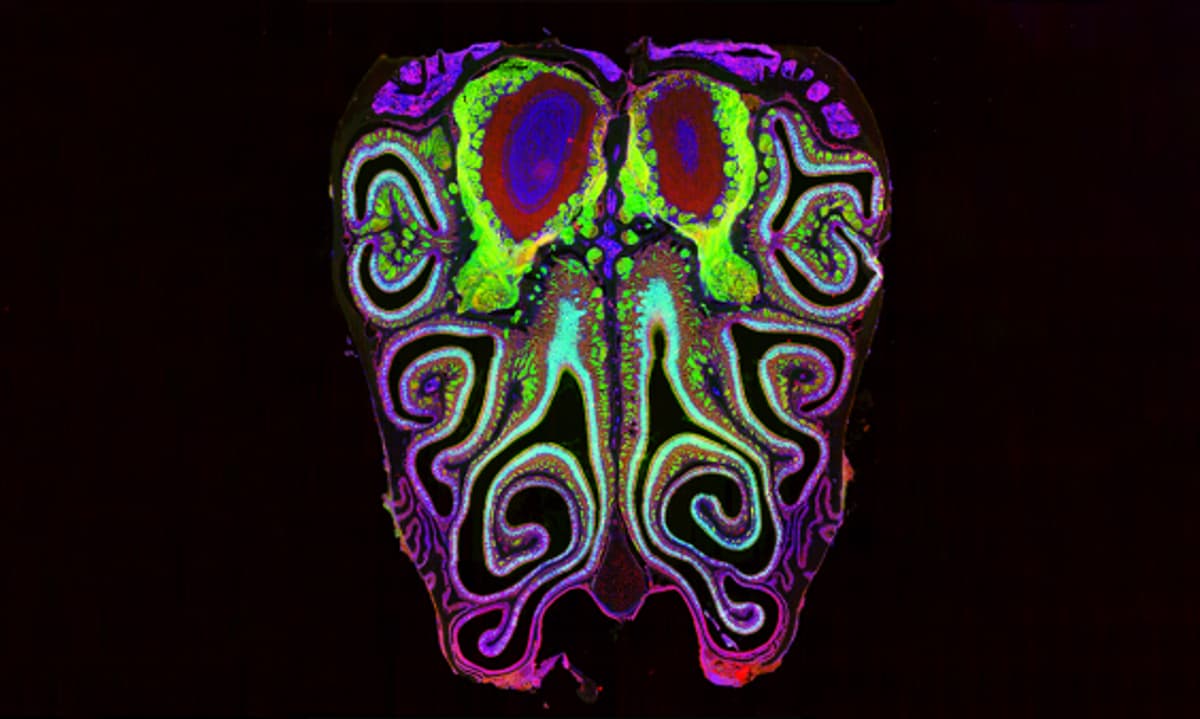
- •Discovered horizontal stripe pattern of odor receptors in nasal epithelium
- •Pattern aligns with corresponding map in the olfactory bulb of the brain
- •Findings may guide new treatments for smell loss and related depression
Pulse Analysis
The olfactory system has long been the outlier among sensory modalities that exhibit clear topographic organization. While the cochlea and retina map frequencies and wavelengths onto precise neural regions, smell receptors were assumed to be haphazardly distributed in the nasal lining. This assumption limited our ability to model how odor information is encoded and processed, creating a blind spot in sensory neuroscience. By establishing that mouse odor receptors follow a structured, stripe‑like arrangement, the new study restores symmetry to our understanding of sensory mapping.
The breakthrough hinged on massive single‑cell RNA sequencing, a technique that reads the genetic signature of individual neurons. The team profiled roughly 5.5 million cells, a scale unprecedented for neural tissue, allowing them to pinpoint which receptor genes each neuron expressed and where those neurons resided in the nasal epithelium. The resulting atlas showed a consistent gradient from the dorsal to ventral nose, with each stripe corresponding to a specific receptor family. Crucially, these nasal stripes line up with parallel zones in the olfactory bulb, confirming a continuous, ordered pathway from scent detection to brain processing.
Beyond basic science, the findings have immediate translational relevance. If human olfactory epithelium mirrors the mouse pattern, clinicians could develop precision therapies that target specific receptor zones, potentially restoring smell after injury or disease. Since anosmia is linked to depression and reduced quality of life, a map‑guided approach could accelerate drug discovery and regenerative strategies. Moreover, the methodology sets a precedent for mapping other seemingly disordered neural circuits, reinforcing the value of large‑scale single‑cell profiling in modern neuroscience.
Where Brains Process Smell
Comments
Want to join the conversation?
Loading comments...