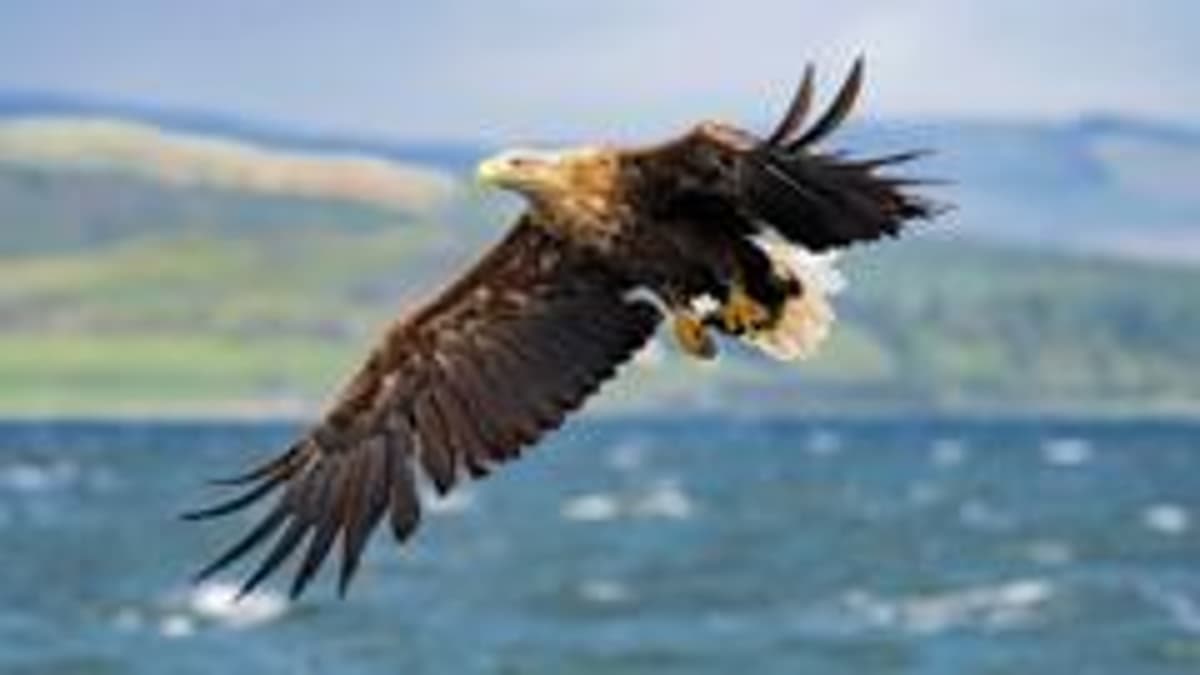
White-Tailed Eagles to Be Released in Exmoor Despite Farmer Warnings
Why It Matters
The release tests the balance between biodiversity restoration and agricultural livelihoods, setting a precedent for future wildlife re‑introductions in the UK. Successful mitigation could unlock broader conservation projects, while failure may deepen rural opposition to environmental policies.
Key Takeaways
- •Up to 20 white‑tailed eagles to be released over three years
- •All birds fitted with satellite tags for tracking
- •Farmers fear lamb losses up to $38,000 annually
- •Natural England approved licence emphasizing stakeholder collaboration
- •Scottish releases previously caused significant lamb predation concerns
Pulse Analysis
White‑tailed eagles, Britain’s largest raptor, are poised for a major comeback in Exmoor National Park. After successful trials on the Isle of Wight and a historic re‑introduction on Scotland’s Isle of Rum in 1975, the latest scheme will see twenty tagged eagles dispersed across the southern landscape over three years. The birds, with wingspans reaching 2.4 m, will be monitored in real time, allowing scientists to map their movements and assess ecological impacts while demonstrating a data‑driven approach to species recovery.
The rollout has ignited fierce resistance from the farming community, which points to recent Scottish case studies where eagles allegedly claimed two‑thirds of a farmer’s lamb crop, translating to roughly $38,000 in annual losses. Organizations such as the National Farmers’ Union Scotland and the National Sheep Association demand robust safeguards, arguing that unchecked predation could jeopardize farm viability and mental health. While some studies suggest eagles primarily scavenge carrion, the uncertainty fuels calls for compensation schemes and proactive deterrent measures to protect vulnerable flocks.
Natural England’s licence frames the project as a collaborative effort, pledging close monitoring and adaptive management. Satellite telemetry will feed into impact assessments, informing mitigation strategies such as guardian dogs, visual deterrents, and targeted compensation. If the Exmoor release demonstrates that conservation goals can coexist with agricultural interests, it could serve as a template for re‑introducing other threatened species across the UK. Conversely, a mismanaged rollout may reinforce rural skepticism toward government‑led environmental initiatives, shaping future policy debates on biodiversity versus land‑use priorities.
White-tailed eagles to be released in Exmoor despite farmer warnings
Comments
Want to join the conversation?
Loading comments...