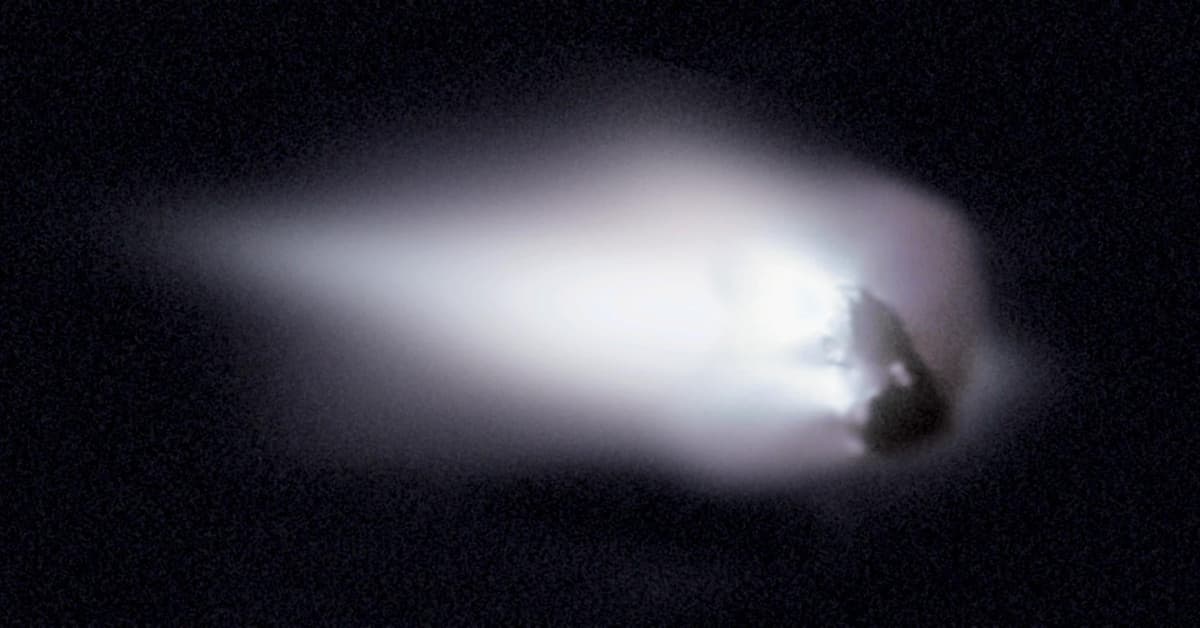
Why Are Interstellar Comets So Weird? Part 2: Why Comets Are Like Cats
•March 11, 2026
0
Why It Matters
Understanding 3I/ATLAS reshapes models of comet formation and informs future resource‑extraction or deflection strategies for exotic small bodies. The data also validates investment in rapid‑response space telescopes and deep‑space missions.
Key Takeaways
- •3I/ATLAS rich in nickel, low water content
- •Brightness increased faster than typical comets
- •Delayed coma and tail formation, then unexpected acceleration
- •Interstellar comets highlight diversity of small bodies
- •Observations drive new models of comet formation
Pulse Analysis
The detection of 3I/ATLAS marks the second confirmed interstellar comet, offering a rare laboratory for studying material that formed beyond our solar system. Its anomalously high nickel concentration challenges conventional cometary chemistry, suggesting that planet‑forming disks elsewhere may retain heavier metals in icy bodies. Researchers are now revisiting formation models to accommodate metal‑laden, water‑poor comets, a shift that could influence how space agencies prioritize spectroscopic surveys of future interstellar visitors.
Beyond pure science, the odd behavior of 3I/ATLAS carries practical implications for the emerging space‑resource sector. Nickel‑rich comets could become attractive targets for in‑situ resource utilization, providing a portable supply of a metal essential for spacecraft construction and propulsion. However, the comet’s rapid brightening and late‑stage acceleration underscore the need for agile tracking systems and adaptable mission architectures, prompting firms to invest in rapid‑deployment probes capable of rendezvousing with fast‑moving, compositionally exotic objects.
Finally, the public fascination with “cat‑like” comets fuels media attention that can accelerate funding for next‑generation observatories. By highlighting the uniqueness of interstellar objects, the scientific community builds a compelling narrative for policymakers, linking fundamental research to broader goals such as planetary defense and deep‑space exploration. As more interstellar bodies are cataloged, the industry will likely see a surge in collaborative projects that blend academic insight with commercial ambition, turning today’s curiosities into tomorrow’s strategic assets.
Why Are Interstellar Comets So Weird? Part 2: Why Comets Are Like Cats
0
Comments
Want to join the conversation?
Loading comments...