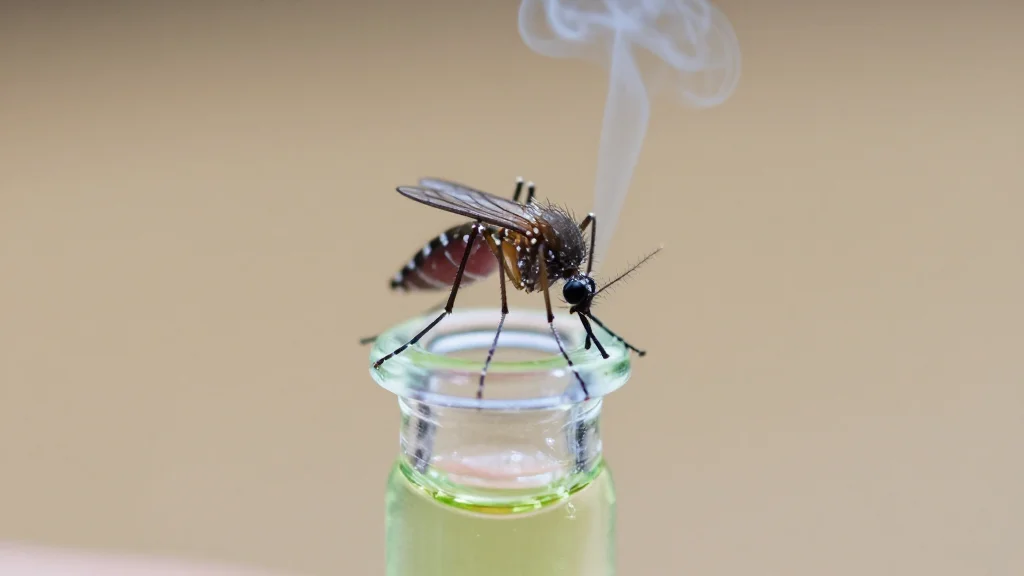
Why Are some People Mosquito Magnets? Clues Are Emerging
Why It Matters
Understanding the precise cues that draw mosquitoes enables better personal protection and informs public‑health strategies against vector‑borne diseases as their range widens.
Key Takeaways
- •Mosquitoes use a blend of 27 odor compounds to locate hosts
- •Higher body temperature and CO₂ from beer increase bite risk
- •Pregnant women emit more 1‑octen‑3‑ol, attracting Aedes aegypti
- •Blood type, skin color, and hair have no proven effect
- •Climate‑driven mosquito range expansion raises disease exposure in new regions
Pulse Analysis
Recent laboratory work has moved beyond the old myth that blood type determines mosquito preference. Researchers at the Institute of Research for Development and collaborators in Sweden exposed Aedes aegypti to 42 volunteers and isolated 27 volatile organic compounds that trigger the insects’ olfactory receptors. Among these, the skin‑derived molecule 1‑octen‑3‑ol, sometimes called mushroom alcohol, stood out as a potent attractant, especially in pregnant participants. The findings confirm that carbon dioxide, body heat, and a complex odor profile—not genetics or hair color—drive host selection, and that even modest changes such as drinking beer can amplify these signals.
The implications stretch far beyond personal annoyance. As global temperatures rise, species like the tiger mosquito (Aedes albopictus) are colonising temperate zones previously free of such vectors, bringing diseases like chikungunya and dengue closer to new populations. The 2025 northward incursion of chikungunya into France’s Alsace region exemplifies how climate‑induced range shifts increase exposure risk. Public‑health agencies can leverage the new chemical insights to refine surveillance traps, develop targeted repellents, and advise communities on behavioural adjustments during peak transmission periods.
For consumers, the research translates into actionable steps: wear loose, breathable clothing, use EPA‑approved repellents, and limit alcohol intake before outdoor activities. In the longer term, biotech firms are exploring synthetic blends that mask or neutralise the identified odor cues, paving the way for personalized protection products. Continued interdisciplinary studies—combining entomology, microbiome science, and climate modeling—will be essential to stay ahead of evolving mosquito behavior and safeguard public health.
Why are some people mosquito magnets? Clues are emerging
Comments
Want to join the conversation?
Loading comments...