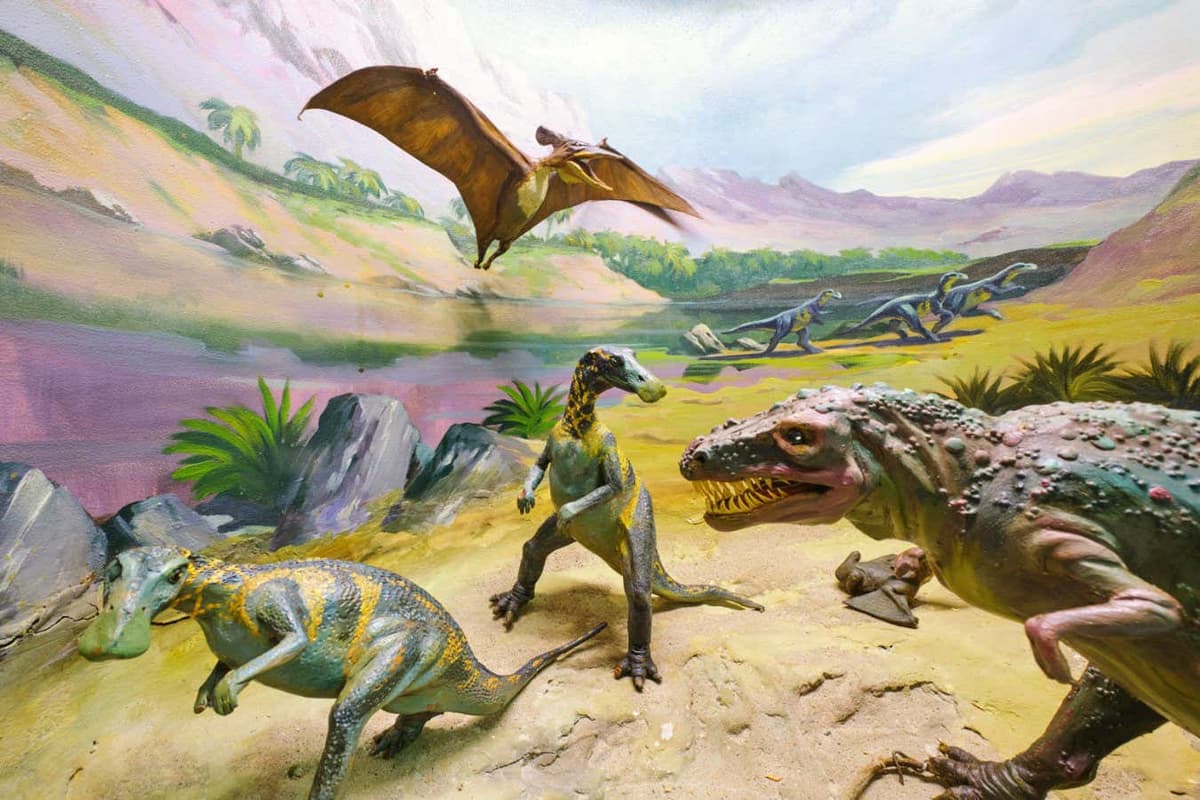
Why Dinosaurs Lived Much More Complex Lives than We Thought
Why It Matters
Accurate reconstructions of dinosaur behavior reshape paleobiology, influencing museum narratives and educational content, while refining models of ancient ecosystem dynamics for evolutionary research.
Key Takeaways
- •New fossil evidence challenges classic pack‑hunting narratives.
- •Modern comparative methods reveal diverse dinosaur social structures.
- •Re‑analysis of Deinonychus‑Tenontosaurus site suggests opportunistic hunting.
- •Display features like Triceratops frills likely served multiple functions.
- •Pterosaur size evolution linked to niche exploitation beyond bird analogs.
Pulse Analysis
The past decade has delivered a torrent of new fossils, high‑resolution CT scans, and biomechanical studies that are forcing scientists to revisit the storybooks of the Mesozoic era. By applying techniques from modern zoology—such as tracking herd dynamics in elephants or studying predator cooperation in wolves—researchers can test long‑standing hypotheses about dinosaurs with a rigor that was previously impossible. This interdisciplinary approach is revealing that dinosaur behavior was far more variable than the monolithic images popularized by cinema.
One of the most iconic narratives, the image of Velociraptor packs hunting in coordinated assaults, rests on a handful of fossil assemblages that have been re‑interpreted in recent years. The famed Deinonychus‑Tenontosaurus bone bed, once touted as proof of pack hunting, now appears to represent a predator‑scavenger interaction or a chance accumulation of carcasses. Such revisions underscore the importance of taphonomic context and caution against projecting modern analogues onto extinct taxa without robust evidence. The emerging consensus suggests many theropods were opportunistic hunters, occasionally cooperating but largely operating as solitary or loosely associated individuals.
These scientific refinements have ripple effects beyond academia. Museums are updating exhibit narratives to emphasize behavioral diversity and uncertainty, while educators are incorporating the latest findings into curricula that stress critical thinking over myth. As paleontologists continue to harness AI‑driven image analysis and isotopic chemistry, our picture of dinosaur societies will likely become even more intricate, offering fresh insights into how complex ecosystems evolve over geological timescales.
Why dinosaurs lived much more complex lives than we thought
Comments
Want to join the conversation?
Loading comments...