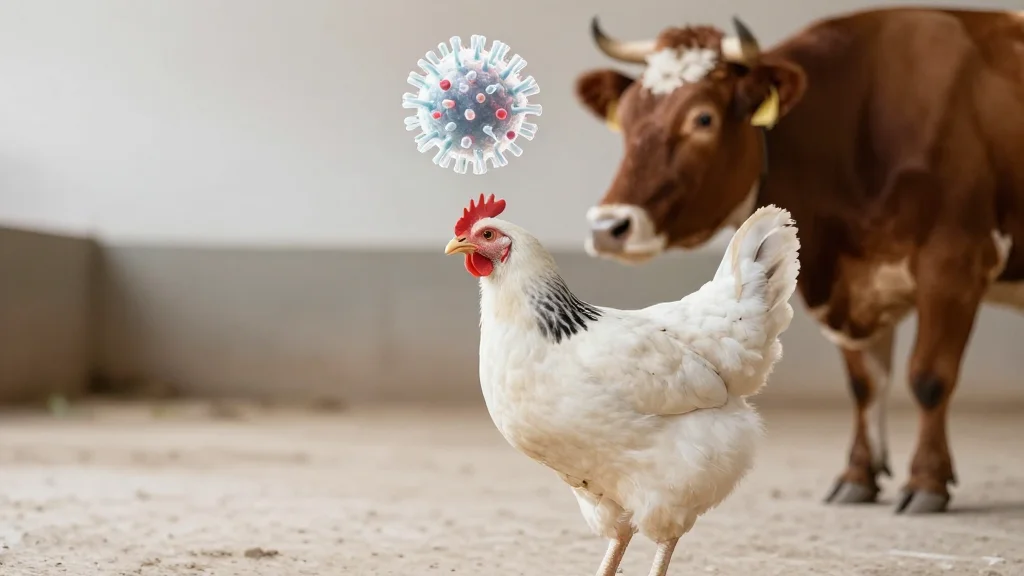
Why Experts Say Now Is the Time to Vaccinate US Dairy Cattle Against Bird Flu
Why It Matters
A cattle vaccination program would safeguard a $4 billion dairy sector, protect farm workers, and act as a barrier against a potential human pandemic, delivering both economic and public‑health benefits.
Key Takeaways
- •H5N1 infected >1,000 US dairy herds across 19 states.
- •Outbreak cost estimated $14 billion, $4 billion dairy losses.
- •Vaccinating cattle could cut virus circulation and spillover risk.
- •Cattle show lasting immunity; trials show months‑long protection.
- •Dairy industry infrastructure enables rapid vaccine rollout.
Pulse Analysis
The H5N1 avian influenza that ripped through U.S. poultry flocks in 2022 has evolved into a multi‑species threat, crossing into dairy cattle by 2024. More than 1,000 herds across 19 states have reported infections, translating into a $14 billion hit to the national economy and roughly $4 billion in direct dairy losses. Beyond the balance sheet, the virus presents a clear zoonotic danger: each animal infection is an additional roll of the dice for genetic mutations that could enable human transmission. With 71 confirmed U.S. cases and two fatalities, public‑health officials are watching the spillover potential closely.
Vaccination offers the most direct method to blunt this trajectory. Studies of naturally infected cows reveal robust, year‑long antibody responses that prevent viral shedding upon re‑exposure, a hallmark of effective herd immunity. Early experimental vaccines have replicated that protection, generating neutralizing antibodies that persist for several months. By reducing viral load in milk and on farms, a vaccine would not only keep cattle healthy but also lower environmental contamination, decreasing the odds that the virus reaches poultry, wildlife, or farm workers.
The dairy sector is uniquely positioned to execute a rapid immunization campaign. Routine calf and adult vaccinations are already embedded in herd‑management protocols, and electronic health records track each animal’s status, enabling precise targeting and monitoring. Internationally, nations such as Mexico and China have leveraged poultry vaccines to curb H5N1 spread, demonstrating that imperfect but widely administered vaccines can dramatically reduce outbreak severity. Policymakers now face a narrow window: authorize a cattle vaccine, fund distribution, and integrate it into existing veterinary services before the virus entrenches further.
Why experts say now is the time to vaccinate US dairy cattle against bird flu
Comments
Want to join the conversation?
Loading comments...