Why It Matters
Understanding how microbial mats preserve trace fossils refines reconstructions of early animal ecosystems and guides exploration for ancient biosignatures on Earth and elsewhere. The insight also aids petroleum geologists in identifying reservoir-quality sandstones stabilized by similar processes.
Key Takeaways
- •Microbial mats bound sand, creating stable surfaces for trace fossils.
- •Blackberry Hill mats captured jellyfish, mollusk, and arthropod trackways.
- •Mat preservation revealed 500‑million‑year‑old animal behaviors and storm events.
- •Modern tidal‑flat mats mirror Cambrian growth stages, confirming analogs.
Pulse Analysis
Microbial mats are layered communities of microorganisms that secrete sticky polymers, cementing sand grains into durable sheets. In Cambrian tidal flats, these sheets acted like natural tarps, stabilizing the substrate and allowing even the softest animal impressions to be recorded before waves could erase them. By binding sediments, the mats not only preserved morphology but also locked in chemical signatures that later researchers can decode for paleoenvironmental clues.
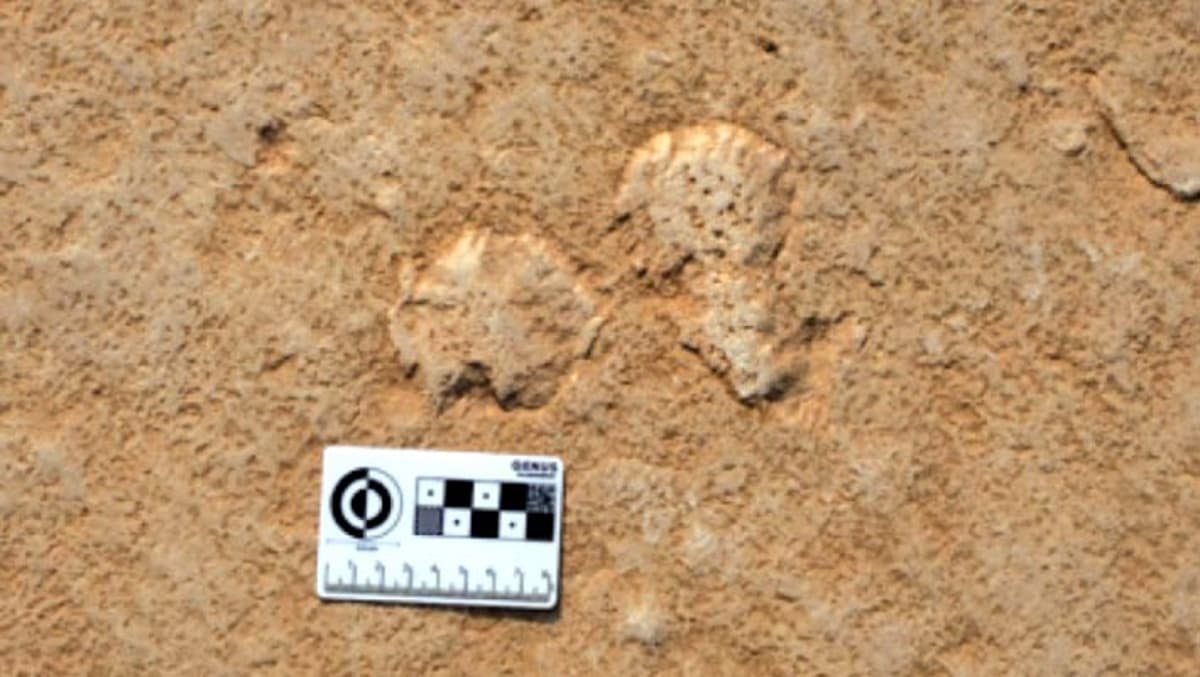
At the Blackberry Hill site in Wisconsin, the fossil record showcases the power of these microbial fabrics. Trace fossils such as jellyfish imprints, mollusk grazing trails, and the iconic Protichnites trackways of the arthropod Mosineia are exquisitely detailed, revealing behavior, locomotion, and habitat preferences of organisms that lived half a billion years ago. Seasonal growth patterns and storm‑induced mat fragments further document climate variability, offering a rare, high‑resolution snapshot of Cambrian coastal dynamics.
Modern tidal‑flat mats on today’s coastlines exhibit the same growth, desiccation, and decay cycles described in the Cambrian record, providing a living laboratory for scientists. This continuity validates the use of microbial mat analogs in petroleum geology to predict sand‑stone quality and in astrobiology to recognize potential biosignatures on Mars or icy moons. Ongoing research aims to map mat distribution globally, improving our ability to interpret ancient sedimentary archives and to anticipate where similar preservation mechanisms might operate in the future.
Why Geologists Love Pond Scum
Comments
Want to join the conversation?
Loading comments...