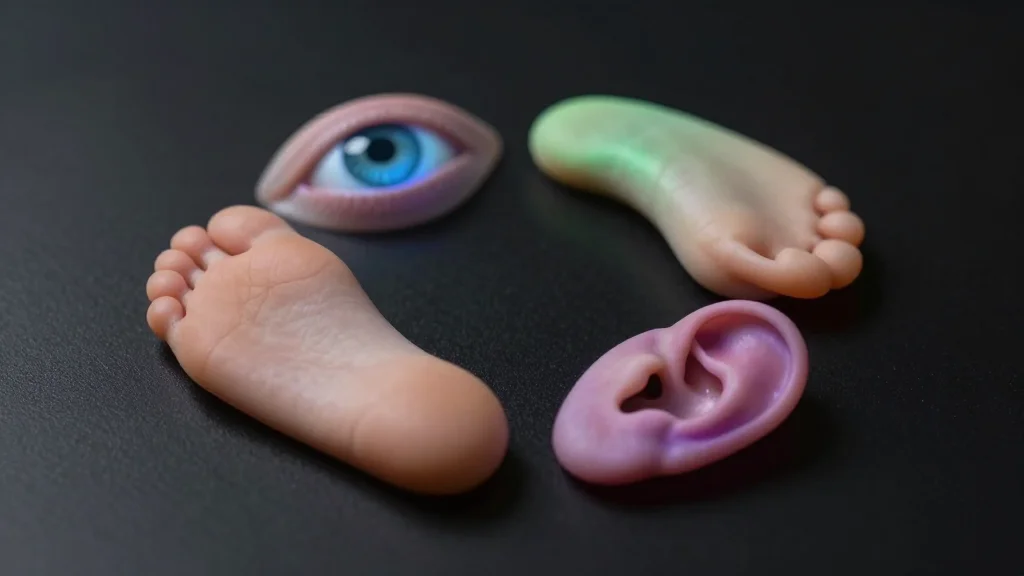
Why some Neuroscientists Now Believe We Have up to 33 Senses
Why It Matters
Recognizing additional senses reshapes product design, marketing, and health interventions by leveraging multisensory integration, offering businesses new avenues to influence consumer behavior and improve wellbeing.
Key Takeaways
- •Researchers propose 22–33 distinct sensory modalities beyond traditional five.
- •Proprioception, vestibular balance, interoception, and agency are classified as separate senses.
- •Multisensory integration influences perception of taste, texture, and visual cues.
- •Studies show noise alters taste perception, enhancing umami on flights.
- •Interactive exhibits let public experience size‑weight illusion and cross‑modal effects.
Pulse Analysis
The notion that humans have only five senses is giving way to a richer taxonomy grounded in neuroscience. Scholars like Charles Spence argue that the brain continuously monitors internal and external cues—proprioceptive feedback about limb position, vestibular signals that maintain balance, and interoceptive awareness of heart rate or hunger—each constituting a discrete sense. This reconceptualization reflects how sensory pathways converge in the cortex, creating a unified perception that cannot be neatly partitioned into sight, sound, touch, taste, and smell alone.
Understanding these cross‑modal interactions opens practical opportunities for businesses. For instance, ambient noise in an aircraft can suppress sweet and sour tastes while leaving umami relatively untouched, explaining why tomato juice tastes richer at 30,000 feet. Marketers can harness scent‑taste pairings to enhance product appeal, while designers of wearable tech can exploit proprioceptive cues to improve ergonomics and user engagement. The size‑weight illusion demonstrated in interactive exhibits illustrates how visual expectations alter tactile judgments, a principle that can be applied to packaging and retail displays.
Looking ahead, the expanded sensory framework promises innovations in health monitoring, virtual reality, and personalized experiences. Sensors that tap into interoceptive signals could detect early signs of stress or disease, while immersive environments might synchronize auditory, visual, and haptic feedback to create more convincing simulations. Companies that integrate this nuanced understanding of human perception into their strategies will gain a competitive edge, turning the science of senses into a tangible market advantage.
Why some neuroscientists now believe we have up to 33 senses
Comments
Want to join the conversation?
Loading comments...