Why the Ideal Magnet Remains Out of Reach
Why It Matters
The breakthrough would free EVs, wind turbines and other high‑power devices from rare‑earth dependence, delivering strategic and economic security. It also showcases quantum computing’s potential to solve previously intractable materials‑science problems.
Key Takeaways
- •ARPA‑E funds $3.9 M for quantum‑enabled rare‑earth‑free magnet research
- •Current magnets rely on NdFeB, a rare‑earth‑dominant material
- •Quantum computers could simulate electron spin interactions beyond classical limits
- •100 logical qubits with error correction targeted by 2030 for material discovery
- •Hybrid workflow combining AI, quantum, and experiments may finally yield viable magnets
Pulse Analysis
The global demand for permanent magnets has surged with electric vehicles, wind turbines, and advanced robotics. Today’s workhorses—neodymium‑iron‑boron (NdFeB) alloys—depend on rare‑earth elements like neodymium and dysprosium, commodities heavily concentrated in China. This creates price volatility and geopolitical risk, driving a search for rare‑earth‑free alternatives. A magnet matching NdFeB performance without scarce elements would lower costs, diversify supply chains, strengthen national security, and accelerate the clean‑energy transition. Moreover, eliminating rare earths reduces environmental impacts associated with mining and processing.
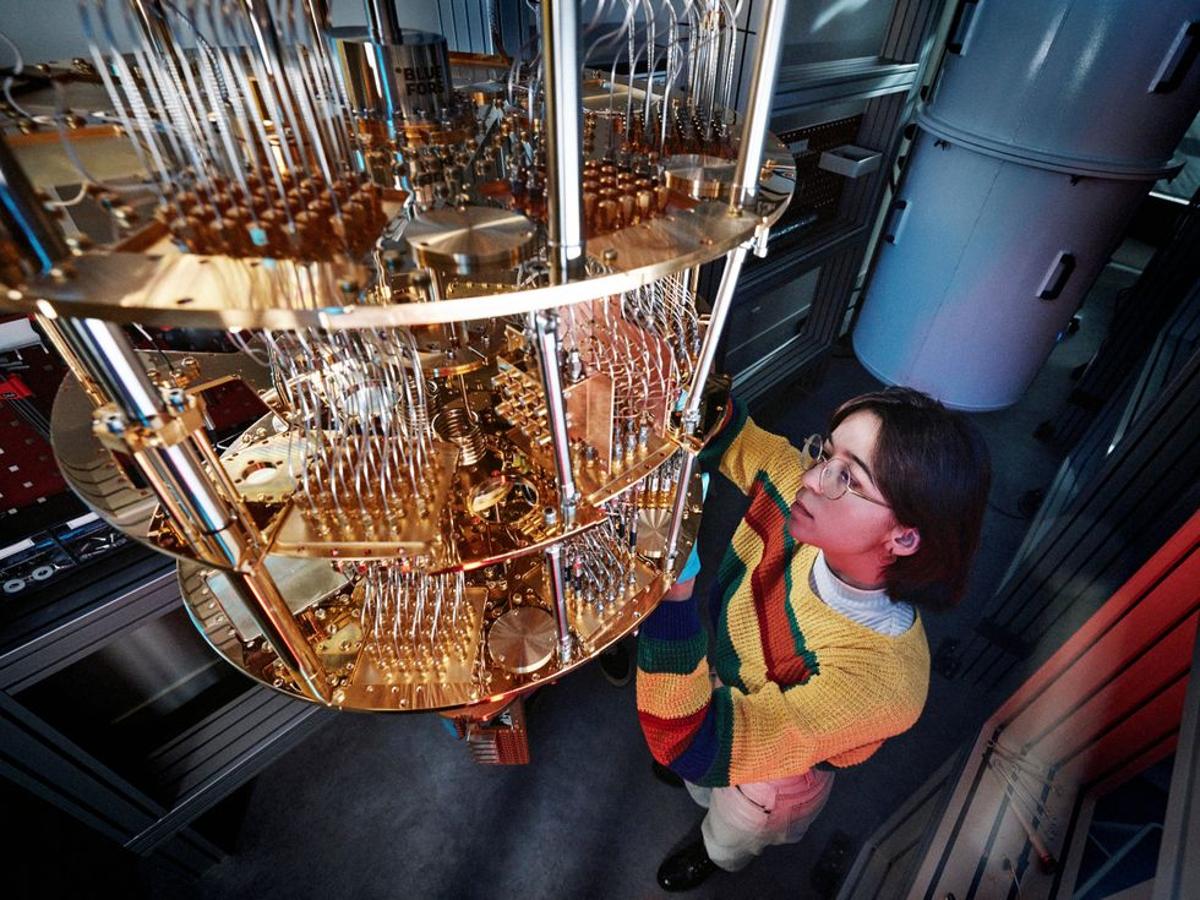
Classical supercomputers cannot reliably predict new magnetic compounds because the problem scales exponentially with interacting electron spins. Capturing 3d and 4f orbital effects, magnetic anisotropy, and thermal noise demands solving a many‑body quantum problem beyond classical reach. Quantum computers use superposition and entanglement to evaluate many spin configurations simultaneously, offering a path through the astronomically large material space. The ARPA‑E‑funded partnership of Alice & Bob, Los Alamos, and GE Vernova has secured $3.9 million to build a 100‑logical‑qubit, error‑corrected processor by 2030, aimed at computational chemistry of magnets. Such a processor would also enable high‑fidelity simulations of other quantum materials, expanding its commercial relevance.
Discovery will likely rely on a hybrid workflow that couples quantum simulations with AI‑driven screening and experimental testing. Universities and labs are already assembling databases of known magnets and training generative models to suggest novel chemistries; quantum calculations can then refine the most promising candidates. Achieving the 2030 quantum milestone could compress material‑development cycles from years to months, disrupting the rare‑earth market and lowering electric‑vehicle drivetrain costs. Ultimately, the United States would gain strategic autonomy over a critical component of clean‑energy technologies. A successful pipeline could also attract private investment, accelerating the broader quantum‑materials ecosystem.
Why the Ideal Magnet Remains Out of Reach
Comments
Want to join the conversation?
Loading comments...