Why It Matters
Understanding the charge generation in volcanic ash clarifies atmospheric electricity and informs models of planet formation, impacting both climate science and astrophysics.
Key Takeaways
- •Quartz grains acquire negative charge when heated, shedding carbon layer
- •Charged ash explains lightning in eruptions and sandstorms
- •Findings suggest electrostatic forces aided early planet formation
- •Study used acoustic levitation to isolate particle interactions
Pulse Analysis
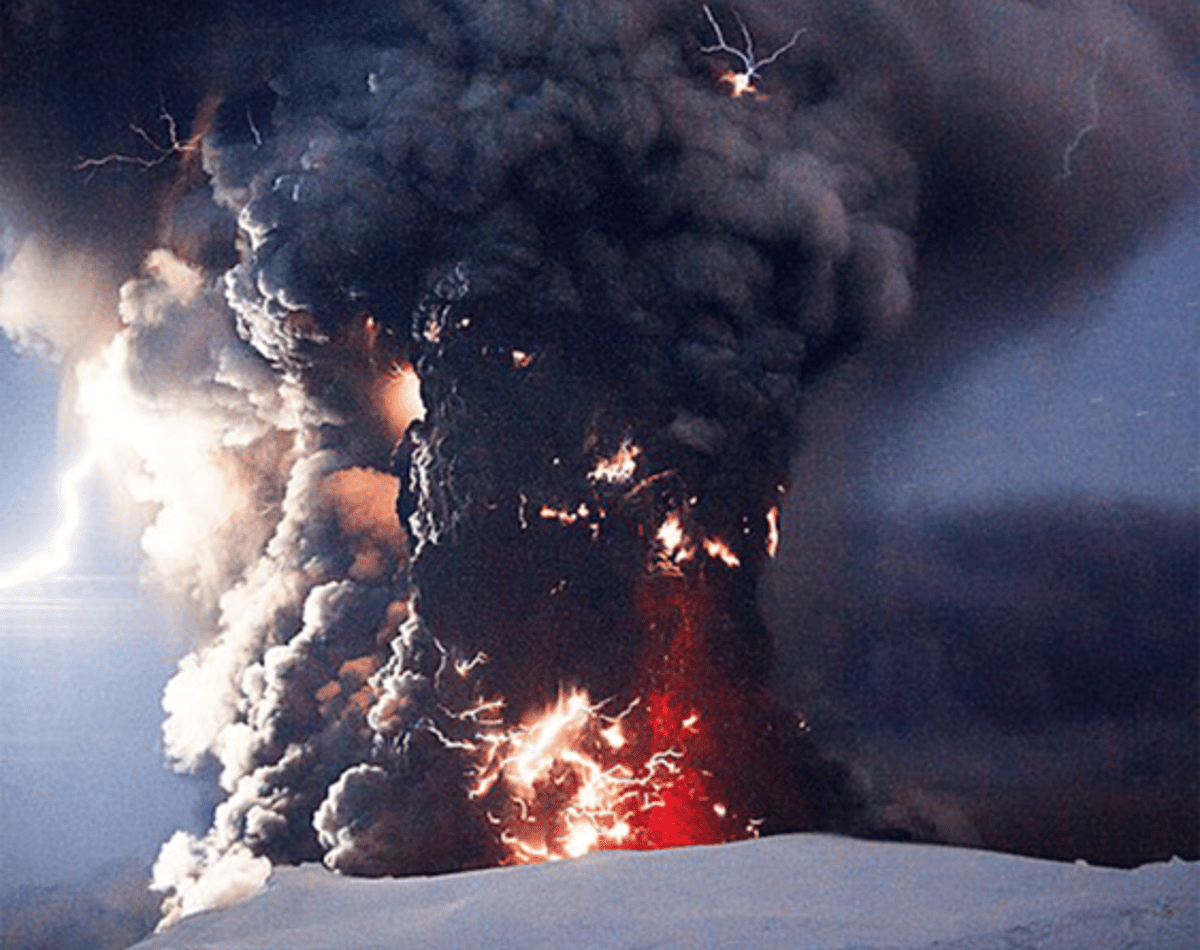
Volcanic lightning has long fascinated observers, from ancient chroniclers like Pliny the Younger to modern scientists. While thunderclouds rely on water droplets to separate charge, eruptions eject massive amounts of ash and sand, creating a different electrical environment. Recent laboratory work shows that when silicate particles such as quartz are heated, a microscopic carbon coating vaporizes, leaving the grains with a net negative charge. This charge accumulation, amplified by countless collisions in a turbulent plume, can reach the breakdown voltage of air, producing the bright, jagged bolts that streak from volcanic columns.
The breakthrough came from using acoustic levitation to suspend individual quartz grains, eliminating external contact charges and isolating the intrinsic charging process. By systematically varying temperature and particle composition, the team demonstrated that the phenomenon is not unique to quartz; other natural oxides behave similarly. This insight reframes how we view dust electrification in deserts and industrial settings, where static discharge can pose safety hazards. Moreover, the study bridges geophysics and materials science, highlighting the role of surface chemistry—specifically carbon residues—in governing electrical behavior of insulating particles.
Beyond Earth, the findings have profound implications for planetary science. Early solar system models propose that micron‑scale dust grains coalesced into planetesimals, a process that may have been accelerated by electrostatic attraction. If carbon‑laden silicates can self‑charge under solar heating, they could have sparked the initial aggregation steps leading to planet formation. Researchers now aim to incorporate these charging dynamics into simulations of protoplanetary disks, potentially revising timelines for how quickly rocky worlds emerge. The work also opens avenues for engineered materials that harness controlled charging for energy harvesting or dust mitigation in space missions.
Why Volcanoes Sometimes Shoot Out Lightning
Comments
Want to join the conversation?
Loading comments...