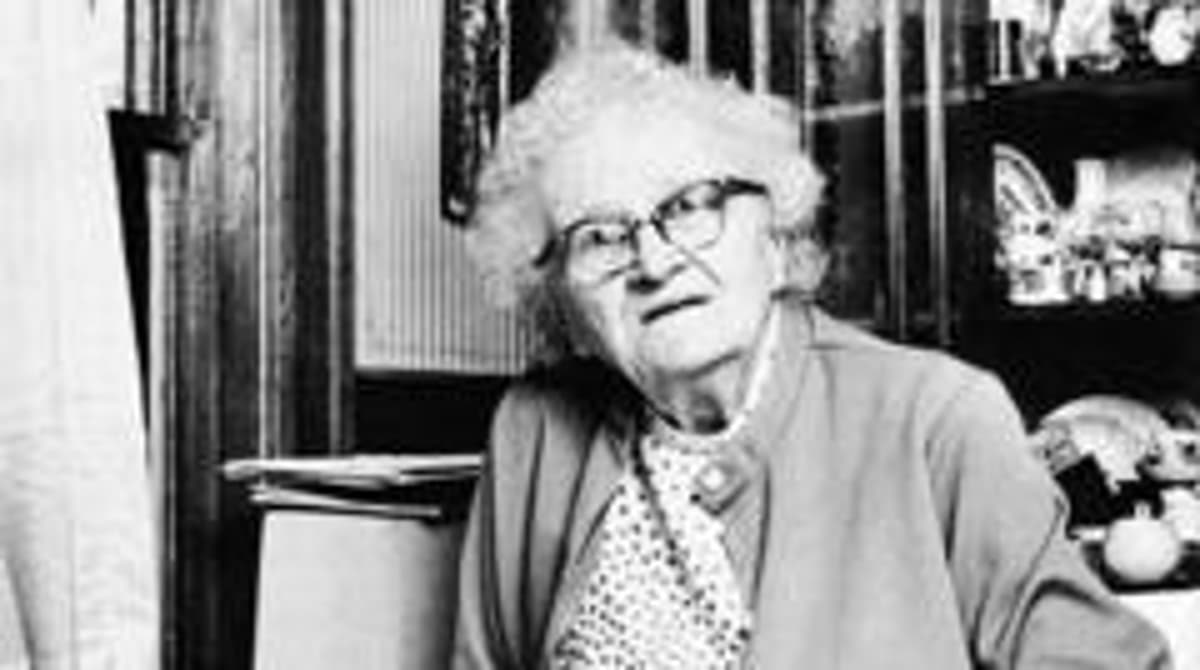
Woman Who Unlocked the Secrets of the Stars Honoured
Companies Mentioned
Why It Matters
The recognition underscores the lasting impact of Payne‑Gaposchkin's scientific breakthroughs and signals a broader cultural shift toward celebrating women’s contributions in STEM fields.
Key Takeaways
- •First woman to earn Harvard astronomy PhD honored with blue plaque
- •1925 thesis proved stars are mostly hydrogen and helium
- •Youngest astronomer listed in American Men of Science, 1927
- •First female full professor at Harvard's Faculty of Arts and Sciences
- •English Heritage plaque highlights her perseverance against gender barriers
Pulse Analysis
Cecilia Payne‑Gaposchkin’s recent commemoration by English Heritage brings renewed attention to a pioneer whose work fundamentally altered our understanding of the cosmos. By installing a blue plaque at her Notting Hill childhood home, the organization not only celebrates her personal journey—from a scholarship at Newnham College to a historic doctorate at Harvard—but also places her alongside other scientific luminaries recognized in London’s built heritage. This public acknowledgment serves as a tangible reminder that groundbreaking research can emerge from modest beginnings, reinforcing the narrative that scientific excellence transcends geography and era.
Payne‑Gaposchkin’s 1925 doctoral thesis was a watershed moment for astrophysics. At a time when the composition of stars was speculative, she applied emerging spectroscopic techniques to demonstrate that hydrogen and helium dominate stellar matter, a conclusion initially met with skepticism but later validated and built upon by generations of astronomers. Her subsequent research on stellar atmospheres and variable stars expanded the field’s methodological toolkit, influencing everything from stellar evolution models to modern exoplanet studies. The lasting relevance of her calculations is evident in contemporary measurements of the Milky Way’s elemental abundances, which continue to echo her early predictions.
Beyond the scientific legacy, the plaque highlights ongoing efforts to rectify historical gender imbalances in STEM recognition. By publicly honoring a woman who broke multiple glass ceilings—first to earn a Harvard astronomy PhD, first female full professor in Harvard’s Faculty of Arts and Sciences—English Heritage contributes to a broader cultural shift that values diverse contributions to science. This act of remembrance not only educates the public about a pivotal figure but also inspires future generations of women to pursue careers in astronomy and related disciplines, reinforcing the importance of inclusive representation in the scientific narrative.
Woman who unlocked the secrets of the stars honoured
Comments
Want to join the conversation?
Loading comments...