Why It Matters
Accurate metrology is essential for the LSST’s scientific goals, enabling reliable dark‑matter and dark‑energy research. Highlighting women leaders reinforces diversity and innovation in high‑tech measurement fields.
Key Takeaways
- •LSST camera captures 60 petabytes of data annually
- •Rubin Observatory will map southern sky nightly
- •Metrology ensures telescope alignment over a decade
- •Women leaders bridge precision engineering and astrophysics
- •CMS 2026 spotlights women’s impact in metrology
Pulse Analysis
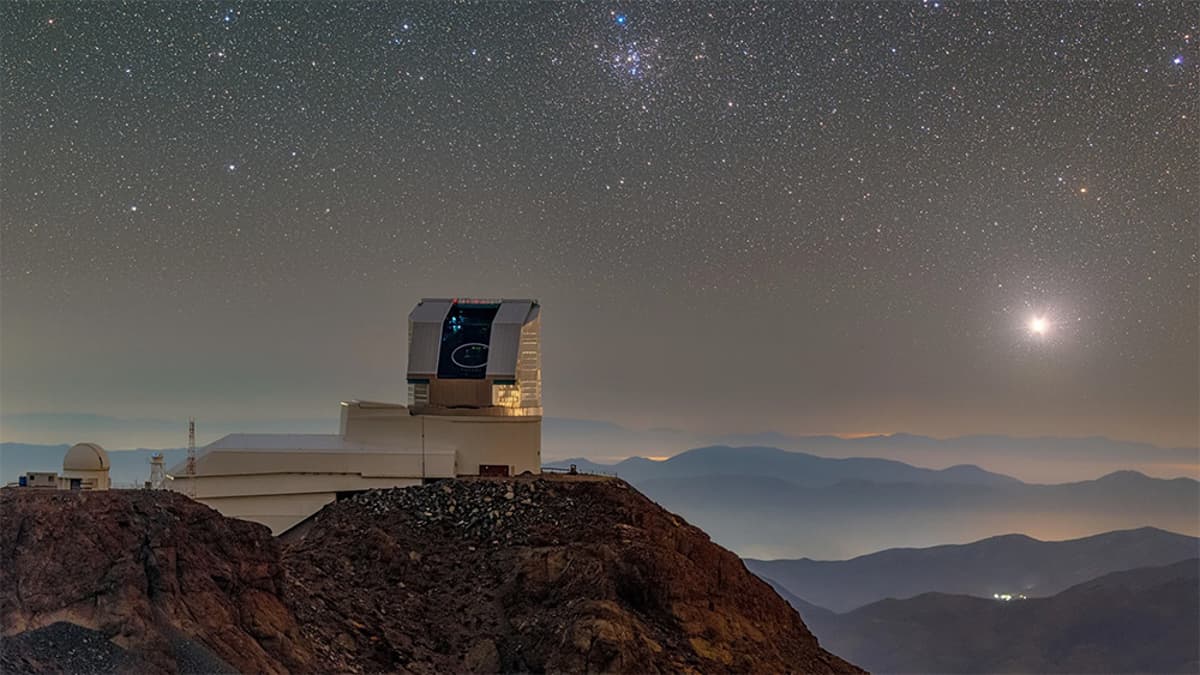
The Vera C. Rubin Observatory’s Legacy Survey of Space and Time represents a watershed in astronomical data collection, with its 3.2‑gigapixel camera delivering unprecedented depth and cadence. Generating roughly 60 petabytes of imagery—equivalent to every selfie ever uploaded—the survey will chart the dynamic universe, probing dark matter, dark energy, and transient phenomena. Achieving this scale hinges on meticulous metrology: sub‑micron alignment of multi‑mirror optics, temperature‑controlled detector calibration, and repeatable performance across ten years of nightly observations.
At the intersection of precision engineering and cosmic discovery stands Sandrine J. Thomas, a metrology expert now steering the LSST’s operational excellence. Her keynote at the 2026 Coordinate Metrology Society conference underscores how dimensional measurement tools, traditionally used on factory floors, are repurposed to keep a mountain‑top telescope in perfect focus. Thomas also highlights the lineage of women like Vera Rubin, whose galaxy‑rotation work unveiled dark matter, and modern engineers who translate that legacy into today’s high‑tech instrumentation. This narrative reinforces the business case for investing in diverse talent pipelines that blend mechanical rigor with scientific ambition.
The broader implications extend beyond astronomy. The LSST’s petabyte‑scale data stream fuels advances in AI‑driven image analysis, high‑performance computing, and cloud storage solutions, creating market opportunities for tech firms specializing in big‑data infrastructure. Moreover, the collaboration between metrology societies and observatories exemplifies a cross‑disciplinary model that can accelerate innovation in sectors ranging from semiconductor manufacturing to autonomous vehicle sensing. As the LSST begins its decade‑long sky sweep, the precision practices honed by metrologists will continue to shape our understanding of the cosmos and drive commercial technology forward.
Women Who Measure the Universe and Chart the Skies
Comments
Want to join the conversation?
Loading comments...