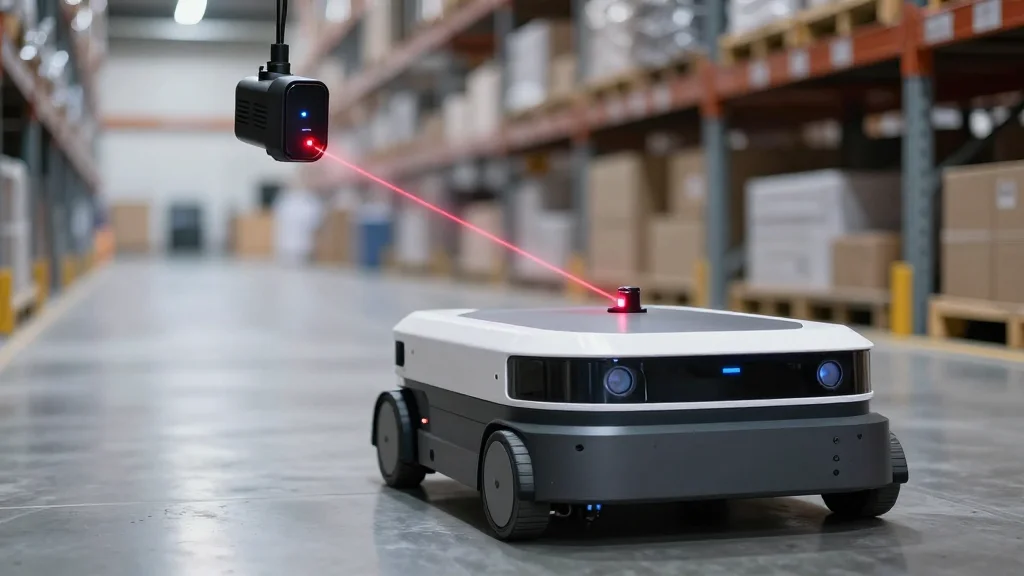
“World First” Power-Beaming Breakthrough, as Laser Tech Wirelessly Electrifies Robot for 24 Hours
Companies Mentioned
Why It Matters
The breakthrough could eliminate battery swaps for autonomous robots, extending operational time and reducing downtime while dramatically lowering energy costs for logistics and drone services. It signals a shift toward wireless power infrastructure that may reshape supply‑chain automation and aerial delivery markets.
Key Takeaways
- •Aquila Earth beamed 4 kWh to a moving robot for 24 hours
- •Record: highest laser power transferred to a dynamic platform
- •Robot traveled 25 km using only laser power, minimal battery backup
- •Laser cost dropped from $120k to $6k, enabling commercial viability
- •Company targets commercial laser‑powered drones by 2027
Pulse Analysis
Wireless power transmission has long been a research curiosity, but Aquila Earth’s 24‑hour laser‑beaming test marks a practical turning point. By directing a 4‑kilowatt‑hour infrared beam at a moving robot, the company achieved the highest power level ever delivered to a mobile platform and the longest uninterrupted operation. The robot’s 25‑kilometre trek on light alone demonstrates that laser power can replace conventional battery packs for certain autonomous systems. Rivals such as Mitsubishi Heavy Industries and SpaceX are also exploring directed‑energy solutions, yet Aquila’s ground‑based approach sidesteps the high launch costs that plague space‑to‑earth concepts.
The economic upside is compelling. Aquila reports that a kilowatt‑class laser can now be sourced for about $6,000, a steep drop from the $120,000 units it evaluated in 2022. This price compression, combined with the ability to keep robots and drones running indefinitely, could slash operational expenses for warehouses, fulfillment centers, and aerial inspection services. Eliminating frequent battery changes reduces labor, downtime, and waste, while the constant power supply enables higher payloads and longer missions, making laser‑powered drones attractive for logistics firms seeking to scale last‑mile delivery.
Despite the promise, several hurdles remain. Safety regulations will need to address the risk of high‑power infrared beams intersecting with personnel or wildlife, and the technology must reliably shut off when obstacles are detected. Scaling the system to industrial volumes will require robust tracking and alignment mechanisms, especially for fast‑moving drones. Nevertheless, Aquila’s roadmap to commercial deployment by 2027, backed by a $3 million funding round and emerging partnerships with major drone manufacturers, suggests the market is ready to test large‑scale implementations. If the company can prove reliability and cost‑effectiveness, laser power could become a cornerstone of the next generation of autonomous logistics.
“World first” power-beaming breakthrough, as laser tech wirelessly electrifies robot for 24 hours
Comments
Want to join the conversation?
Loading comments...