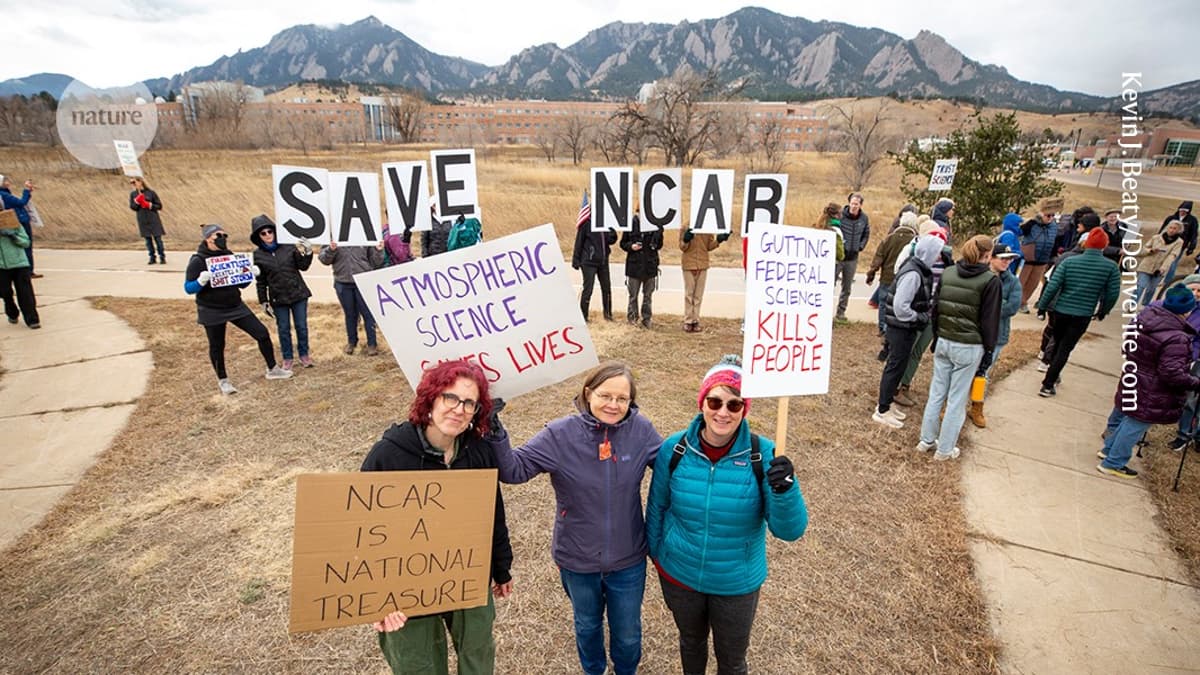
World-Leading Climate Centre Takes Trump Administration to Court
Why It Matters
NCAR underpins U.S. and global weather forecasting, climate modeling, and AI‑driven extreme‑event research; its disruption would reverberate across finance, agriculture, and disaster‑response sectors.
Key Takeaways
- •UCAR sued NSF to block NSF's plan to dismantle NCAR.
- •NSF aims to transfer NCAR’s supercomputing centre to other entities.
- •Judge will decide quickly, outcome will affect climate modeling resources.
- •Potential disruption to weather forecasts and AI climate research.
- •NCAR’s loss would erase decades of atmospheric science expertise.
Pulse Analysis
The National Center for Atmospheric Research (NCAR) has long been the backbone of U.S. climate science, operating a suite of supercomputers, aircraft, and satellite‑data programs that feed into daily weather forecasts and long‑term climate projections. Funded primarily through a contract with the National Science Foundation (NSF), NCAR collaborates with roughly 130 universities via UCAR, delivering data that power everything from agricultural planning to insurance risk models. Its computational capacity also supports cutting‑edge artificial‑intelligence studies that aim to predict extreme weather events with unprecedented accuracy.
Under the Trump administration, the White House’s budget office instructed the NSF in late 2025 to restructure NCAR to align with “administration priorities,” a euphemism for curbing what officials label as climate alarmism. The NSF responded by soliciting proposals to reallocate NCAR’s assets, notably its flagship supercomputing centre in Cheyenne, Wyoming, and announced a tentative transfer plan before the public comment deadline. UCAR argues that the rapid timeline bypasses required procedural safeguards, while the NSF maintains no final decision has been made. The legal showdown in Colorado reflects a broader clash between scientific institutions and a political agenda seeking to reshape federal research funding.
The stakes extend well beyond academia. Financial markets rely on NCAR’s climate projections to price climate‑related risk, while emergency managers use its forecasts to allocate resources during hurricanes, wildfires, and floods. A disruption or loss of NCAR’s data pipelines could degrade forecast accuracy, increase insurance premiums, and hamper AI models that inform infrastructure resilience. The judge’s upcoming ruling will therefore shape not only the future of a premier research facility but also the reliability of the climate information that underpins critical economic and public‑safety decisions across the United States.
World-leading climate centre takes Trump administration to court
Comments
Want to join the conversation?
Loading comments...