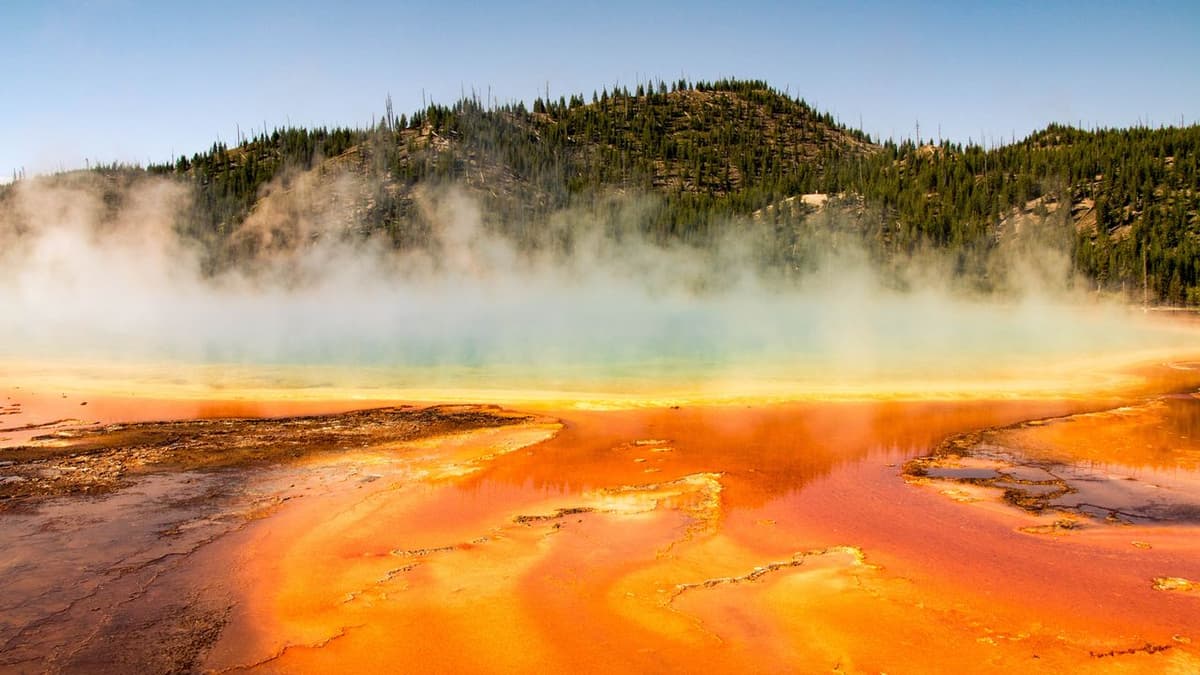
Yellowstone's Volcano May Be Fueled in a Very Different Way than We Thought
Why It Matters
Understanding the true heat source reshapes eruption forecasting for Yellowstone, a high‑risk supervolcano, and offers a transferable framework for assessing other caldera hazards.
Key Takeaways
- •Tectonic stretching and slab rollback heat Yellowstone magma without a mantle plume.
- •3‑D model integrates plate motion, mantle structure, and lithospheric density.
- •Competing forces open lithosphere, directing magma migration toward the caldera.
- •Findings improve eruption forecasts for Yellowstone and similar supervolcanoes.
- •Approach applicable to Toba, Taupo, and northeastern China volcanoes.
Pulse Analysis
The debate over Yellowstone’s heat engine has long centered on a deep mantle plume versus shallow crustal processes. By demonstrating that tectonic extension and the subduction of the ancient Farallon slab can supply sufficient thermal energy, the new research overturns the plume paradigm that has dominated volcanic textbooks for decades. This shift matters because it ties volcanic activity directly to observable plate‑scale dynamics, allowing scientists to monitor measurable surface deformation and seismicity as proxies for magma heating.
The authors’ 3‑D simulation merges paleogeographic reconstructions, present‑day mantle tomography, and lithospheric density variations to map a ‘translithospheric’ plumbing system. The model reveals how opposing forces—westward crustal stretching and slab‑induced down‑warping—create a conduit that channels mantle‑derived melt toward the caldera. Such mechanistic insight refines probabilistic eruption models, enabling more precise estimates of eruption timing, magnitude, and style. For emergency managers and policymakers, this translates into clearer risk communication and better‑targeted mitigation strategies for the millions living downstream of the Yellowstone hotspot.
Beyond Yellowstone, the methodological framework offers a template for other high‑hazard caldera complexes. By applying similar tectonic‑thermal coupling analyses to Indonesia’s Toba, New Zealand’s Taupo, and volcanic fields in northeastern China, researchers can evaluate whether comparable crust‑mantle interactions drive their magmatic systems. This cross‑regional applicability promises to unify volcanic hazard assessment under a common physical basis, fostering collaborative monitoring networks and informing global volcanic risk reduction initiatives.
Yellowstone's volcano may be fueled in a very different way than we thought
Comments
Want to join the conversation?
Loading comments...