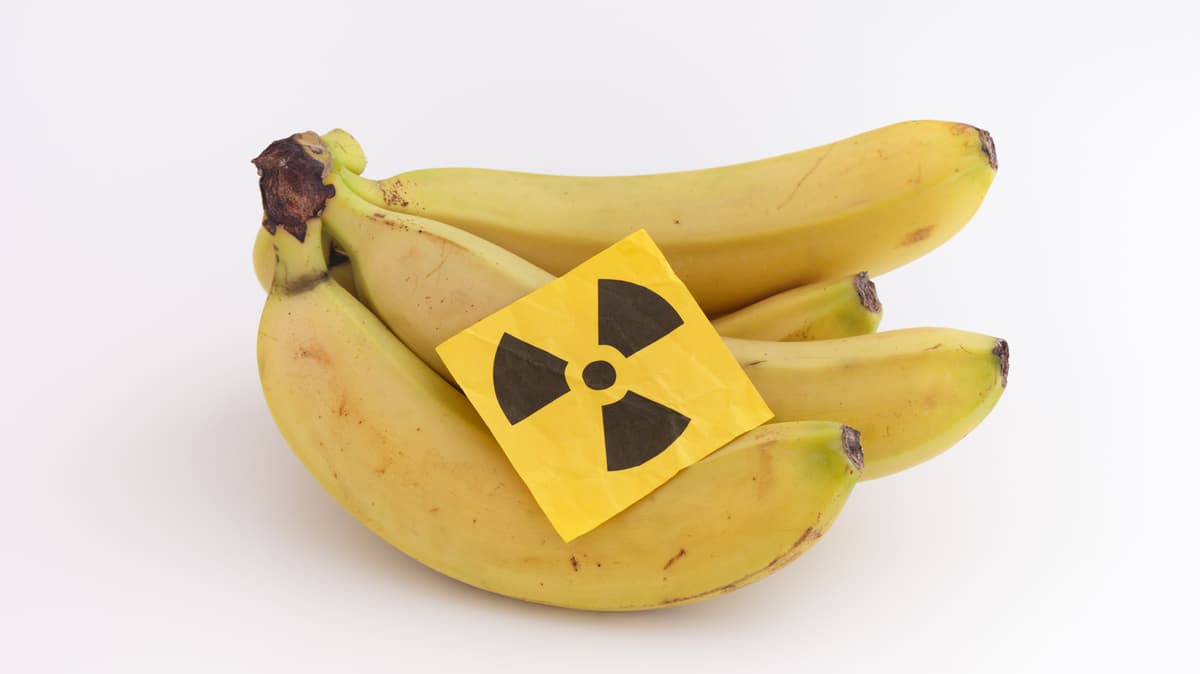
Yes, Bananas Are Radioactive — But They're Still Safe To Eat
Why It Matters
Understanding the low‑level radioactivity in common foods dispels myths and helps consumers assess real health risks, reinforcing confidence in food safety standards.
Key Takeaways
- •A banana emits about 0.1 microsievert of radiation.
- •Potassium‑40 makes up 0.012% of natural potassium.
- •100 million bananas would reach lethal radiation dose.
- •Airport scanners add radiation equivalent to 2.5 bananas.
- •Brazil nuts are similarly mildly radioactive due to potassium.
Pulse Analysis
Potassium‑40, a naturally occurring isotope, is the source of the faint radioactivity in bananas. Though only 0.012% of the potassium atoms decay, the cumulative effect translates to roughly 0.1 microsievert per fruit—a figure that aligns with the average daily background radiation most people receive from the environment. By converting this exposure into familiar terms, such as the radiation added by an airport security scan, the article makes abstract scientific data accessible to a broad audience.
The public often conflates natural radioactivity with harmful exposure, yet the dose from a banana is minuscule compared to everyday sources. For perspective, a single chest X‑ray delivers about 100 microsieverts, a thousand times the radiation from a banana. Even consuming dozens of bananas daily would not meaningfully increase a person’s overall dose. This context reassures consumers that the fruit’s nutritional benefits far outweigh any negligible radiological concern, and it underscores the importance of scientific literacy in public health communication.
Beyond bananas, other potassium‑rich foods like Brazil nuts share this low‑level radioactivity, while food irradiation—used to sterilize products—introduces no additional radiation to the consumer. Differentiating between intrinsic radioactivity and industrial irradiation helps maintain trust in food safety practices. As regulators continue to monitor radiation limits in consumables, clear messaging about natural versus processed radiation ensures that consumers can make informed choices without undue alarm.
Yes, Bananas Are Radioactive — But They're Still Safe To Eat
Comments
Want to join the conversation?
Loading comments...