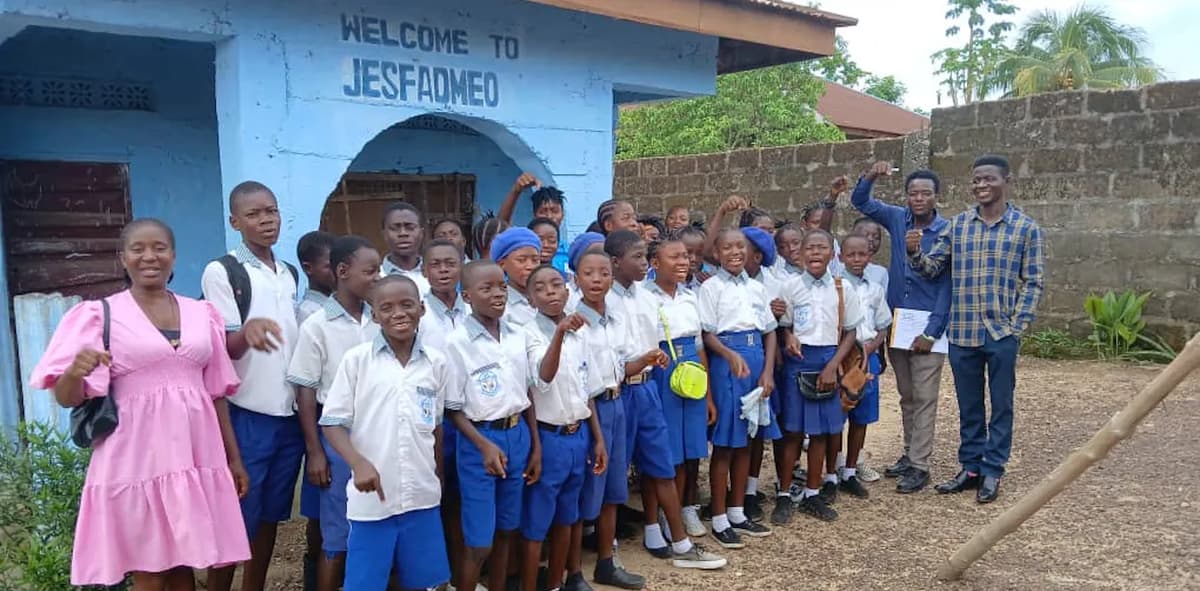
Young Africans Will Inherit a Climate Crisis: How Kids in Sierra Leone Are Getting Ready
Why It Matters
As secondary cities like Bo become front‑line destinations for climate migrants, empowering local youth is essential for sustainable adaptation and for integrating community‑driven solutions into national resilience plans.
Key Takeaways
- •Youth Climate Science Hub trained ~100 Bo City students, half girls.
- •Hub projects planted 1,500 shade and fruit trees and launched climate clubs.
- •Local curriculum blended science with indigenous practices for flood and drought adaptation.
- •Researchers call for national support of low‑cost school hubs in secondary cities.
Pulse Analysis
West Africa’s secondary cities are increasingly on the front lines of climate disruption, facing more frequent floods, droughts and the looming influx of climate migrants. Unlike primary capitals, these urban centers often lack robust infrastructure, internet connectivity and financial resources, making community‑driven adaptation critical. Young people, who will inherit these challenges, are uniquely positioned to blend local knowledge with scientific insight, creating resilient solutions that scale from neighborhoods to municipal planning.
The Youth Climate Science Hub in Bo illustrates a replicable, low‑cost model that bridges that gap. By partnering with five public schools, the initiative delivered a co‑designed curriculum that covered food security, circular economy, waste management, gender equity and micro‑finance. Hands‑on activities—planting 1,500 shade and fruit trees, establishing climate clubs, and hosting debates—translated theory into tangible community benefits. This approach not only built technical competence but also fostered social‑ecological networks, reinforcing the idea that strong community ties amplify adaptive capacity.
For policymakers and donors, the hub’s success signals a clear investment case: scaling school‑based climate hubs can accelerate grassroots resilience across secondary cities throughout the Sahel and beyond. National education ministries should embed climate modules into curricula, while international funders can earmark grants for hub infrastructure and teacher training. Aligning these hubs with city‑level adaptation plans ensures that youth‑led projects feed directly into broader disaster‑risk strategies, creating a pipeline of future climate leaders equipped to navigate an increasingly volatile world.
Young Africans will inherit a climate crisis: how kids in Sierra Leone are getting ready
Comments
Want to join the conversation?
Loading comments...