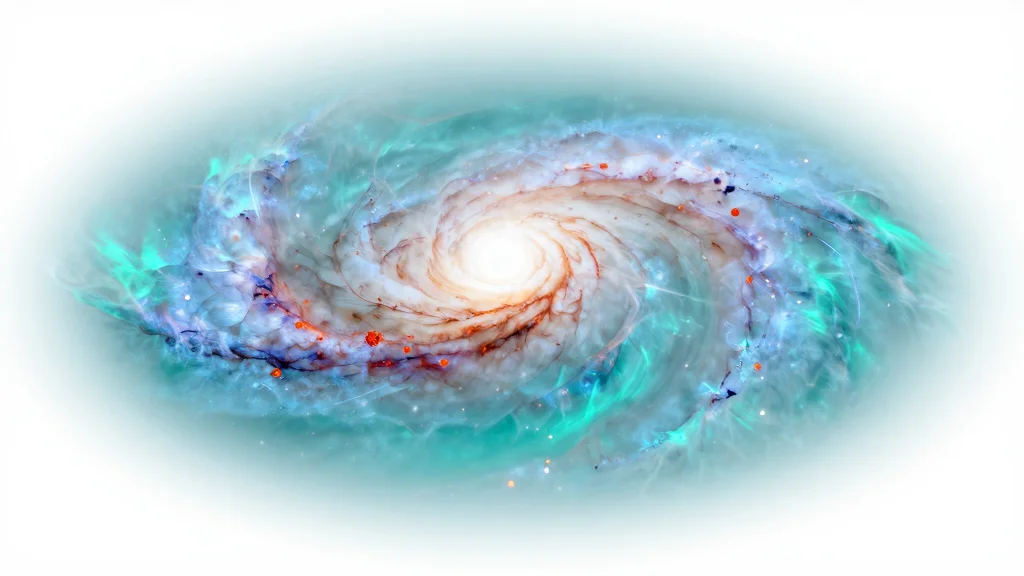
Young Stellar Activity Drives Galactic Evolution Across the Universe
Why It Matters
The study shows that early stellar feedback critically regulates galaxy growth and chemical evolution, forcing a rethink of star‑formation models across diverse cosmic environments.
Key Takeaways
- •18,000 regions analyzed across nearby spiral galaxies
- •Ionized gas pressure governs young region expansion
- •NGC 3256 feedback pressure 100× Milky Way levels
- •High turbulence indicates non‑disk gas dynamics
- •Findings benchmark stellar feedback for galaxy evolution models
Pulse Analysis
Stellar feedback—energy and momentum injected by young massive stars—has long been recognized as a key driver of galaxy evolution, yet direct measurements of its pressure have been scarce. By leveraging high‑resolution observations from JWST, Hubble, and ALMA within the PHANGS collaboration, researchers were able to quantify feedback pressures across thousands of star‑forming knots, revealing a clear link between ionized‑gas pressure and the expansion of nascent stellar clusters. This granular view moves beyond theoretical estimates, offering empirical data that can calibrate simulations of interstellar medium dynamics.
The survey’s most striking contrast emerges in NGC 3256, a luminous infrared starburst located about 100 million light‑years away. Here, feedback pressures are an order of magnitude higher—approximately 100 times those measured in typical Milky Way‑like spirals—producing extreme turbulence that prevents the gas from settling into a thin disk. Such conditions suggest that in merger‑driven starbursts, young stars can both trigger and suppress further star formation, reshaping the galaxy’s structural evolution in real time. These findings also illuminate why chemical enrichment patterns differ between quiescent disks and chaotic starburst environments.
Beyond the immediate astrophysical insights, the work sets a new standard for measuring stellar feedback across the universe. Accurate pressure benchmarks will improve galaxy‑formation models, informing predictions about star‑formation rates, gas depletion timescales, and the buildup of heavy elements essential for planet formation. As the lead author prepares follow‑up observations with the GOALS collaboration at Caltech’s IPAC, the community can anticipate deeper probes into dusty, turbulent regions that have previously eluded detailed study, further bridging the gap between observation and theory.
Young stellar activity drives galactic evolution across the universe
Comments
Want to join the conversation?
Loading comments...