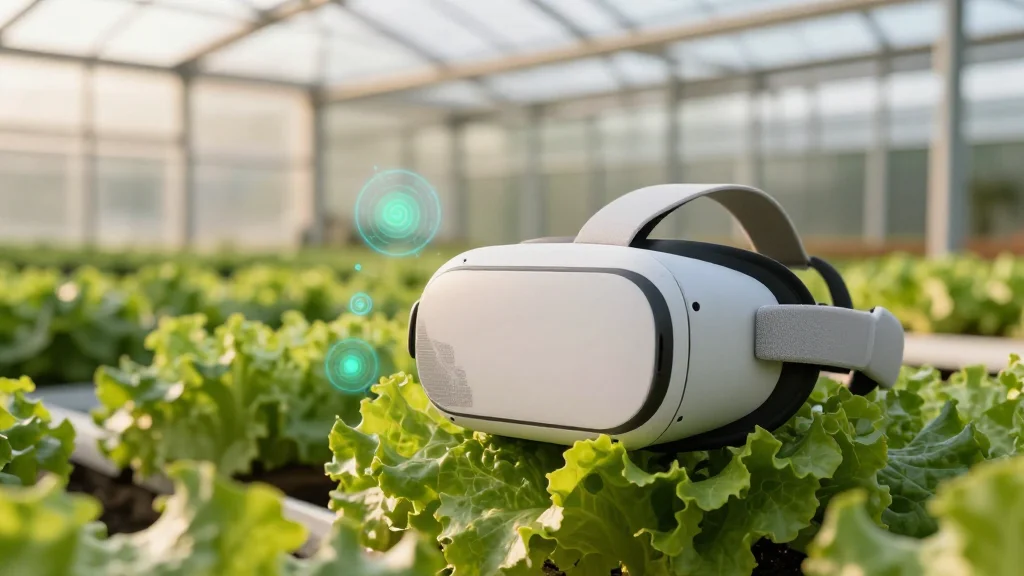
Your Own Personal Farmville: This VR Greenhouse Lets Users Monitor Crops Remotely
Why It Matters
By merging real‑time IoT data with immersive visualization, the technology lowers barriers to precision agriculture and could accelerate remote farm oversight, especially for growers with mobility constraints.
Key Takeaways
- •Binghamton University created VR digital twin for greenhouse monitoring.
- •System streams real-time sensor data (temp, humidity, gas) to VR.
- •Enables elderly or disabled owners to inspect crops remotely.
- •Potential uses in agri education and remote farm management.
- •Early-stage prototype; scalability depends on sensor deployment demand.
Pulse Analysis
The rise of digital twins—virtual replicas that mirror physical assets—has transformed sectors from manufacturing to smart cities, but agriculture has lagged behind due to the complexity of living systems. Traditional farm dashboards present rows of numbers, stripping away the spatial context that growers rely on when walking a field or greenhouse. By projecting real‑time sensor feeds onto three‑dimensional plant models within a mixed‑reality headset, Binghamton University’s platform restores that missing visual layer, letting users experience a farm’s micro‑climate as if they were on site.
Beyond novelty, the system addresses a concrete accessibility gap. Older farmers, those with mobility impairments, or owners who manage multiple remote sites can now inspect temperature, humidity, and gas levels plant‑by‑plant without leaving their homes. The immersive interface also doubles as an educational tool; agronomy students can explore plant physiology in a hands‑on virtual lab, reinforcing theory with live data. Such dual‑purpose design aligns with broader trends toward inclusive technology and experiential learning in STEM curricula.
Looking ahead, the prototype hints at a scalable market for remote farm management solutions. As IoT sensor costs continue to fall, integrating them into a unified VR environment could become a standard offering for precision‑agri service providers. Investors may see opportunities to bundle hardware, software, and data analytics into subscription models for large‑scale growers, while startups could specialize in niche crops or climate‑controlled facilities. The key challenge will be ensuring data reliability and low latency, but the early academic validation suggests a viable pathway toward commercial adoption, potentially reshaping how the agriculture industry monitors and optimizes production.
Your own personal Farmville: This VR greenhouse lets users monitor crops remotely
Comments
Want to join the conversation?
Loading comments...