AIhub
The Machine Ethics Podcast: Organoid Computing with Dr Ewelina Kurtys
Why It Matters
Understanding how living neural tissue can perform computation could unlock ultra‑energy‑efficient AI hardware, addressing the soaring operational costs of large language models that cost billions annually. This episode spotlights a frontier at the intersection of neuroscience, ethics, and technology, offering listeners insight into a potentially transformative, yet ethically complex, path for future computing.
Key Takeaways
- •Living neuron organoids act as experimental biocomputers.
- •Encoding information in spikes remains unknown, requiring trial‑and‑error.
- •Current prototype stores only one bit, showing early development.
- •Biocomputers could run generative AI with far lower energy.
- •Ethical debates focus on anthropomorphism and future regulation.
Pulse Analysis
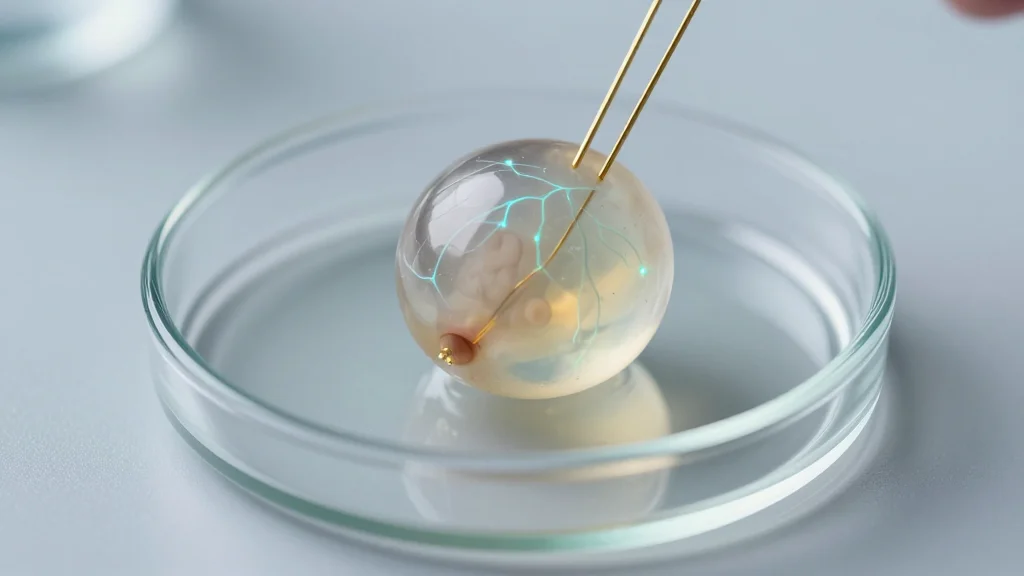
The Machine Ethics podcast features Dr. Ewelina Kurtys, advisor at Final Spark, a Swiss startup building computers from living neurons. They culture cortical organoids—tiny blobs of about 10,000 neurons in a half‑millimeter sphere—and attach electrode arrays for stimulation and recording. Unlike silicon transistors that toggle binary states, neurons communicate via timed spikes whose spatial and temporal patterns encode information. Because these encoding rules remain unknown, the team must invent new communication protocols, turning the organoid into a wet‑ware processor that operates on principles closer to biological brains than traditional digital chips.
Supporters claim biocomputing could cut power use for demanding tasks like generative AI. The human brain processes massive data with milliwatts, suggesting neuron‑based hardware might run large language models at a fraction of current data‑center costs. So far, Final Spark’s prototype has reliably stored a single bit, highlighting both promise and infancy. Living tissue’s plasticity forces massive trial‑and‑error experimentation, a process accelerated by AI‑driven automation that explores millions of stimulation patterns. These early results hint at a future where energy‑efficient neural processors complement silicon in AI workloads.
The rise of wet‑ware computers sparks fresh ethical debates. Critics caution against anthropomorphizing organoids or calling them “brains in a dish,” since they lack the organized architecture of a true cortex. Final Spark envisions a bio‑server accessed through familiar APIs, keeping hardware invisible to users. Yet machines that blur silicon and biology raise questions about responsibility, regulation, and the need for philosophical guidance. With AI costs soaring—OpenAI’s recent $19 billion loss underscores the pressure—biocomputing may become a strategic path toward more affordable, sustainable artificial intelligence.
Episode Description
Hosted by Ben Byford, The Machine Ethics Podcast brings together interviews with academics, authors, business leaders, designers and engineers on the subject of autonomous algorithms, artificial intelligence, machine learning, and technology’s impact on society. Organoid computing with Dr Ewelina Kurtys This month Ben chats with Dr Ewelina Kurtys on the uses of organoids and energy […]
Comments
Want to join the conversation?
Loading comments...