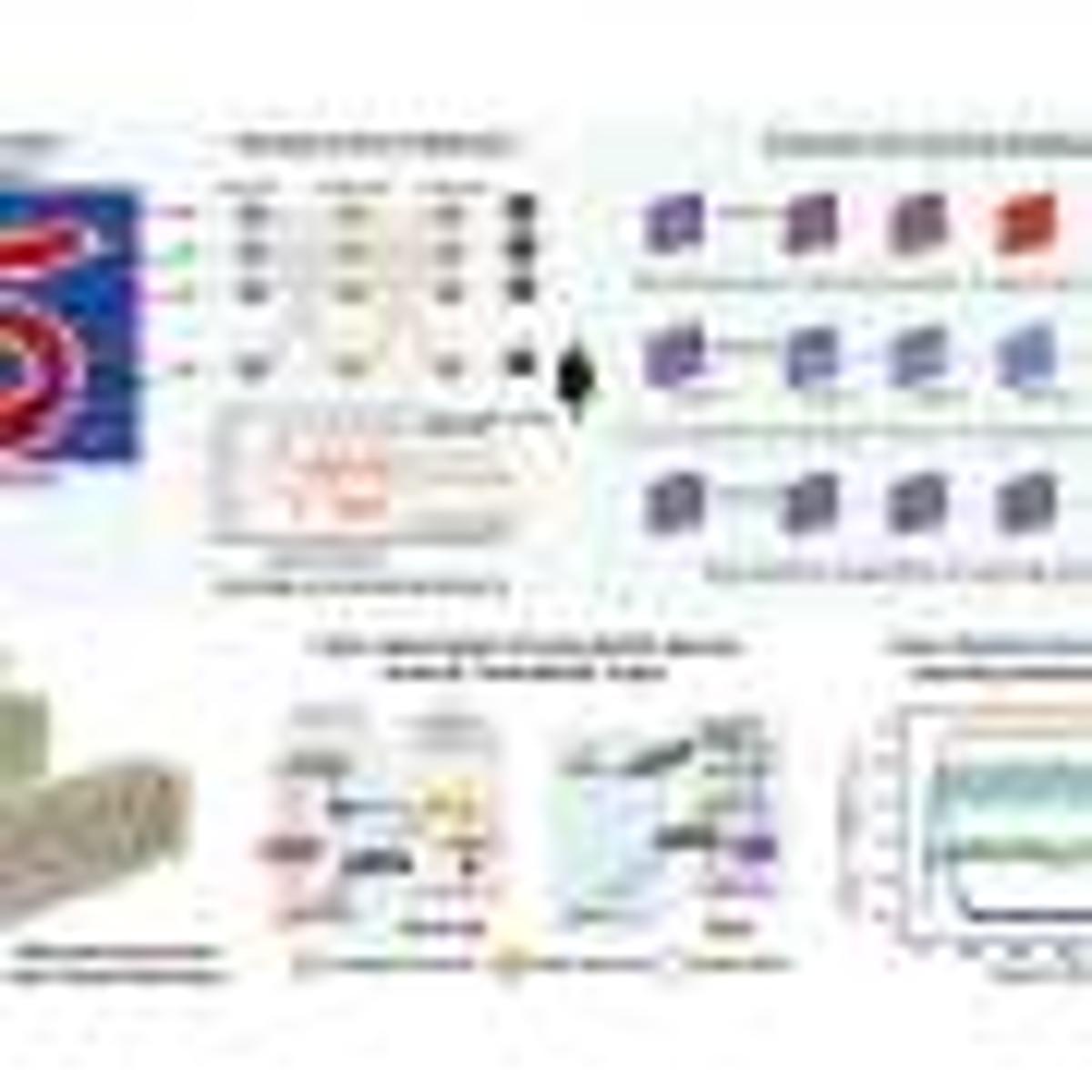
Artificial Synapse Uses Light-Color Programming for Brain-Like Balanced Learning
Why It Matters
The breakthrough offers a hardware‑level solution for balanced learning, reducing the energy and software overhead of current AI accelerators and opening pathways to ultra‑low‑power neuromorphic systems.
Key Takeaways
- •AgBiS₂ defect traps enable light‑color controlled memory
- •Near‑infrared light boosts synaptic weight 13×; blue light induces forgetting
- •Balanced learning persists over 1,000 training rounds in simulations
- •Ink‑based low‑temp processing compatible with existing semiconductor lines
Pulse Analysis
Neuromorphic computing has surged as a strategy to curb the soaring energy demands of modern AI, which can consume as much power as a small city during model training. Traditional artificial synapses rely on a single electrical control, causing weight saturation or drift that erodes learned information over time. By integrating photonic control directly at the synaptic junction, researchers can offload both storage and processing to the same device, dramatically improving energy efficiency and enabling real‑time adaptation akin to biological neurons.
The core of the new device is a deliberate cation‑disorder in AgBiS₂, a semiconductor normally prized for its light‑absorption properties. This disorder creates electron‑trapping sites that act as persistent memory elements when illuminated. Near‑infrared photons inject carriers that fill these traps, strengthening the synaptic connection, while blue photons release them, prompting rapid forgetting. This wavelength‑orthogonal mechanism yields a more than 13‑fold increase in potentiation speed and a comparable acceleration in depression, delivering a hardware‑implemented homeostatic plasticity that eliminates the need for complex software balancing.
Beyond the laboratory, the technology’s low‑temperature, ink‑based fabrication aligns with current semiconductor manufacturing, paving the way for scalable integration into AI accelerators, in‑sensor processing, and machine‑vision platforms for autonomous vehicles and robotics. The ability to program memory with light also suggests novel artificial‑eye architectures that can both perceive and retain visual information. As the industry seeks ultra‑low‑power solutions, this photonic synapse could become a cornerstone of next‑generation edge AI, driving both performance gains and sustainability.
Artificial synapse uses light-color programming for brain-like balanced learning
Comments
Want to join the conversation?
Loading comments...