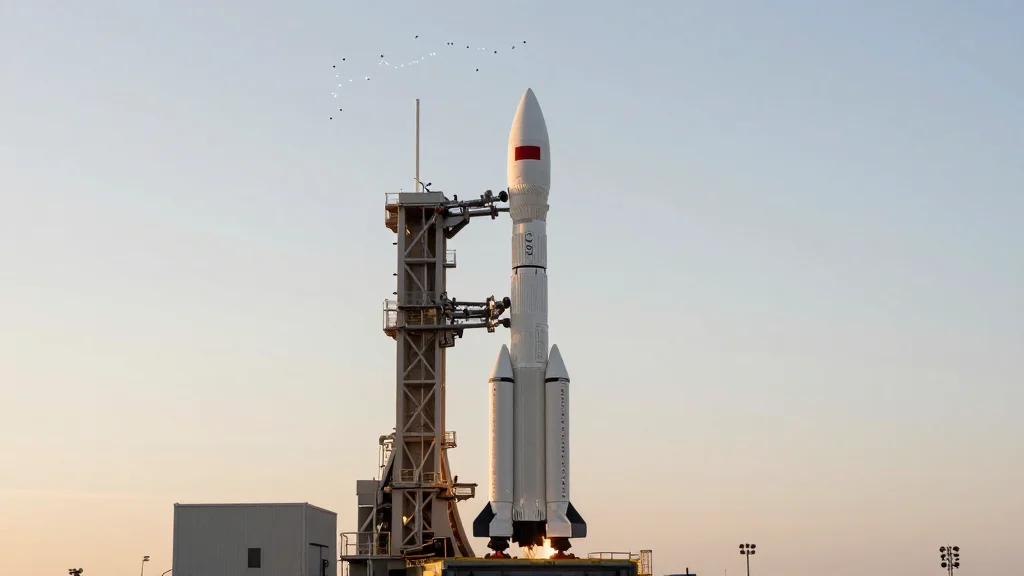
Ariane 6 Lifts Off 32 Amazon Kuiper Satellites, Expanding LEO Broadband Push

Companies Mentioned

Why It Matters
The launch underscores a pivotal shift in the LEO broadband arena, where multiple megaconstellations are vying for market share and regulatory approval. Amazon’s progress with Kuiper could democratize high‑speed internet access for remote communities, challenging the current monopoly held by SpaceX’s Starlink. Additionally, the involvement of Ariane 6 highlights Europe’s growing influence in commercial launch services, potentially reshaping the global launch market and encouraging price competition. From a SpaceTech perspective, the successful deployment of 32 satellites in a single mission validates the scalability of Amazon’s satellite manufacturing pipeline and its ability to coordinate complex launch logistics across several providers. The event also raises questions about orbital debris mitigation, spectrum allocation, and the capacity of ground‑segment networks to handle an influx of new broadband users.
Key Takeaways
- •Ariane 6 launched 32 Amazon Leo satellites from Kourou on April 30 at 4:08 a.m. ET.
- •Amazon’s Kuiper constellation targets 3,200 satellites across more than 80 launches.
- •Only ten Kuiper missions have flown so far; the most recent was an Atlas V launch of 29 satellites on April 27.
- •Starlink currently operates over 10,000 satellites, making Kuiper a smaller but rapidly growing competitor.
- •The launch marks Europe’s first Ariane 6 mission for Amazon, expanding the continent’s role in commercial LEO deployments.
Pulse Analysis
Amazon’s decision to ride Ariane 6 for a Kuiper batch is a strategic hedge against launch‑provider concentration risk. By spreading launches across Ariane 6, Falcon 9, and Atlas V, Amazon can negotiate better pricing and avoid bottlenecks that have plagued other constellations during peak demand periods. The move also signals confidence in Ariane 6’s payload capacity and reliability, a crucial endorsement for a launch system still early in its operational life.
The broader LEO broadband market is entering a phase where economies of scale will dictate competitive advantage. Starlink’s head start gives it a network effect that translates into lower per‑user costs and broader service contracts. Kuiper must therefore accelerate its deployment schedule while delivering comparable latency and throughput to win enterprise and government customers. The 32‑satellite launch is a modest but necessary step toward that goal, and each successful batch reduces the marginal cost of subsequent launches as production ramps up.
Regulatory scrutiny will intensify as both constellations approach the threshold where orbital congestion becomes a safety concern. The International Telecommunication Union and national space agencies are already drafting tighter spectrum rules and debris‑mitigation standards. Amazon’s ability to meet these requirements while maintaining launch cadence will be a litmus test for the sustainability of megaconstellations. If Kuiper can demonstrate responsible growth, it could unlock new markets in Africa, South America, and the Pacific, reshaping the global digital divide.
Overall, the Ariane 6 launch is more than a routine lift‑off; it is a barometer of how quickly Amazon can translate its satellite manufacturing capability into a viable broadband service. The next few years will reveal whether Kuiper can close the gap with Starlink or become a niche player serving specialized segments. Either outcome will have lasting repercussions for launch service providers, spectrum policy, and the future of global connectivity.
Ariane 6 lifts off 32 Amazon Kuiper satellites, expanding LEO broadband push
Comments
Want to join the conversation?
Loading comments...