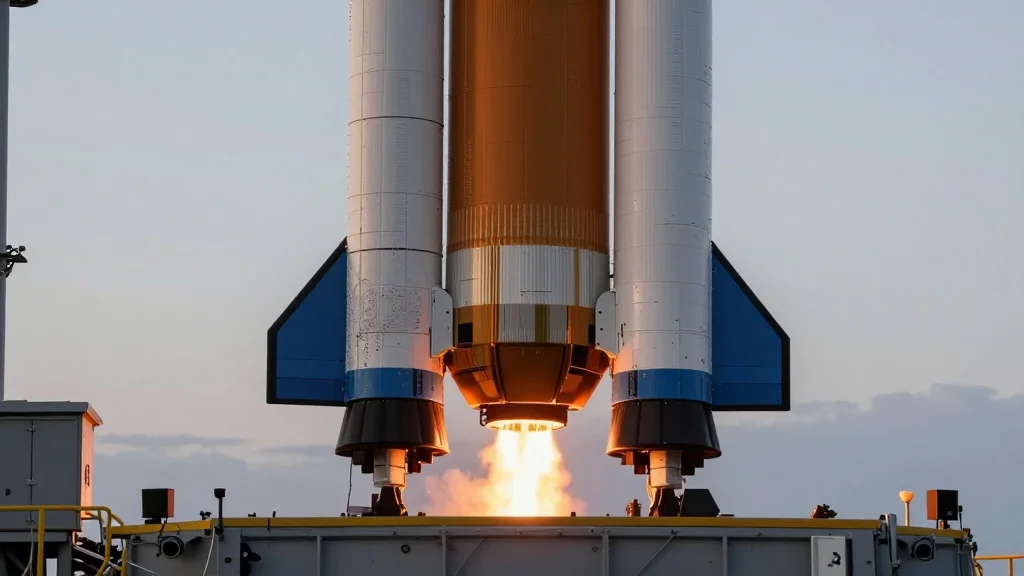
Blue Origin’s New Glenn Explodes in Hot‑fire Test, Shaking Launch Market

Companies Mentioned


Why It Matters
The New Glenn explosion underscores the fragility of the emerging commercial launch ecosystem, where a single vehicle failure can cascade into delayed satellite constellations, lost revenue, and shaken investor confidence. For Amazon, postponing Project Kuiper threatens its strategic push into global broadband, potentially ceding market share to rivals like SpaceX that have more proven launch cadence. Beyond individual contracts, the incident highlights the high stakes of reusability claims. Blue Origin’s ability to deliver a cost‑effective, reusable heavy‑lift system is central to its bid for NASA and defense contracts. A prolonged grounding could tilt future procurement decisions toward competitors, reshaping the competitive landscape of U.S. space launch services for years to come.
Key Takeaways
- •New Glenn exploded during a hot‑fire test on May 28 at Cape Canaveral, halting the planned Amazon Project Kuiper launch.
- •AST SpaceMobile shares fell 14.79% to $113.41 after the incident, the steepest drop among affected SpaceTech stocks.
- •Rocket Lab, Planet Labs, and Intuitive Machines each slipped more than 5% in the same trading session.
- •Virgin Galactic rose 11% as investors shifted focus to its tourism program amid Blue Origin’s setback.
- •Deutsche Bank cut AST SpaceMobile’s price target to $106, citing uncertainty around New Glenn’s availability.
Pulse Analysis
Blue Origin’s failure is a watershed moment for the U.S. launch sector, not because of the technical loss alone but because it punctures the narrative that multiple reusable heavy‑lift vehicles are now a given. SpaceX’s dominance has been challenged by the promise of New Glenn, yet two anomalies in quick succession erode confidence among satellite operators who prize schedule certainty. The market’s swift reaction—particularly the steep decline in AST SpaceMobile—reflects a pricing of risk that will likely persist until Blue Origin can demonstrate a clean flight.
Strategically, the incident forces Amazon to re‑evaluate its launch procurement mix. While SpaceX offers a proven, high‑frequency launch cadence, its pricing and capacity constraints could limit Kuiper’s rapid deployment. If Blue Origin cannot return to flight soon, Amazon may negotiate a larger share of its launches with SpaceX or turn to emerging players like Axiom Space, reshaping the competitive dynamics of the broadband‑satellite market.
Finally, the broader implication for policy and funding is clear: government agencies such as NASA and the Department of Defense may tighten their risk assessments when awarding contracts, favoring providers with demonstrated flight heritage. Blue Origin’s path forward will hinge on the speed and transparency of its investigation, the robustness of corrective actions, and its ability to reassure both commercial customers and federal partners that New Glenn can meet the reliability standards demanded by a maturing space economy.
Blue Origin’s New Glenn explodes in hot‑fire test, shaking launch market
Comments
Want to join the conversation?
Loading comments...