Blue Origin’s TeraWave Constellation: Analysts Size Up Competitive Positioning
Companies Mentioned


Why It Matters
TeraWave could redefine high‑capacity B2B satellite connectivity, pressuring incumbents such as O3b mPOWER and Telesat Lightspeed, while positioning Blue Origin as a full‑stack space‑services player.
Key Takeaways
- •TeraWave plans 5,408 optically linked LEO/MEO satellites.
- •Targets 100,000 enterprise customers with ultra‑high throughput.
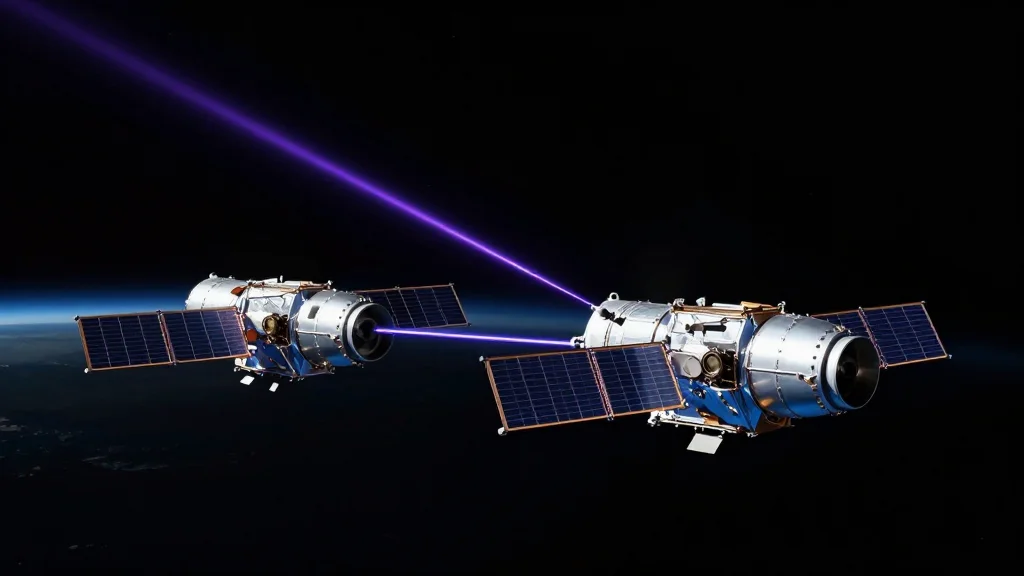
- •Uses Q/V‑band and space‑to‑ground lasers, unproven at scale.
- •Launch likely after 2027, facing technology and schedule risks.
- •Could pressure high‑capacity constellations like O3b mPOWER.
Pulse Analysis
Blue Origin’s entry into the satellite‑as‑a‑service arena reflects a broader industry trend toward vertical integration. By coupling its New Glenn launch system with an ambitious downstream network, the company aims to capture the lucrative enterprise segment that has traditionally been served by terrestrial fiber. This strategy mirrors SpaceX’s evolution from launch provider to Starlink operator, but Blue Origin differentiates itself by targeting high‑throughput, low‑latency backhaul rather than mass‑market broadband, positioning the firm for long‑term contracts with cloud providers and government agencies.
The technical blueprint of TeraWave is both its greatest promise and its most significant hurdle. Operating in the Q/V‑band promises wider bandwidths, yet the frequencies are highly susceptible to atmospheric attenuation, demanding sophisticated rain‑fade mitigation and robust terminal designs. Optical inter‑satellite links, while proven in limited deployments, must scale to thousands of nodes across two orbital regimes, requiring precise pointing and autonomous network management. Overcoming these challenges could unlock "fiber in the sky" capabilities, delivering terabit‑scale links between data centers and remote sites, but the development timeline is likely to extend into the early 2030s.
From a market perspective, TeraWave’s high‑capacity focus directly challenges incumbents like O3b mPOWER and emerging B2B constellations such as Telesat Lightspeed. If Blue Origin can deliver the promised performance, it may shift enterprise customers toward space‑based backhaul, especially in regions where terrestrial infrastructure is constrained. However, the success of this venture hinges on mastering new hardware, securing a steady launch cadence, and navigating regulatory hurdles for Q/V‑band usage. Investors and industry watchers will monitor Blue Origin’s progress as a bellwether for the next generation of satellite connectivity solutions.
Blue Origin’s TeraWave Constellation: Analysts Size Up Competitive Positioning
Comments
Want to join the conversation?
Loading comments...