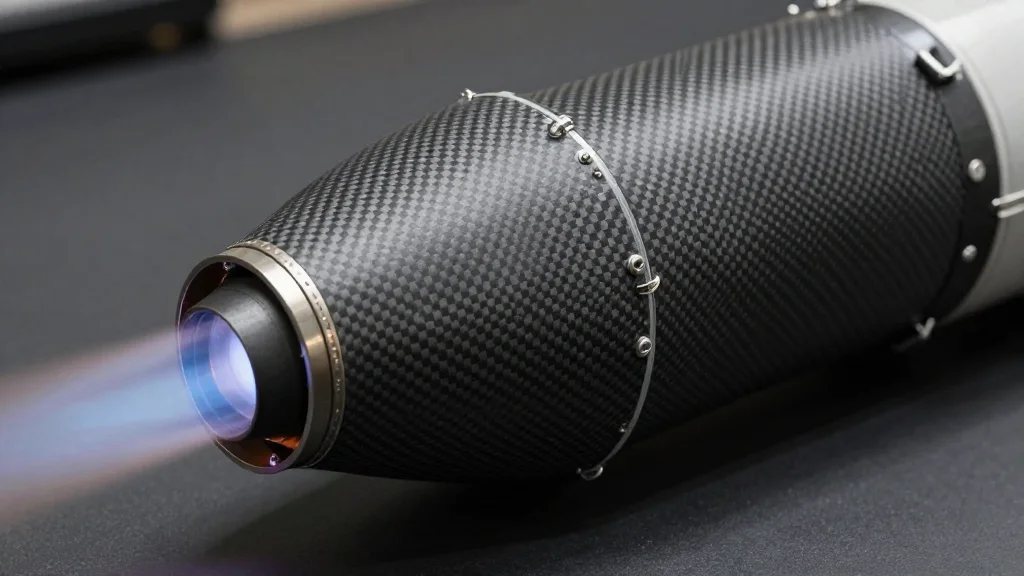
China Unveils 5‑Meter Composite Propulsion Module for Reusable Long March 10

Why It Matters
The composite propulsion module represents a tangible shift from heavy‑metal rocket structures to lighter, high‑strength materials, a transition that directly influences launch cost and payload capacity. By achieving a seven‑month development cycle, CASC demonstrates an ability to iterate quickly, a trait traditionally associated with private U.S. firms. If the Long March 10 can reliably reuse its first stage, China could offer competitive launch services for both government and commercial customers, potentially reshaping the balance of power in the burgeoning low‑cost launch sector. Beyond economics, the module’s integration into a lunar‑focused launch system underscores Beijing’s strategic intent to establish a sustainable presence on the Moon. A reusable heavy‑lift vehicle would lower the cost per kilogram for lunar cargo, accelerating the timeline for crewed missions and supporting scientific and resource‑extraction activities. The technology also provides a platform for future Chinese deep‑space endeavors, positioning the nation as a credible contender in the next era of space exploration.
Key Takeaways
- •CASC unveiled a 5‑meter‑wide propulsion module for the Long March 10
- •Module is >60% composite material and can handle 1,000 metric‑ton axial loads
- •Prototype built in just seven months from design to delivery
- •Designed for both vertical‑landing and sea‑based net recovery methods
- •Supports China’s goal of crewed lunar missions in the 2030s
Pulse Analysis
China’s rapid rollout of a large‑scale composite propulsion module signals a maturation of its reusable‑rocket capabilities that rivals the private‑sector agility seen in the United States. Historically, composite structures have been a niche in Chinese launch vehicles due to manufacturing complexity and cost. The shift to a 60% composite design suggests that supply‑chain bottlenecks are easing, likely driven by state investment in advanced materials and a strategic push to match SpaceX’s cost‑per‑kilogram advantage.
From a market perspective, the Long March 10 could become a viable alternative for commercial satellite operators seeking lower‑cost access to orbit, especially in the growing constellation market. While SpaceX currently enjoys a price advantage of roughly 30% over traditional expendable launchers, China’s ability to reuse a heavy‑lift vehicle could compress that gap further, particularly if the sea‑based recovery method proves cheaper than ground‑based landing infrastructure.
Looking ahead, the decisive factor will be the module’s performance in flight tests and the operational reliability of the chosen recovery system. A successful demonstration could unlock a cascade of downstream benefits: reduced launch costs, increased payload capacity for lunar missions, and a stronger bargaining position for China in international launch services. Conversely, technical setbacks could delay Beijing’s lunar timetable and cede additional market share to competitors. The next six months—when the module is integrated into a flight‑ready Long March 10 and subjected to static‑fire and orbital tests—will be critical in determining whether China’s reusable ambitions translate into a durable competitive edge.
China Unveils 5‑Meter Composite Propulsion Module for Reusable Long March 10
Comments
Want to join the conversation?
Loading comments...