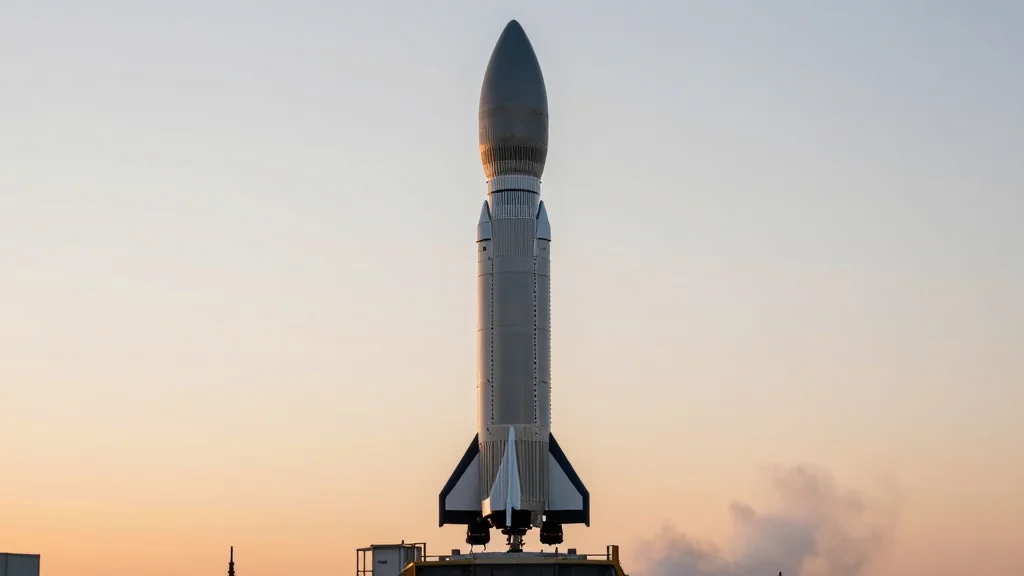
China’s Tianlong‑3 Debut Fails, Shaking Hopes for Commercial Heavy‑lift Market

Companies Mentioned
Why It Matters
The Tianlong‑3 failure underscores the high technical risk inherent in developing reusable heavy‑lift rockets, a sector that has been dominated by a handful of established players. For China, achieving a reliable domestic alternative to Falcon 9 is central to its ambition of reducing dependence on foreign launch services and supporting a growing commercial satellite ecosystem. A successful Tianlong‑3 would also signal that Chinese private firms can compete on cost and performance, potentially attracting international payloads and accelerating the commercialization of low‑Earth‑orbit infrastructure. Moreover, the incident may influence global launch pricing dynamics. If Chinese firms cannot deliver dependable heavy‑lift capability soon, customers may continue to gravitate toward SpaceX’s proven fleet, reinforcing its market share and pricing power. Conversely, a rapid recovery and successful subsequent launch could introduce meaningful competition, driving down launch costs and expanding access for emerging satellite operators worldwide.
Key Takeaways
- •Space Pioneer’s Tianlong‑3 failed on its maiden flight after an ascent‑phase anomaly.
- •The 72‑meter rocket was designed to lift 17‑22 metric tons to low Earth orbit and cost $350 million to develop.
- •China’s commercial launch sector faces technical setbacks, with recent recovery attempts on Zhuque‑3 and Long March 12A also failing.
- •Falcon 9 remains the benchmark, with SpaceX reporting a record 34th flight of a reused booster on March 30.
- •ESA disclosed Ariane 62 launch pricing at €82,070,773 ($96 million), highlighting competitive cost pressures.
Pulse Analysis
Space Pioneer’s setback is a reminder that reusability, while a game‑changer for launch economics, is a steep engineering hill to climb. The company’s $350 million capital base is sizable for a Chinese startup, yet the failure suggests that additional funding may be needed to iterate on engine performance, stage separation, and recovery systems. Historically, firms that have survived early failures—such as SpaceX and Blue Origin—did so by leveraging deep pockets and a willingness to accept multiple test flights before achieving operational reliability.
In the short term, the incident is likely to reinforce the dominance of established launch providers. Satellite operators with tight deployment schedules will favor proven vehicles, especially as SpaceX continues to push the envelope on booster reuse, targeting up to 40 flights per first stage. However, the longer‑term strategic calculus for Chinese customers could shift if Space Pioneer can demonstrate a rapid turnaround and competitive pricing. A reliable, partially reusable Chinese heavy‑lift rocket would not only diversify the global launch market but also provide a sovereign capability for China’s burgeoning satellite constellations and lunar ambitions.
Investors and policymakers should watch the timeline for the next Tianlong‑3 flight closely. A successful second launch within the year could restore confidence and attract new contracts, while prolonged delays may erode the momentum built by the $350 million fundraising round. The broader implication is clear: the commercial launch sector remains a high‑stakes arena where technical success directly translates into market relevance, and any misstep reverberates across the entire space economy.
China’s Tianlong‑3 debut fails, shaking hopes for commercial heavy‑lift market
Comments
Want to join the conversation?
Loading comments...