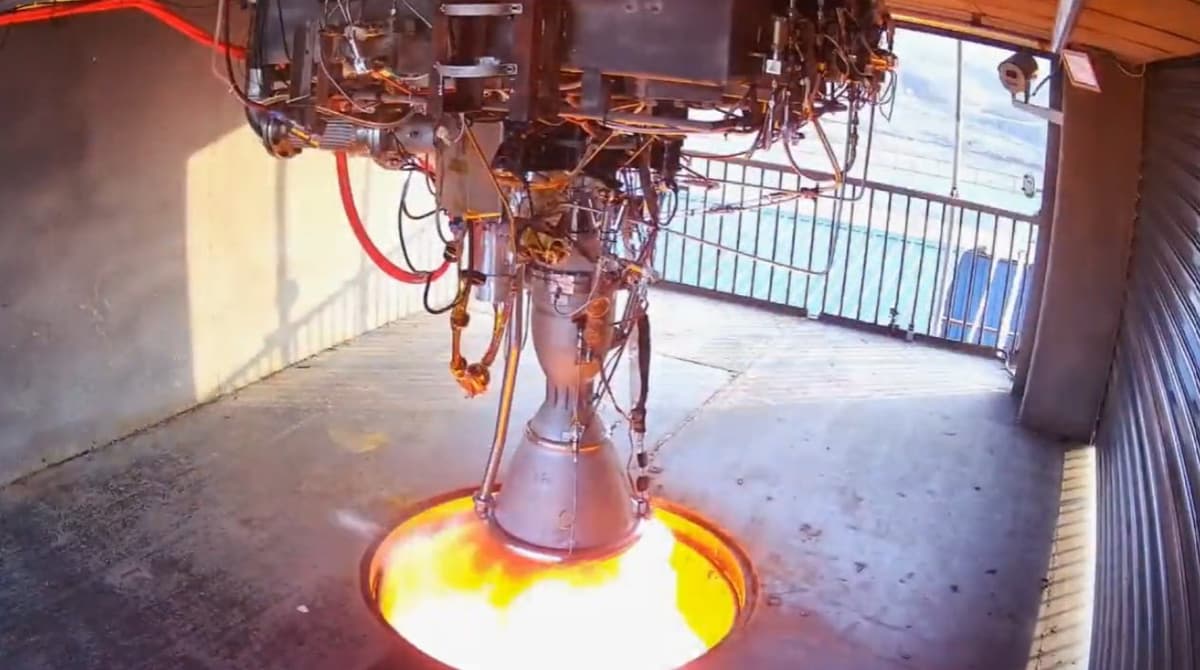
Chinese Startup Spark Space Tests Engine, Raises Funds for Electric-Pump Rocket
Companies Mentioned
Why It Matters
Spark Space’s electric‑pump rocket could dramatically lower launch costs in the crowded Chinese small‑sat market, challenging incumbents like Rocket Lab and accelerating China’s commercial space capabilities.
Key Takeaways
- •Spark Space raised ~100 million yuan ($14.8 M) in Pre‑A funding.
- •Lieyan‑2 engine delivers 10 tons thrust, nine power first stage.
- •Jinhua‑1 targets 1,500 kg LEO payload, triple Electron’s capacity.
- •Electric‑pump design cuts turbopump weight, but adds battery mass.
- •First flight slated for 2027, aiming at small‑sat constellations.
Pulse Analysis
Spark Space’s recent engine hot‑fire marks a pivotal step for China’s emerging electric‑pump‑fed launch sector. By eliminating traditional turbopumps, the Lieyan‑2 engine promises a lighter, simpler architecture, echoing Rocket Lab’s Rutherford design but scaling thrust to 10 tons per unit. This approach reduces mechanical complexity and manufacturing time, though it shifts mass to high‑energy batteries, a trade‑off that will influence overall vehicle efficiency and cost structures.
The financing round—nearly 100 million yuan ($14.8 million) plus additional capital from Cathay—signals strong investor confidence in Spark Space’s ability to compete in a market crowded with solid‑fuel small launchers such as Galactic Energy’s Ceres‑1 and CAS Space’s Kinetica‑1. With a 27.5‑meter, two‑stage Jinhua‑1 capable of delivering 1,500 kg to LEO, the company aims to undercut Rocket Lab’s Electron, which carries about 300 kg, offering a compelling value proposition for satellite constellations seeking rapid deployment and replenishment.
If Spark Space meets its 2027 orbital debut, it could reshape the economics of low‑Earth‑orbit access in Asia. The combination of a high‑thrust electric‑pump engine, government‑linked backing, and a growing domestic demand for small‑sat services positions the firm to capture a sizable share of the burgeoning constellation market. Success would also validate electric‑pump technology at a larger scale, potentially prompting legacy launch providers to revisit similar architectures for medium‑lift vehicles.
Chinese startup Spark Space tests engine, raises funds for electric-pump rocket
Comments
Want to join the conversation?
Loading comments...