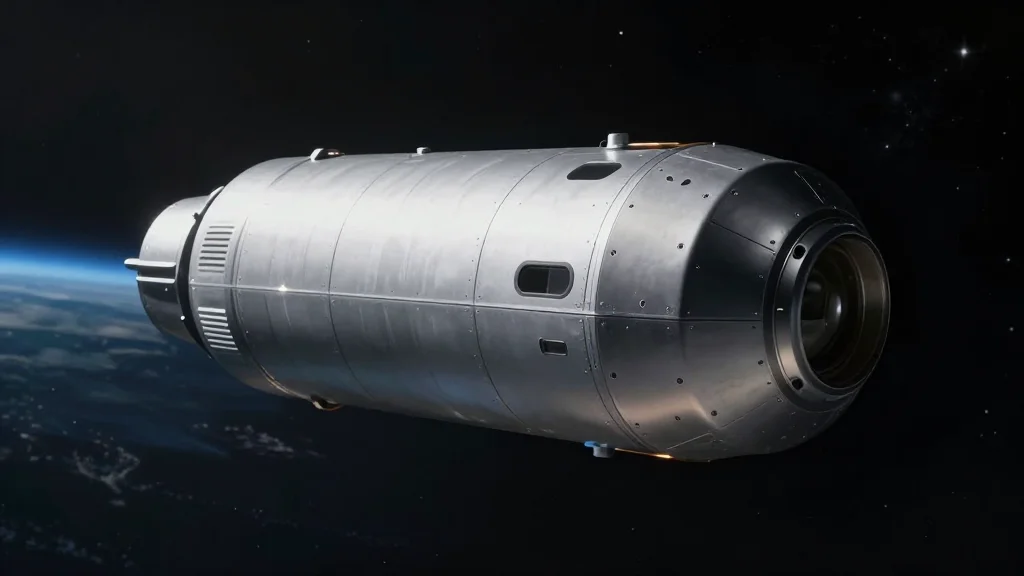
Katalyst Completes Final Ground Testing of Its Swift Rescue Spacecraft
Companies Mentioned
Why It Matters
The rescue could extend Swift’s scientific output by years and prove Katalyst’s orbital‑servicing model, opening doors to more commercial and government contracts.
Key Takeaways
- •Katalyst finished vibration, thermal‑vacuum, and thruster tests on LINK.
- •Integration onto Pegasus rocket scheduled for June 2026 launch.
- •Mission aims to raise Gehrels‑Swift Telescope orbit, extending its life.
- •Success would validate Katalyst’s orbital‑servicing capabilities for future contracts.
- •NASA awarded Katalyst the rescue contract only eight months after proposal.
Pulse Analysis
The Gehrels‑Swift Telescope, launched in 2004, has been a workhorse for high‑energy astrophysics, but its diminishing orbit threatens to curtail valuable observations. NASA’s decision to contract a private firm reflects a broader shift toward commercial partners for spacecraft maintenance, a niche that Katalyst has been cultivating through its modular servicing platform. By designing LINK to dock, grapple, and boost existing assets, Katalyst aims to fill a gap that traditional government programs have left unaddressed.
Katalyst’s recent ground‑testing milestone demonstrates the rigor required for such missions. Vibration testing on a Pegasus launch profile simulated the intense forces of a mid‑air launch, while thermal‑vacuum cycles in a 27‑foot chamber reproduced the extreme hot‑cold swings of low‑Earth orbit. The successful firing of three xenon ion thrusters and deployment of a capture arm prove that LINK can maneuver with the precision needed to rendezvous with Swift. Integration onto the final Pegasus in the inventory is scheduled for June, positioning the launch for later that month and compressing the timeline for a rapid response rescue.
If LINK succeeds, it will provide a proof‑point for a new class of on‑orbit servicing missions, from extending satellite lifespans to de‑orbiting defunct hardware. The commercial space market is increasingly valuing such capabilities, with investors eyeing revenue streams from satellite life‑extension, debris removal, and constellation upkeep. Katalyst’s win not only secures immediate revenue but also signals to the industry that NASA is willing to outsource critical orbital operations, potentially accelerating the emergence of a robust orbital‑servicing ecosystem.
Katalyst completes final ground testing of its Swift rescue spacecraft
Comments
Want to join the conversation?
Loading comments...